If your hydraulic hoses are sweating, it usually means moisture is forming on their surface due to temperature fluctuations and high humidity. This condensation happens because the hose material reacts to environmental conditions, especially during rapid temperature changes. Sweating can signal potential issues like corrosion or system inefficiency, so it’s important to understand what causes it. Keep exploring to uncover more about preventing this problem and protecting your hydraulic system.

Get business pricing on tools and workshop supplies
- Business-only prices and quantity discounts
- Tax-exempt purchasing
- Multiple users, one account, clear invoices
Key Takeaways
- Sweating indicates moisture condensation caused by temperature fluctuations and high humidity environments.
- It suggests external environmental factors are affecting the hose surface, not necessarily a hose defect.
- Hose material and environmental conditions influence the likelihood of sweating occurring.
- Sweating can lead to corrosion, system inefficiency, and potential damage if not addressed.
- Proper insulation, material selection, and maintenance help mitigate hose sweating.
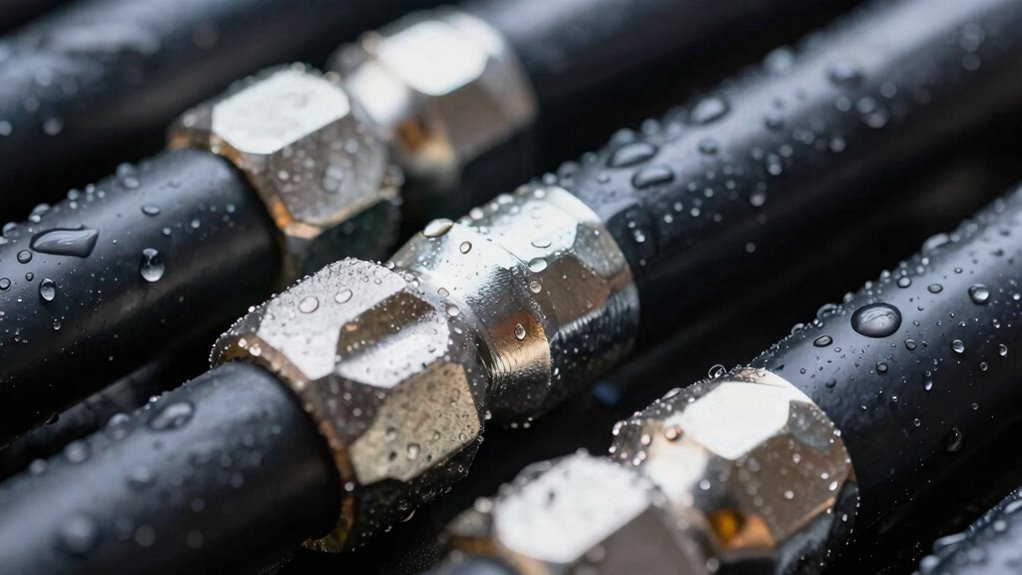
If you’ve noticed water collecting on your hydraulic hoses, you’re likely dealing with a common issue known as “sweating.” This occurs when moisture condenses on the surface of the hoses due to temperature fluctuations, which can lead to corrosion, reduced efficiency, and potential system failures. Sweating is a visual sign that your hydraulic system is experiencing environmental and operational challenges. Understanding what causes it can help you take the right steps to prevent damage.
The primary factor behind sweating is the interaction between hose material and environmental conditions. Different hose materials react differently to temperature changes. For example, rubber or synthetic hoses tend to be more prone to sweating because they are less resistant to temperature extremes. On the other hand, hoses made from certain plastics or composite materials may better withstand temperature variations, reducing the likelihood of condensation forming on their surfaces. Still, no hose material is completely immune, especially if environmental conditions are harsh, such as high humidity or rapid temperature swings. environmental conditions play a crucial role in sweating, influencing how and when moisture condenses on hoses. Additionally, understanding the material properties of the hoses can help in selecting the right type for specific operational environments, potentially minimizing sweating issues. Proper maintenance practices can also help mitigate sweating by ensuring that hoses are inspected and replaced when necessary. Moreover, implementing insulation techniques can further reduce the temperature differentials that cause condensation to form. Using appropriate materials designed for specific conditions can greatly decrease the chances of sweating, especially in challenging environments.
hydraulic hose insulation sleeves
As an affiliate, we earn on qualifying purchases.
As an affiliate, we earn on qualifying purchases.
Frequently Asked Questions
Can Sweating Hydraulic Hoses Cause System Failure?
Sweating hydraulic hoses can lead to system failure if left unchecked. The moisture from sweating can cause corrosion, especially if the hose material isn’t resistant, and pressure fluctuations can worsen the issue. Over time, this moisture buildup may weaken hose integrity, leading to leaks or bursts. Regular inspection and choosing hoses with proper insulation or moisture barriers help prevent sweating and protect your system from potential failures.
How Often Should I Inspect Hoses for Sweating?
Think of your hydraulic system as a living organism; regular check-ups keep it healthy. You should inspect hoses for sweating at least monthly, especially in humid or temperature-fluctuating environments. Pay attention to hose material, as rubber and synthetic hoses may sweat differently. Frequent inspection helps catch early signs of issues, preventing system failure. Adjust your inspection frequency based on usage, environment, and manufacturer recommendations for best performance.
Are There Specific Brands Less Prone to Sweating?
Some brands are less prone to sweating due to their strong reputation for quality and durable hose materials. Look for brands like Parker and Gates, known for their high standards and reliable hose material. These manufacturers typically use better insulation and advanced sealing techniques, reducing sweating. Opting for well-established brands ensures you get hoses designed to resist moisture buildup, giving you peace of mind and longer-lasting performance in your hydraulic system.
Does Sweating Indicate a Need for Immediate Replacement?
Sweating can signal a problem, but it doesn’t always mean immediate replacement. You should first inspect the hose material for signs of deterioration or damage. Sometimes, manufacturing defects or environmental factors cause sweating, which might be temporary. However, persistent moisture indicates a potential leak or compromised integrity. Don’t ignore it—monitor closely. If you notice cracks or worsening leaks, replacing the hose promptly prevents costly failures and safety hazards.
Can Environmental Factors Worsen Hydraulic Hose Sweating?
Yes, environmental factors can worsen hydraulic hose sweating. If your surroundings are humid or exposed to extreme temperatures, it impacts the hose material, making it more prone to condensation. High humidity increases moisture buildup on the hose surface, while temperature fluctuations cause expansion and contraction, leading to sweating. To prevent this, consider using hoses designed for your environment and guarantee proper insulation to reduce environmental impact on sweating.
Conclusion
So, next time your hydraulic hose starts “sweating,” remember it’s more than just a little moisture—it’s a sign that something’s off. Don’t ignore the warning, or you could face bigger problems down the line. Isn’t your equipment’s safety and efficiency worth a quick check? Staying vigilant helps prevent costly repairs and downtime. Keep an eye on those hoses, and you’ll keep your operation running smoothly—because a little caution now can save a lot of trouble later.
Fall yard work Picks
leaf blowers
As an affiliate, we earn on qualifying purchases.