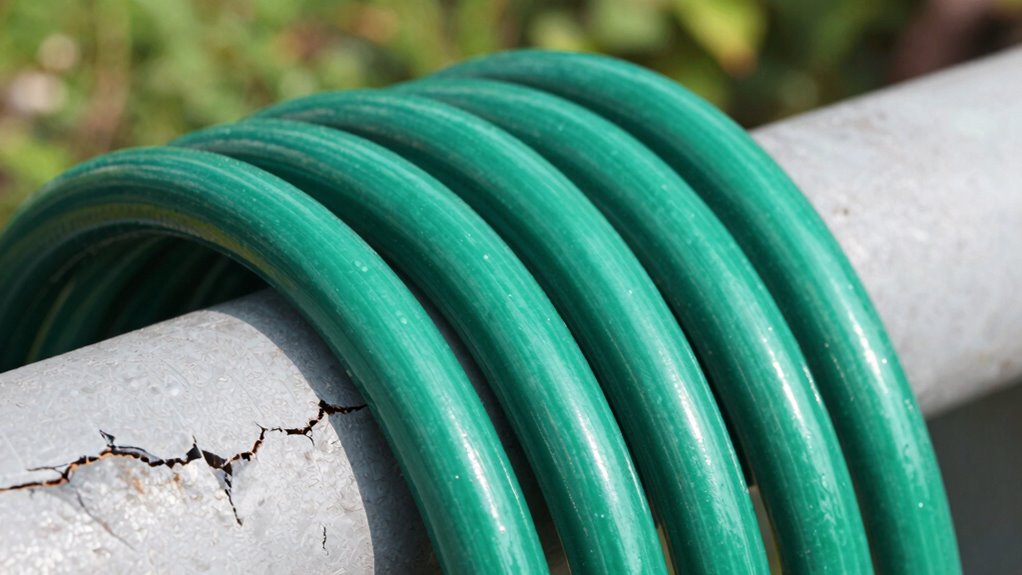

When you install a new hose, it can leak more because the materials are initially stiff and haven’t softened yet. This rigidity can make sealing tricky, causing gaps and leaks. Over time, the hose material becomes more flexible, fitting snugger and reducing leaks. Proper installation, cleaning fittings, and following guidelines help prevent early leaks. If you want to understand why new hoses act this way and how to fix it, you’ll find useful details ahead.
Key Takeaways
- New hoses are often stiffer, preventing proper sealing until they soften over time.
- Initial installation may involve misalignment or cross-threading, causing early leaks.
- Rushing installation can lead to insufficient tightening or damage, increasing leak risk.
- Pressure fluctuations are more impactful on new hoses, which haven’t fully stabilized.
- Incomplete cleaning or inspection of fittings can create gaps and weak points initially.
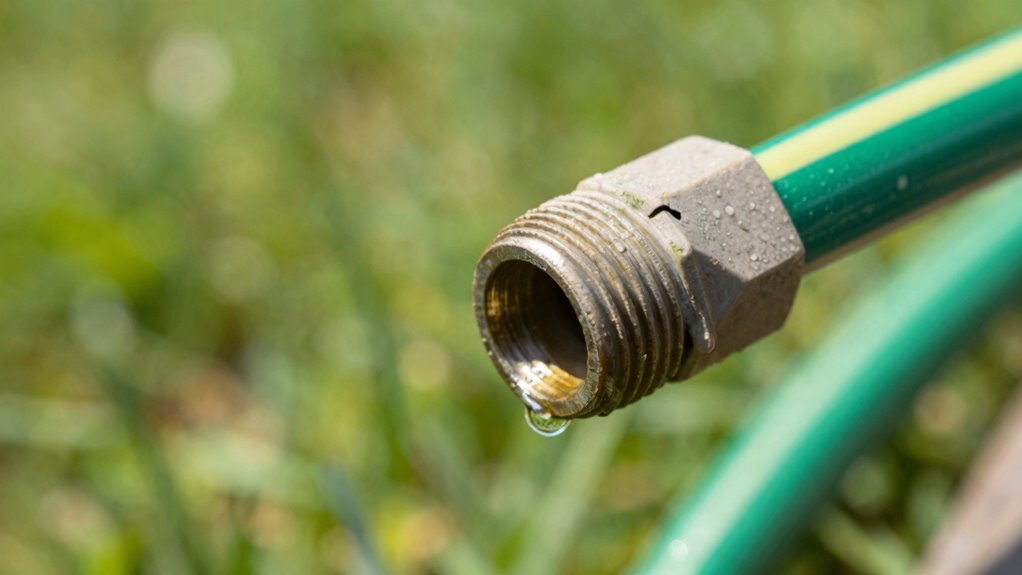
When you install a new hose, you might expect it to be fully reliable right away, but surprisingly, it can actually leak more than an old one. This often happens because the hose material or installation techniques aren’t quite right. New hoses are made from different materials, like rubber, silicone, or reinforced plastics, each with unique properties. Some materials require a break-in period to become more flexible and form a better seal. If you try to connect a new hose immediately, especially if it’s stiff or rigid, you might not get a tight fit. As a result, leaks can occur right from the start. Over time, the hose material will soften, and the fittings will settle into place, reducing leaks. But initially, the rigidity of certain materials can make sealing difficult, leading to leaks that weren’t a problem with the older, more pliable hose.
Another common cause of leaks with new hoses relates to installation techniques. Proper connection is crucial, and rushing through the process or using incorrect methods can cause problems. For example, if you don’t tighten the fittings enough, or if you over-tighten and damage the hose or fittings, leaks will develop. Some hoses require specific tools or tightening procedures to ensure a secure fit without damaging the material. Also, many new hoses come with manufacturer instructions that emphasize the importance of cleaning and inspecting fittings before installation. Skipping these steps or failing to align the hose properly can create gaps or weak points that leak under pressure. Even minor misalignments or cross-threading can lead to persistent leaks, especially during initial use. Additionally, because new hoses can be more sensitive to pressure fluctuations, leaks may be more likely until the system stabilizes. Understanding the material properties of the hose can help prevent premature leaks and ensure a longer-lasting connection. Properly testing the connection before full use can also help identify potential leaks early. Furthermore, paying attention to installation guidelines can make a significant difference in preventing early issues and ensuring a secure, durable connection.

Sanpaint 2 Pack Garden Hose Connector Repair Mender Kit with Stainless Clamp,Fits 3/4"-5/8" Water Hose Repair Fitting
- Hose Compatibility: Fits 3/4"-5/8" hoses
- Durable Material: Made from strong aluminum
- Easy to Use: Reliable and simple to install
As an affiliate, we earn on qualifying purchases.
As an affiliate, we earn on qualifying purchases.
Frequently Asked Questions
How Long Does It Take for a New Hose to Stop Leaking?
It usually takes a few hours to a couple of days for a new hose to stop leaking, depending on hose durability and the quality of the connections. To speed up leak prevention, guarantee all fittings are tightly secured and check for any manufacturing defects. Regular inspection during this period helps identify and fix small leaks early, ensuring your hose becomes fully functional and leak-free faster.
Can Improper Installation Cause Increased Leaks in New Hoses?
Yes, improper installation can cause more leaks in your new hose. Ironically, rushing through installation or ignoring compatibility issues often leads to those pesky drips. Installation errors like over-tightening fittings or using incompatible connectors create weak spots, making leaks worse. So, even a brand-new hose can be your worst enemy if you don’t take the time to install it correctly and guarantee compatibility. Patience prevents leaks!
Do Different Hose Materials Affect Initial Leak Rates?
Different hose materials substantially affect initial leak rates because of hose durability and material compatibility. Some materials are more flexible and create better seals, reducing leaks, while others may be prone to tearing or cracking during installation, increasing leaks. Choosing a hose made from a compatible material guarantees a tight fit, minimizes initial leaks, and enhances overall performance. Always consider the hose’s material properties to prevent early leaks and guarantee long-term durability.
Are Certain Water Pressures More Likely to Cause Leaks in New Hoses?
Imagine your garden’s lifeline suddenly bursting—pressure fluctuations can be unpredictable, and they’re more likely to cause leaks in new hoses. High water pressures strain hose materials, especially if the hose isn’t compatible with your water system. To prevent leaks, keep water pressure steady and select hoses designed for your pressure levels. Proper hose compatibility and managing pressure fluctuations guarantee your new hose stays leak-free and your garden thrives.
How Can I Identify a Manufacturing Defect Causing Leaks?
To identify a manufacturing defect causing leaks, carefully inspect your new hose for signs of manufacturing flaws like cracks, weak spots, or uneven fittings. Check if all connections are secure and look for irregularities that suggest poor quality control. If leaks persist despite proper installation, contact the manufacturer or retailer. They can verify if the hose has a defect, and often, a replacement or refund is available, ensuring you’re not stuck with faulty gear.
Conclusion
So, next time your new hose drips more than expected, remember—sometimes, a fresh start comes with unexpected leaks. It’s like planting a seed; at first, it might seem messy, but with patience, growth follows. Don’t let small leaks dampen your enthusiasm. Instead, see them as part of the journey toward a better, more efficient hose. After all, every drip is just a sign that you’re on the path to a smoother, leak-free future.