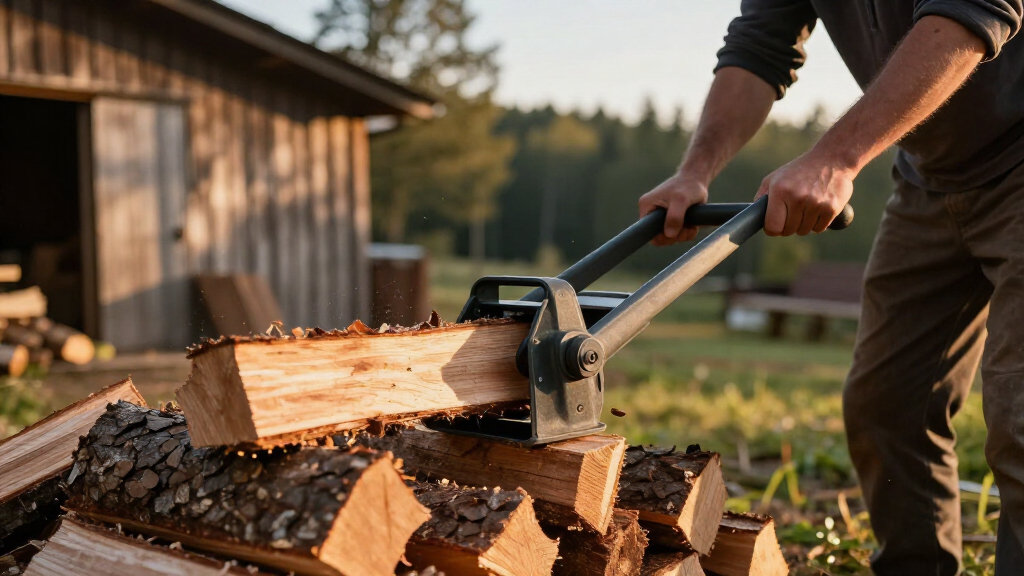
Manual log splitters occupy a smart middle ground between swinging an axe and buying a gas-powered machine. They trade raw speed for safety, silence, and a low price, and for most homeowners who only need kindling or occasional firewood, that trade makes a lot of sense. In this roundup, I compare four of the most popular manual options and rank them for different buyers.
Open a free Amazon Business account
Business pricing, bulk buying and tax-exempt orders.
Create a free accountAs an affiliate, we earn on qualifying purchases.
My top pick is the KABIN Kindle Quick Log Splitter (KKQR1), which offers the best balance of stability, capacity, and durability thanks to its heavier build and anchorable base. For buyers who want to split actual logs rather than just kindling, the Timber Tuff Manual Log Splitter with Steel Slide Hammer brings slide-hammer force that no stationary wedge can match. And if budget is the driving factor, the Kindling Splitter L in cast iron covers the basics at the lowest price point.
The central tradeoff in this category is stationary wedge versus slide hammer. Stationary wedges are safer and simpler but require you to swing a mallet and limit you to smaller pieces. Slide hammers deliver more splitting force with no swinging at all, but they cost more and weigh more. I break down exactly where each model fits below.
Complete the kit



Key Takeaways
- The KABIN Kindle Quick (KKQR1) earns Best Overall for its heavier 12-pound build, wide mouth, and anchorable base that keeps it stable during aggressive splitting sessions.
- The Timber Tuff slide hammer is the only pick here that realistically handles larger logs, using an 8.8-pound sliding mass instead of a mallet swing.
- The compact KABIN Kindle Quick (6 pounds) is the clear portability pick for camping and kindling duty, but its lighter base makes it jump around on stubborn pieces.
- The cast iron Kindling Splitter L is the cheapest entry point and works fine for occasional use, but cast iron is more brittle than cast steel if you miss your strikes.
- All four options are quieter, cheaper, and safer than gas splitters, but none will keep up with serious firewood production beyond a few cords a year.
| KABIN Kindle Quick Log Splitter – Manual Steel Firewood Splitting Tool |  | Best Overall | Model: KKQR1 | Material: Cast steel | Weight: 12 pounds | VIEW LATEST PRICE | See Our Full Breakdown |
| Timber Tuff Manual Log Splitter with Steel Slide Hammer, 44 Inch |  | Best for Larger Logs | Model: TMW-11 | Manufacturer: BAC Industries | Material: Steel, powder coated | VIEW LATEST PRICE | See Our Full Breakdown |
| KABIN Kindle Quick Compact Log Splitter – Manual Steel Wedge for Firewood |  | Best Portable Pick | Material: Cast steel | Weight: 5.5–6 pounds | Dimensions: 11.89 x 8.27 x 7.6 inches | VIEW LATEST PRICE | See Our Full Breakdown |
| Kindling Splitter L, Cast Iron Manual Wood Splitter for Firewood |  | Best Budget Option | Material: Cast iron | Weight: 7.3 pounds | Blade Width: 6.1 inches | VIEW LATEST PRICE | See Our Full Breakdown |
| manual log splitter | Material | Weight | Color | Operation |
|---|---|---|---|---|
| KABIN Kindle Quick Log Splitte | Cast steel | 12 pounds | Black | Manual, struck with mallet or hammer |
| Timber Tuff Manual Log Splitte | Steel, powder coated | 13.73 pounds | — | — |
| KABIN Kindle Quick Compact Log | Cast steel | 5.5–6 pounds | Black | Manual, struck with mallet or hammer |
| Kindling Splitter L | Cast iron | 7.3 pounds | Black | Manual, struck with hammer or mallet |
More Details on Our Top Picks
KABIN Kindle Quick Log Splitter – Manual Steel Firewood Splitting Tool
The full-size KABIN Kindle Quick earns the top spot because it gets the fundamentals of a stationary wedge right. At 12 pounds of cast steel, it stays planted when you strike, and the wide mouth and tall profile accept longer and thicker pieces than most kindling crackers on the market. Compared with the compact KABIN model I also review, this version trades portability for real work capacity, and that is the right trade for anyone splitting wood at home rather than at a campsite.
The standout feature is the anchorable base. You can screw or strap it to a stump or pallet, which eliminates the biggest complaint owners have with lighter wedges: the unit hopping around after every strike. Once anchored, you can work faster and hit harder without chasing the tool across the yard. The weather-resistant coating also holds up better outdoors than bare cast iron.
The honest downside is that it is still a kindling-class tool. If your goal is splitting full rounds rather than reducing splits into starter pieces, the Timber Tuff slide hammer below will outperform it, because a mallet swing delivers less controlled force than a sliding 8.8-pound mass. And at 12 pounds, this is not a tool you toss in a backpack. Within its lane, though, it is the most complete package here.
Pros:- Heavier 12-pound cast steel body stays stable during use
- Anchorable base prevents slipping and jumping when secured to a stump
- Wide mouth accepts longer and thicker logs than typical kindling crackers
- Weather-resistant coating stands up to outdoor storage
Cons:- Too heavy to be conveniently portable
- Requires a mallet or hammer, which is not included in the concept of an all-in-one tool
- Not suited to splitting large rounds, only kindling and smaller splits
Best for: Homeowners who split kindling and moderate firewood regularly and want a stable, durable stationary wedge
Not ideal for: Buyers who need to split large diameter rounds or want a tool they can carry to a campsite
- Model:KKQR1
- Material:Cast steel
- Weight:12 pounds
- Dimensions:10.25 x 9 x 15.5 inches
- Base:Stable, anchorable to stump or platform
- Color:Black
- Operation:Manual, struck with mallet or hammer
Our verdict“The most capable and stable stationary wedge in this lineup, and the right default choice for backyard firewood duty.”
Timber Tuff Manual Log Splitter with Steel Slide Hammer, 44 Inch
The Timber Tuff takes a completely different approach, and that is exactly why it ranks second. Instead of placing a log over a stationary wedge and swinging a mallet, you set the log under the tool and drive an 8.8-pound sliding mass down a steel shaft. This design multiplies your effective force while keeping both hands on the tool and no blade anywhere near your body, making it a genuine safer alternative to an axe or maul.
Where the KABIN wedges above struggle with anything beyond kindling, this slide hammer can open up properly large rounds, and its 44-inch working length accommodates pieces most stationary crackers cannot. Compared with the Kindling Splitter L, it also removes the need to own and swing a separate hammer at all, which many buyers prefer. The ergonomic cushioned grip keeps repeated strokes from wearing out your palms.
Now the tradeoffs. At 13.73 pounds and 44 inches long, it is the least portable item in this comparison, awkward to stash in a trunk and genuinely heavy to carry any distance. It is also the most expensive tool here, so if you only make kindling for a fireplace, you would be paying for splitting capacity you never use. For firewood duties beyond kindling, though, nothing else in this lineup comes close.
Pros:- Slide hammer design delivers high splitting force without swinging a blade
- Handles larger and longer logs than any stationary wedge in this comparison
- Heavy-duty steel construction with powder coat finish resists wear
- Ergonomic cushion handle makes repeated strokes more comfortable
Cons:- Heaviest and longest tool in the lineup, awkward to transport
- Highest price point of the four options
- Slide hammer motion can still be tiring over large volumes
Best for: Rural property owners and firewood processors who need to split real logs without a powered machine
Not ideal for: Campers, apartment dwellers with a fire pit, or anyone who only needs small kindling pieces
- Model:TMW-11
- Manufacturer:BAC Industries
- Material:Steel, powder coated
- Weight:13.73 pounds
- Size:44 x 2 x 3 inches
- Slide Hammer Mass:8.8 pounds
- Handle:Steel with ergonomic cushion grip
- Warranty:1 year
Our verdict“The only pick here that splits full-size logs, and worth its higher price if your firewood needs go beyond kindling.”
KABIN Kindle Quick Compact Log Splitter – Manual Steel Wedge for Firewood
This is the travel-sized sibling of my top pick, and its entire value proposition is portability. At roughly 6 pounds with a built-in carrying handle, it is half the weight of the full-size KABIN, and that makes it the obvious choice for camping trips, fire pits at the cabin, or a picnic-site kindling supply. No other tool in this lineup is this easy to throw in a tote.
The tradeoff is predictable: less mass means less stability. Where the 12-pound KABIN stays planted, this lighter model will skid and tip on hard surfaces unless you hold the base down with a foot or secure it somehow. Its mouth is also smaller, so thicker logs simply will not fit, and knotty pieces tend to bounce rather than split. Compared with the cast iron Kindling Splitter L, this model is a bit lighter in spirit but more forgiving in material, since cast steel shrugs off glancing mallet strikes that could chip cast iron.
Where this option makes the most sense is occasional, small-batch kindling away from home. If you are splitting wood in one place every week, the extra six dollars and six pounds of the full-size KABIN buy you a meaningfully better experience. As a packable tool, though, the compact Kindle Quick stands alone in this group.
Pros:- Light 6-pound build with carrying handle for easy transport
- Cast steel construction resists damage from missed strikes
- Wide enough mouth for typical kindling-sized billets
- Simple, blade-free design safe for inexperienced users
Cons:- Light base makes it unstable on hard ground without footing or anchoring
- Cannot accept larger or thicker logs
- Not practical for processing more than small batches
Best for: Campers, van lifers, and anyone who needs kindling on the go
Not ideal for: Buyers splitting wood in a fixed backyard setup, where the heavier full-size model is better
- Material:Cast steel
- Weight:5.5–6 pounds
- Dimensions:11.89 x 8.27 x 7.6 inches
- Color:Black
- Portability:Integrated carrying handle
- Operation:Manual, struck with mallet or hammer
Our verdict“The pick when weight matters more than capacity, provided your splitting stays in kindling territory.”
Kindling Splitter L, Cast Iron Manual Wood Splitter for Firewood
The Kindling Splitter L is the value play of this group, delivering the core stationary-wedge experience at the lowest cost. Its 6.1-inch blade width and 9.8-inch height give it a decent working envelope for the price, and the protective cover and mounting options show that the designer thought about safety rather than just cutting the price to the bone.
How does it differ from the KABIN wedge? The honest answer is material. Cast iron is more brittle than cast steel, so repeated off-center mallet strikes or freezing outdoor storage carry a somewhat higher risk of cracking over the years. The KABIN units also feel more refined in their mouth geometry, while this splitter’s open construction means oddly shaped or long pieces can wobble during a strike. For occasional fireplace duty, none of that matters much, which is precisely why it earns the budget slot.
Compared with the Timber Tuff, it obviously cannot touch larger logs, but it also costs a fraction as much and weighs half as much. This model makes the most sense for a household that needs a few dozen pieces of kindling a week and wants to stop swinging a hatchet. If you split wood daily or process a full cord each season, spend up for one of the picks above.
Pros:- Lowest price in the comparison while covering all the basics
- Protective blade cover adds a safety margin for storage and use
- Stable mounting options for securing to a block
- Light enough at 7.3 pounds for easy repositioning
Cons:- Cast iron is more prone to cracking than cast steel if struck off-center
- Requires a separate hammer or mallet to operate
- Open design allows irregular logs to wobble during strikes
Best for: Budget-conscious buyers who need occasional kindling for a fireplace or fire pit
Not ideal for: Frequent users or anyone splitting hardwood rounds, where steel construction is the smarter long-term buy
- Material:Cast iron
- Weight:7.3 pounds
- Blade Width:6.1 inches
- Height:9.8 inches
- Color:Black
- Safety:Protective cover and stable mounting options
- Operation:Manual, struck with hammer or mallet
Our verdict“A perfectly serviceable entry-level splitter that trades long-term durability for a lower price.”
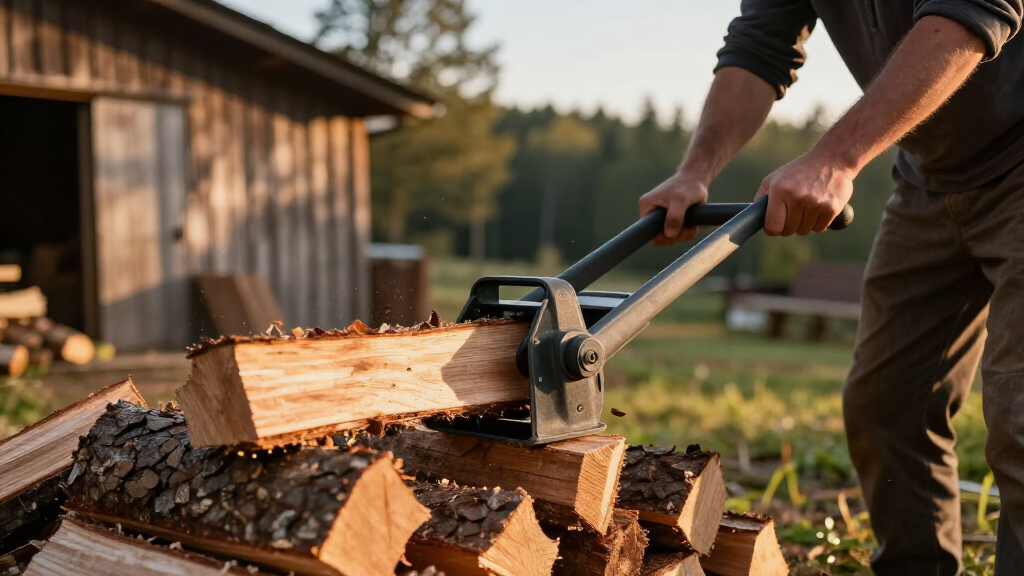
How We Picked
Since manual log splitters all solve the same basic problem, I focused on the differences that actually change the buying decision. The first criterion was splitting force and log capacity: a stationary kindling wedge and a slide hammer are fundamentally different tools, and I wanted the lineup to represent both approaches honestly.
Next I weighed build material and weight. Cast steel tolerates missed strikes and rough handling better than cast iron, and a heavier base means less jumping and walking during use, which matters more than most buyers expect. I also considered stability features, such as anchorable bases and mounting options, because an unsecured splitter is both frustrating and mildly hazardous.
Finally, I factored in portability, price, and ease of use, since several of these tools are aimed at campers and occasional users rather than dedicated firewood processors. Each pick was assigned a distinct role in the comparison so the ranking reflects who each tool serves best, not just a raw score. I did not personally test these units; rankings are based on specifications, construction details, and aggregated owner feedback.
| manual log splitter | Model | Material | Operation |
|---|---|---|---|
| KABIN Kindle Quick Log Splitte | KKQR1 | Cast steel | Manual, struck with mallet or hammer |
| Timber Tuff Manual Log Splitte | TMW-11 | Steel, powder coated | — |
| KABIN Kindle Quick Compact Log | — | Cast steel | Manual, struck with mallet or hammer |
| Kindling Splitter L | — | Cast iron | Manual, struck with hammer or mallet |
Factors to Consider When Choosing Manual Log Splitters
Manual log splitters look nearly identical in product photos, but the differences between them determine whether you will use yours for years or leave it in a shed. Here is what actually matters when choosing one.Stationary Wedge vs. Slide Hammer
These are the two core designs in the manual category, and they serve different jobs. A stationary wedge, like the three KABIN-style options above, holds the wood over a blade while you strike it with a mallet. This design excels at kindling, is very safe, and costs little, but you supply all the force with your arm. A slide hammer, like the Timber Tuff, drives a weighted mass down a shaft, which multiplies force and lets you split larger rounds without any swinging motion. If your wood is already bucked into rounds you need to open, choose the slide hammer; if you only make kindling, the wedge is simpler and cheaper.
Material: Cast Steel vs. Cast Iron
Both materials show up in this comparison, and the gap matters. Cast steel is more ductile, meaning it bends slightly rather than cracking when struck off-center or dropped on a cold morning. Cast iron is harder but more brittle, and repeated glancing blows can eventually chip or crack it, especially if left outside through freeze-thaw cycles. If you split wood weekly or work in a cold climate, cast steel is worth the premium. For a fireplace-only tool used gently, cast iron holds up fine.
Weight and Stability
Counterintuitively, a heavier manual splitter is usually better, at least for stationary wedges. A heavy base keeps the tool planted under repeated strikes, while a light one skitters across the patio and forces you to steady it with your foot near the blade. Lighter weights only win when portability is the priority, as with the compact KABIN for camping. Look for anchorable bases with bolt holes, since screwing a splitter to a stump transforms the experience for almost no cost.
Log Capacity and Blade Geometry
Check the mouth width and overall height before buying, because a log that does not fit is a log you cannot split. Wide mouths handle thicker billets, and taller bodies let you split longer pieces in one pass. Also consider the blade geometry: some wedges split cleanly while others tend to jam on stringy woods like elm. Reviews consistently mention jamming, so favor models described as jam-free if you split mixed hardwoods.
Safety Features and Accessories
Even without a swinging blade, these tools involve hammers and sharp wedges. A protective blade cover, like the one on the Kindling Splitter L, helps during storage. Check whether the package includes a mallet, since most stationary wedges do not, and budget a few dollars for a rubber mallet if needed. Always wear safety glasses, because chips and fragments do fly, and never strike a stationary wedge with a steel-faced hammer if the manufacturer specifies rubber.
Frequently Asked Questions
Can a manual log splitter handle large logs?
It depends on the design. Stationary wedge splitters, like the KABIN models and the Kindling Splitter L, are built primarily for kindling and smaller split pieces, so logs beyond roughly six to eight inches in diameter will frustrate you or simply not fit the mouth. The Timber Tuff slide hammer is the exception in this lineup, because its 8.8-pound sliding mass delivers concentrated force that can open larger rounds. Even so, no manual tool rivals a gas or electric hydraulic splitter for consistent large-log work. If most of your wood comes as big rounds, a manual splitter is a supplement, not a replacement, and you should set your expectations accordingly.
Do I need a mallet or hammer to use a manual log splitter?
For stationary wedge splitters, yes, and most of them do not include one, so factor a rubber mallet into your budget. A rubber mallet is preferable to a steel hammer because it protects the top of the wedge and reduces flying chips, and it is quieter on repeated strikes. The Timber Tuff slide hammer is the one exception in this comparison, since its sliding weight does the striking for you and no separate mallet is required. Whichever tool you use, wear safety glasses, because wood fragments and glancing strikes can send debris upward toward your face.
Are manual log splitters actually safer than axes?
Yes, and by a wide margin. With an axe or maul, your swing places a sharp blade in motion near your feet and legs, and fatigue leads to misses. With a stationary wedge, the blade never moves; you place the wood over it and strike downward with a blunt mallet, so your hands stay well away from the cutting edge, and the wood cannot kick back toward you the way it can with an axe. Slide hammers are similarly safe because both hands remain on the tool. Manual splitters are also popular with older users and teenagers for exactly this reason, though supervision and eye protection still apply.
How do I keep a stationary splitter from moving while I use it?
The simplest solution is to anchor the base, and several models in this comparison are designed for exactly that. Screw the splitter to a wide stump, a section of log, or a plywood board through the mounting holes, and the tool will stay planted through aggressive splitting. If you cannot anchor it, place it on a softer surface like grass or dirt rather than concrete, and steady the base with your foot well away from the blade. Heavier units like the 12-pound KABIN need less help than light ones, which is one reason I rank weight as a feature rather than a flaw for home use.
What kind of wood works best in a manual log splitter?
Dry, straight-grained softwoods and moderate hardwoods split easily, while green wood, frozen wood, and stringy species like elm or sycamore resist any manual tool. Seasoned wood splits far more readily than fresh-cut wood, so let rounds dry for a few months if you can. Knots are the other obstacle, because grain that changes direction will wedge itself against the blade and can jam the tool. For difficult species, the slide hammer design handles resistance better than a stationary wedge, since its concentrated impact can power through knots that would stop a mallet-driven splitter cold.
Conclusion
After comparing all four options, the right pick comes down to what you are splitting and where. For homeowners with a fireplace or wood stove, the KABIN Kindle Quick full-size model is the best all-around choice, with the weight and anchorable base that make weekly kindling sessions quick and frustration-free. For anyone splitting actual firewood rounds, the Timber Tuff slide hammer is the only tool here with the force to do the job, and its higher price buys real capacity rather than frills.
Campers and travelers should choose the compact KABIN Kindle Quick, which halves the weight while keeping the durable cast steel build, making it the clear pick when the splitter rides along in the car. Finally, budget buyers and occasional users who just want a few pieces of kindling per fire without swinging a hatchet will be well served by the Kindling Splitter L, as long as they treat it gently and accept that cast iron asks for more careful strikes than cast steel. Whatever you choose, anchor it, use a rubber mallet, and wear eye protection, and any of these tools will outlast the axe it replaces.
Fall yard work Picks
leaf blowers
As an affiliate, we earn on qualifying purchases.