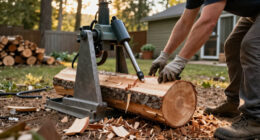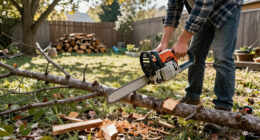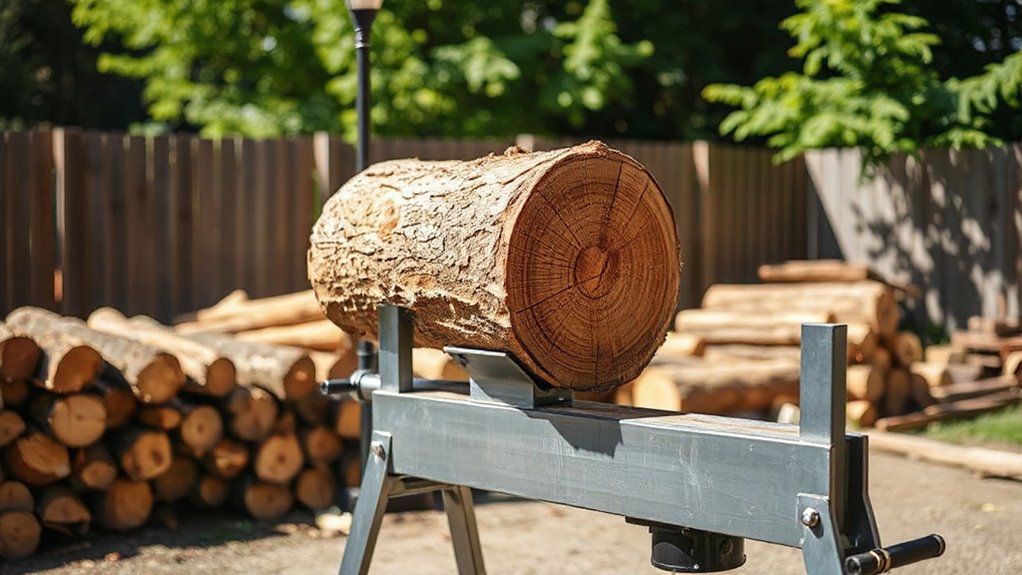

When searching for a log splitter with log lift, you want a machine that combines power, convenience, and safety. The 38 Ton Log Splitter with 306cc Full Boar OHV Engine stands out as the overall best due to its high splitting force and reliable engine. For those prioritizing versatility, the Superhandy 37 Ton Gas Powered Log Splitter offers both vertical and horizontal operation. The main challenge in this category is balancing raw power with ease of use, especially when lifting heavy logs. Continue reading to see how these options compare and find the best fit for your wood-splitting tasks.

Get business pricing on tools and workshop supplies
- Business-only prices and quantity discounts
- Tax-exempt purchasing
- Multiple users, one account, clear invoices
Complete the kit


Key Takeaways
- High-tonnage splitters generally provide faster and more efficient splitting but tend to be heavier and less portable.
- Log lift features add convenience but can sometimes increase machine complexity or cost.
- Vertical and horizontal operation options are crucial for handling logs of different sizes and reducing user strain.
- Engine size and power directly influence splitting speed and ability to handle tough wood types.
- Build quality and safety features vary, impacting durability and user confidence during operation.
| 38 Ton Log Splitter with 306cc Full Boar OHV Engine |  | Best Overall for Power and Durability | Engine: 306cc Full Boar OHV | Splitting Force: 38 tons | Cycle Time: 13.8 seconds | VIEW ON AMAZON | See Our Full Breakdown |
| Superhandy 37 Ton Gas Powered Log Splitter with Vertical/Horizontal Operation |  | Best for Versatility and Mobility | Engine: 389cc | Log Capacity: 24 inches diameter and length | Cycle Time: 16 seconds | VIEW ON AMAZON | See Our Full Breakdown |
| Titan Attachments 3 Point 25 Ton Hydraulic Log Splitter for Cat 1 Tractors |  | Best for Tractor Owners and Heavy-Duty Use | Splitting Force: 25 tons | Max Pressure: 2,500 PSI | Log Capacity: 25″ x 8.5″ | VIEW ON AMAZON | See Our Full Breakdown |
| 28 Ton Log Splitter with 212cc Full Boar Engine |  | Best for Speed and Efficiency | Engine: 212cc Full Boar OHV | Splitting Force: 28 tons | Cycle Time: 10.9 seconds | VIEW ON AMAZON | See Our Full Breakdown |
| 35 Ton Gas Log Splitter with 4-Way & 6-Way Wedges and Hydraulic Log Lift |  | Best for Commercial and Heavy-Duty Residential Use | Log Power: 35 Tons | Engine Displacement: 306cc | Blade Types: 4-Way, 6-Way | VIEW ON AMAZON | See Our Full Breakdown |
| 27-Ton Gas Firewood Processor with 739cc RATO Engine, Hydraulic Log Splitter, 20-Inch Chainsaw, 6-Way Wedge, Log Lifter & 3M Conveyor |  | Best for High-Volume, Commercial-Scale Firewood Processing | Splitting Force: 27 tons | Engine: 739cc RATO gasoline engine | Hydraulic Pump: 21 GPM | VIEW ON AMAZON | See Our Full Breakdown |
| 27-Ton Gas Firewood Processor with 739cc RATO Engine, Hydraulic Log Splitter, 20-Inch Chainsaw, 6-Way Wedge, Log Lifter & 118-Inch Conveyor | | Best for Large Log Handling and Efficiency for Commercial Use | Splitting Force: 27 tons | Engine: 739cc RATO gasoline engine | Hydraulic Pump: 21 GPM | VIEW ON AMAZON | See Our Full Breakdown |
| BILT HARD 27-Ton Towable Gas Powered Log Splitter with 209cc OHV Engine |  | Best for Versatile, On-the-Go Firewood Splitting | Engine: 209cc OHV | Splitting Force: 27 tons | Max Log Length: 24 inches | VIEW ON AMAZON | See Our Full Breakdown |
| log splitter with log lift | Engine | Splitting Force |
|---|---|---|
| 38 Ton Log Splitter with 306cc | 306cc Full Boar OHV | 38 tons |
| Superhandy 37 Ton Gas Powered | 389cc | — |
| Titan Attachments 3 Point 25 T | — | 25 tons |
| 28 Ton Log Splitter with 212cc | 212cc Full Boar OHV | 28 tons |
| 35 Ton Gas Log Splitter with 4 | — | — |
| 27-Ton Gas Firewood Processor | 739cc RATO gasoline engine | 27 tons |
| 27-Ton Gas Firewood Processor | 739cc RATO gasoline engine | 27 tons |
| BILT HARD 27-Ton Towable Gas P | 209cc OHV | 27 tons |
More Details on Our Top Picks
38 Ton Log Splitter with 306cc Full Boar OHV Engine
This model stands out for its combination of raw splitting force and fast cycle time, making it ideal for heavy-duty users who need quick, reliable results. Unlike the 28-ton model, the 38-ton splitter offers more muscle for tough hardwoods, but its increased weight and bulk could be a drawback for those with limited storage or mobility. The heavy-duty H-beam and internal hydraulic filter contribute to longevity, though maintenance is necessary to keep it running smoothly. This splitter is perfect for serious property owners or commercial operators who prioritize power and durability over portability.Pros:- Exceptional 38-ton splitting force for tough woods
- Fast cycle time of 13.8 seconds increases productivity
- Heavy-duty H-beam structure enhances stability and longevity
- Hydraulic oil filter inside reservoir protects internal components
Cons:- Heavy and bulky, challenging for transport and storage
- Requires regular hydraulic maintenance to sustain peak performance
Best for: Farmers and professional wood processors needing fast, heavy-duty splitting in a durable setup
Not ideal for: Home users with limited space or those who prefer lightweight, portable equipment
- Engine:306cc Full Boar OHV
- Splitting Force:38 tons
- Cycle Time:13.8 seconds
- Control Valve:Auto return with adjustable detent
- Structure:Heavy-duty H-beam
- Hydraulic Oil Filter:Mounted inside reservoir
Our verdict“This is best suited for users who need maximum power and durability despite the size and weight challenges.”
Superhandy 37 Ton Gas Powered Log Splitter with Vertical/Horizontal Operation
The Superhandy 37-ton splitter excels for users who need both vertical and horizontal splitting options, providing flexibility that the 28-ton model lacks. Its 389cc engine delivers ample power to handle sizable logs, and the quick conversion between modes saves time on changing setups. However, at over 600 pounds and with towability, it demands a robust vehicle for transport and ample storage space—potential barriers for casual users. Compared with smaller splitters, it offers superior capacity but sacrifices ease of handling. This makes it ideal for contractors or landowners who prioritize versatility and mobility over compactness.Pros:- Powerful 37-ton force for large logs
- Vertical and horizontal operation for versatile splitting
- Quick mode conversion enhances efficiency
- Towable design allows easy transport between sites
Cons:- Heavy weight requires strong towing vehicle
- Large footprint demands significant storage space
- High maintenance due to engine and hydraulic system
Best for: Landowners, contractors, or small commercial operations needing flexible, portable power for large logs
Not ideal for: Home users with limited storage or those seeking lightweight, easy-to-move equipment
- Engine:389cc
- Log Capacity:24 inches diameter and length
- Cycle Time:16 seconds
- Operation Modes:Vertical & Horizontal
- Weight:633 pounds
- Towable:Yes, with 2-inch ball coupler
Our verdict“This splitter suits those needing maximum versatility and mobility at the expense of size and weight.”
Titan Attachments 3 Point 25 Ton Hydraulic Log Splitter for Cat 1 Tractors
Compared to gas splitters like the Superhandy, this hydraulic splitter offers the advantage of tractor-powered strength, making it ideal for users with existing equipment. Its 25-ton force is sufficient for most hardwoods, and the horizontal/vertical options add versatility. The rugged steel construction promises longevity, but setup involves tractor compatibility and additional hydraulic connections, which could be complex for casual users. Heavy and requiring significant space, it’s best suited for those with a tractor and hydraulic setup who want a semi-permanent, powerful solution. It’s less convenient for users without tractor access or those seeking portability.Pros:- Powerful 25-ton force handles hardwoods
- Versatile horizontal and vertical modes
- Compatible with Cat 1 tractors for high-duty use
- Durable steel build for extended lifespan
Cons:- Heavy setup requiring tractor and hydraulic system
- No electric or battery options, less portable
- Installation and hookup can be complex
Best for: Tractor owners and landowners with hydraulic hookups needing serious splitting force
Not ideal for: Home users without tractors or those seeking portable, standalone splitters
- Splitting Force:25 tons
- Max Pressure:2,500 PSI
- Log Capacity:25″ x 8.5″
- Operation Modes:Horizontal & Vertical
- Compatibility:Cat 1 Tractors
- Hydraulic System:Single-cylinder with auto-return valve
Our verdict“This is an excellent choice for tractor owners seeking a high-capacity, semi-permanent splitter, not for casual or portable use.”
28 Ton Log Splitter with 212cc Full Boar Engine
The 28-ton model offers a quick cycle time of 10.9 seconds, making it a strong choice for users who prioritize efficiency over raw power. Its smaller 212cc engine still delivers excellent splitting force and durability, comparable to the 38-ton model but with a more manageable weight. It’s less powerful than the 38-ton splitter but offers a good balance of speed and strength for mid-sized logs. The hydraulic oil filter inside the reservoir adds to its durability, though its limited regional availability might be a concern. This pick is ideal for homeowners or small operations that want fast results without the bulk of a 38-ton machine.Pros:- Fast cycle time of 10.9 seconds improves workflow
- Reliable 28-ton force for medium-sized logs
- Durable heavy-duty H-beam structure
- Hydraulic oil filter inside reservoir enhances longevity
Cons:- Limited regional availability may restrict purchase
- Less power than larger splitters for very tough hardwoods
Best for: Homeowners needing quick, reliable splitting for moderate logs without excessive bulk
Not ideal for: Commercial operators or those handling very large or tough woods regularly
- Engine:212cc Full Boar OHV
- Splitting Force:28 tons
- Cycle Time:10.9 seconds
- Control Valve:Auto return with adjustable detent
- Structural Design:Heavy-duty H-beam
- Hydraulic Oil Filter:Mounted inside reservoir
Our verdict“Ideal for homeowners who value speed and efficiency in a more compact, manageable design.”
35 Ton Gas Log Splitter with 4-Way & 6-Way Wedges and Hydraulic Log Lift
This splitter offers a blend of power, versatility, and productivity, with interchangeable blades that speed up the process for different log types. Its hydraulic log lift reduces manual effort, a feature that the 28-ton model lacks, making it suitable for larger volumes or professional settings. The 35-ton force strikes a balance, while the durable box beam frame ensures stability during demanding tasks. However, its size and weight mean it’s less suitable for users with limited space or those seeking a lightweight option. It’s best for those who need high throughput and flexibility, especially in a commercial context.Pros:- Interchangeable 4-way and 6-way blades accelerate splitting
- Hydraulic log lift minimizes manual handling
- Heavy-duty box beam design for stability and durability
- Capable of handling logs up to 700 lbs
Cons:- Heavy and large, challenging to store or move
- Gas engine produces noise and emissions
- High maintenance for hydraulic and engine components
Best for: Landscapers, tree service professionals, or serious homeowners handling large volumes of firewood
Not ideal for: Casual users or those with limited storage and transportation options
- Log Power:35 Tons
- Engine Displacement:306cc
- Blade Types:4-Way, 6-Way
- Hydraulic Wedge Adjustment:3.55 inches
- Hydraulic Log Lift Capacity:700 lbs
- Log Tray Length:32 inches
Our verdict“This splitter makes the most sense for professionals or dedicated users seeking speed and versatility regardless of size and weight.”
27-Ton Gas Firewood Processor with 739cc RATO Engine, Hydraulic Log Splitter, 20-Inch Chainsaw, 6-Way Wedge, Log Lifter & 3M Conveyor
This heavy-duty firewood processor stands out for its exceptional 27-ton splitting power combined with an integrated hydraulic log lift, making it ideal for farms, ranches, or small businesses that need to process large quantities efficiently. Unlike the smaller, more portable options like the BILT HARD 27-Ton Towable, this model offers a robust 739cc engine and a 6-way wedge, significantly speeding up production. However, its weight of over 2,100 pounds and complex assembly mean it’s better suited for fixed installation rather than casual use. The included conveyor and chainsaw enhance workflow, but the size and setup requirements can be barriers for some users. Overall, this machine delivers unmatched power and durability for demanding firewood jobs, with tradeoffs in mobility and ease of setup.
Pros:- Exceptional 27-ton splitting force handles hardwood and softwood easily
- Integrated hydraulic log lift reduces manual labor significantly
- Includes a 20-inch chainsaw and adjustable conveyor for efficient workflow
- Heavy-duty construction ensures long-term durability
Cons:- Very heavy—about 2,100 pounds—requiring dedicated setup space
- Primarily designed for commercial or farm use, not portable
Best for: Businesses or serious firewood producers requiring high capacity and durability
Not ideal for: Homeowners with limited space or occasional firewood needs due to its heavy weight and complex setup
- Splitting Force:27 tons
- Engine:739cc RATO gasoline engine
- Hydraulic Pump:21 GPM
- Log Diameter Capacity:Up to 17.3 inches
- Log Length Capacity:Up to 22.8 inches
- Conveyor Length:118 inches
- Weight:Approximately 2,100 lbs
Our verdict“This processor is best for high-volume, professional firewood production where power and durability outweigh mobility concerns.”
27-Ton Gas Firewood Processor with 739cc RATO Engine, Hydraulic Log Splitter, 20-Inch Chainsaw, 6-Way Wedge, Log Lifter & 118-Inch Conveyor
Sharing core features with the previous model, this firewood processor specializes in handling large logs up to 17.3 inches in diameter with swift 13-second hydraulic cycles, making it suitable for busy farms or small-scale firewood operations. Its 27-ton splitting force is comparable to the earlier model, but this version emphasizes a streamlined design with a longer conveyor (118 inches), aiding in continuous workflow. While similar in power and durability, it’s slightly lighter at around 2,100 pounds, yet still requires multiple operators or equipment for mobility. Compared to the BILT HARD towable splitter, this model offers more stability and capacity but sacrifices portability, making it less suitable for casual or temporary setups.
Pros:- Powerful 27-ton splitting force suitable for hardwood and softwood
- Includes a hydraulic log lift and a long conveyor for efficient processing
- Heavy-duty steel build ensures long-lasting durability
- Capable of handling logs up to 17.3 inches in diameter
Cons:- Heavy (around 2,100 lbs), requiring proper setup and handling
- Limited portability makes it unsuitable for casual or temporary use
Best for: Farmers and small business owners who need efficient, large-log processing with continuous workflow
Not ideal for: Home users seeking a portable or lightweight log splitter for occasional use
- Splitting Force:27 tons
- Engine:739cc RATO gasoline engine
- Hydraulic Pump:21 GPM
- Max Log Diameter:17.3 inches
- Max Log Length:22.8 inches
- Chainsaw Size:20 inches
- Conveyor Length:118 inches
- Weight:Approximately 2,100 lbs
Our verdict“This model excels in high-volume firewood processing for commercial or farm environments where continuous operation is key.”
BILT HARD 27-Ton Towable Gas Powered Log Splitter with 209cc OHV Engine
Compared with the stationary models, the BILT HARD 27-Ton Towable offers impressive flexibility with its towable design, allowing users to transport it easily to different sites. Its 209cc OHV engine provides enough power for demanding jobs, and the hydraulic system’s quick 13-second cycle enhances productivity, especially for users needing mobility. The horizontal and vertical operation modes increase versatility, making it suitable for different log sizes and user preferences. However, at nearly 500 pounds, it’s still a heavy piece that requires assistance to set up, and it demands regular fuel and maintenance. For homeowners or small-scale firewood processors who want mobility without sacrificing power, this model offers a solid balance but is less suited for those who prefer a stationary, high-capacity setup.
Pros:- Powerful 27-ton splitting force suitable for large logs
- Towable with durable tires for easy transportation
- Horizontal and vertical operation for flexibility
- Quick hydraulic cycle improves efficiency
Cons:- Heavy (about 494 lbs), requiring help for setup
- Requires fuel and routine maintenance for optimal operation
- Large size may limit storage options
Best for: Homeowners or small-scale firewood processors needing a portable, towable splitter
Not ideal for: Large-scale commercial operations where stationary, high-capacity machines are more efficient
- Engine:209cc OHV
- Splitting Force:27 tons
- Max Log Length:24 inches
- Hydraulic Cycle Time:13 seconds
- Tire Size:16 inches DOT-approved
- Towing Hitch:2-inch ball
- Hydraulic Oil Capacity:6 gallons
- Pump Flow Rate:11 GPM
Our verdict“This splitter combines mobility and power, making it ideal for users needing on-site firewood processing with flexibility.”

How We Picked
I evaluated these products based on several key criteria: splitting power (tonnage), engine performance, ease of operation, safety features, and build quality. The presence of a log lift was a primary factor, but I also considered versatility, durability, and user-friendliness. Products were ranked to highlight a balance between raw power and practical features, ensuring options for different user needs. The top picks offer strong performance, reliable construction, and effective log lifting to make wood splitting safer and more manageable.Factors to Consider When Choosing Log Splitter With Log Lift
Choosing the right log splitter with log lift involves understanding several factors that impact performance and usability. Beyond raw power, features like operation modes, engine type, and safety considerations can make a big difference in your experience. Making the right choice depends on the types of logs you handle, your physical ability, and your budget. Here are key considerations to help you find the best machine for your needs.Tonnage and Power
The splitting capacity measured in tons indicates how well the machine can handle different wood sizes and densities. Higher tonnage splitters are better suited for tough, knotty logs, but they tend to be larger and more expensive. Lower-tonnage models are more portable and easier to operate but might struggle with dense wood. Consider your typical wood type and volume when choosing a power level to avoid overpaying or underperforming.
Operation Mode and Ease of Use
Vertical splitters are ideal for heavy or awkward logs, reducing user fatigue and improving safety. Horizontal models are typically more stable and faster for standard logs, especially when combined with a log lift. Some splitters offer both modes, adding flexibility but increasing complexity and cost. Think about your space, physical strength, and log sizes to pick an operation style that minimizes effort and maximizes productivity.
Engine Type and Maintenance
Gas engines are common for portable log splitters, providing good power but requiring regular maintenance and fueling. Electric models are quieter and cleaner but less powerful and suitable for smaller jobs. Consider engine size and quality, as more robust engines tend to last longer but come at a higher initial cost. Regular maintenance routines are essential to keep your splitter running smoothly over time.
Safety and Additional Features
Features like automatic return, safety guards, and easy-access controls enhance user safety and convenience. A log lift reduces the physical effort needed to position heavy logs, making it a worthwhile addition for long sessions. However, extra features can add to the price and complexity. Prioritize safety features, especially if you’re new to wood splitting or plan to use the machine frequently.
Build Quality and Durability
Durability depends on construction materials, weld quality, and component robustness. Heavy-duty steel frames and corrosion-resistant parts extend the lifespan of your splitter. Cheaper models may be tempting but often require more repairs or replacement sooner. Investing in a well-built machine ensures consistent performance and safety, especially when handling frequent or large-volume wood splitting.
Frequently Asked Questions
Is a log splitter with log lift worth the extra cost?
Yes, a log lift significantly reduces the physical effort required to position heavy logs, especially over extended use. It can improve safety by minimizing the risk of injury from lifting or dropping logs. While it adds to the initial cost, the convenience and reduced fatigue often justify the expense for frequent users or those with limited strength.
Can I use a gas-powered log splitter indoors?
Gas-powered splitters produce emissions and exhaust gases, making them unsuitable for indoor use without proper ventilation. Using a gas splitter indoors can pose health risks and safety hazards. For indoor or covered space operation, consider electric models that do not emit fumes and are safer for enclosed environments.
What maintenance is required for a log splitter with log lift?
Regular maintenance includes checking hydraulic fluid levels, inspecting and replacing hydraulic filters, lubricating moving parts, and ensuring engine components are clean and functioning. Proper maintenance extends the lifespan of the machine and keeps it operating efficiently. Always follow the manufacturer’s guidelines for specific service intervals and procedures.
How much space do I need to operate a log splitter with log lift?
The required space depends on the splitter’s size and operation mode. Horizontal models need sufficient clearance for logs and maneuvering, while vertical models require space for stability and safety. Ensure you have enough room for safe operation, including space behind and around the machine for loading and maintenance tasks.
Are multi-way wedges worth the extra cost?
Multi-way wedges can significantly speed up the splitting process by allowing multiple logs to be split at once, which is especially useful for large volumes. However, they tend to increase the machine’s cost and complexity. For casual or small-volume use, a standard wedge might suffice, but frequent users will benefit from the efficiency of multi-way wedges.
Conclusion
For most users seeking a powerful, reliable machine, the 38 Ton Log Splitter with 306cc Full Boar OHV Engine offers the best overall performance. Budget-conscious buyers or those handling smaller logs might prefer the BILT HARD 27-Ton Towable Gas Powered Log Splitter for its affordability and portability. First-time users or those with limited strength should consider models with vertical operation and easy controls. Premium buyers or professionals handling large volumes will benefit from high-tonnage splitters with multiple operation modes and durable construction. Ultimately, your choice depends on your specific wood-splitting needs, budget, and frequency of use.
As an affiliate, we earn on qualifying purchases.Black Friday Picks

Philips Hue Play Gradient Light Tube, Large, Black