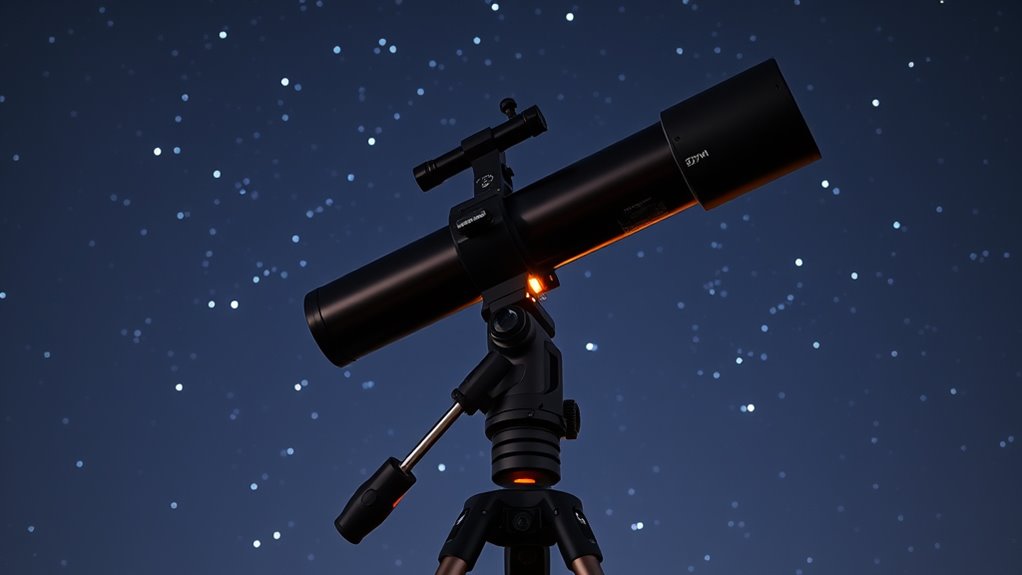

Choosing a motorized alt az mount as a beginner can feel overwhelming, with options ranging from versatile all-in-one systems to lightweight travel mounts. For those new to astronomy, the key is balancing ease of use with features that support learning and exploration. Among the top contenders are the Sky-Watcher AZ-EQ5, offering robust versatility but heavier setup; the portable AZ-GTI, which excels in mobility and remote control; and the Explore Scientific FirstLight Twilight Nano, perfect for travel and simple tracking. Each has unique tradeoffs, so understanding your observing goals and portability needs is essential.

Get business pricing on tools and workshop supplies
- Business-only prices and quantity discounts
- Tax-exempt purchasing
- Multiple users, one account, clear invoices
Complete the kit


Key Takeaways
- Versatility vs. portability: the AZ-EQ5 offers advanced features but is heavier, while the AZ-GTI and Twilight Nano prioritize lightweight design.
- Automation and control options vary greatly, with WiFi-enabled mounts like the AZ-GTI offering remote smartphone control, ideal for beginners wanting modern convenience.
- Payload capacity influences telescope choice; larger mounts like the AZ-EQ5 support heavier equipment, but lighter options suit small to medium telescopes or binoculars.
- Ease of setup and use differ, with simpler mounts like the Twilight Nano providing quick assembly for travel, whereas more complex mounts may require some learning.
- Price and durability are key: higher-end mounts tend to last longer and support more features, but budget-friendly options still deliver solid beginner performance.
| Sky-Watcher AZ-EQ5 Fully Computerized GoTo German Equatorial and Alt-Az Telescope Mount |  | Best Overall for Versatility and Precision | Modes: AZ, EQ, Dual-OTA | Payload Capacity: 30 lbs | Motor Type: Belt-driven stepper motors | VIEW ON AMAZON | See Our Full Breakdown |
| Sky-Watcher AZ-GTI Portable Computerized Alt-Az Mount with WiFi Control |  | Best for Portability and Modern Control | Weight: 8.6 lbs | Payload Capacity: 11 lbs | Height Range: 28 to 53 inches | VIEW ON AMAZON | See Our Full Breakdown |
| Explore Scientific FirstLight Twilight Nano Alt-Azimuth Mount & Stainless-Steel Tripod |  | Best for Travel and Simplicity | Supports Up To: 14 lb | Dovetail Saddle: Vixen-style | Tripod Material: Stainless steel | VIEW ON AMAZON | See Our Full Breakdown |
| Sky-Watcher AZ-GTi with SkyMax 127 – Modular Go-To Alt-Az Tracking Mount for Time-lapse and Panoramas – WiFi Enabled App Controlled |  | Best for Planetary and Lunar Observation on the Go | Weight: 8.6 pounds | Telescope: SkyMax 127mm Maksutov-Cassegrain | Payload Capacity: 11 pounds | VIEW ON AMAZON | See Our Full Breakdown |
| motorized alt az mounts for beginner | Payload Capacity | Weight |
|---|---|---|
| Sky-Watcher AZ-EQ5 Fully Compu | 30 lbs | — |
| Sky-Watcher AZ-GTI Portable Co | 11 lbs | 8.6 lbs |
| Explore Scientific FirstLight | — | — |
| Sky-Watcher AZ-GTi with SkyMax | 11 pounds | 8.6 pounds |
More Details on Our Top Picks
Sky-Watcher AZ-EQ5 Fully Computerized GoTo German Equatorial and Alt-Az Telescope Mount
The Sky-Watcher AZ-EQ5 stands out for its ability to switch between azimuth, equatorial, and dual-OTA modes, offering flexibility to beginners who want to explore different types of tracking. Its belt-driven stepper motors deliver incredibly smooth and quiet slewing, ideal for observing in quiet environments. While its all-metal construction suggests durability, this also makes the mount heavier, which could be a drawback for portable use. The SynScan hand controller with a 42,000-object database provides a strong foundation for learning star hopping and automation. Compared with simpler mounts, the AZ-EQ5 demands a steeper initial setup but rewards users with extensive capabilities, making it suitable for those who plan to grow in their astronomy journey.
Pros:- Versatile operation modes for different observing styles
- Quiet, smooth slewing with belt-driven motors
- Robust all-metal build ensures durability
- Extensive object database for deep sky exploration
Cons:- Heavy and less portable for frequent travel
- Setup complexity may challenge complete beginners
Best for: Beginners eager to learn advanced tracking and capable of handling heavier equipment
Not ideal for: Those seeking a lightweight, travel-friendly mount or absolute beginners wary of complex setup
- Modes:AZ, EQ, Dual-OTA
- Payload Capacity:30 lbs
- Motor Type:Belt-driven stepper motors
- Hand Controller:SynScan with 42,000+ object database
- Construction:All-metal
Our verdict“The AZ-EQ5 offers a compelling mix of versatility and durability, making it ideal for beginners ready to invest in a long-term, feature-rich mount.”
Sky-Watcher AZ-GTI Portable Computerized Alt-Az Mount with WiFi Control
The AZ-GTI is tailored for those who prioritize mobility and remote operation. Weighing just 8.6 pounds, it supports payloads up to 11 pounds, suitable for small telescopes or cameras. Its WiFi capability allows control via smartphone or tablet, making it very accessible for beginners who prefer modern interfaces. The dual encoders enable accurate tracking, although the mount’s limited payload means it’s best paired with lightweight gear. Its aluminum and brass gears ensure smooth motion but require an external power source for extended use, which could complicate setup for some users. Compared to bulkier mounts, this model simplifies travel and casual observing while offering solid tracking features.
Pros:- Lightweight and highly portable
- WiFi-enabled for remote smartphone or tablet control
- Supports astrophotography with time-lapse and panorama modes
- Durable all-metal gears for smooth tracking
Cons:- Limited payload capacity restricts larger telescopes
- Requires external power for longer sessions
- Setup may be complex for absolute beginners
Best for: Beginners interested in portable, app-controlled astronomy and astrophotography
Not ideal for: Users with larger telescopes or those needing high payload capacity
- Weight:8.6 lbs
- Payload Capacity:11 lbs
- Height Range:28 to 53 inches
- Power Options:AA batteries, 12V external input
- Material:Brass and aluminum gears
Our verdict“The AZ-GTI excels as an easy-to-transport, modern mount suited for beginners who want control at their fingertips with minimal setup burden.”
Explore Scientific FirstLight Twilight Nano Alt-Azimuth Mount & Stainless-Steel Tripod
The FirstLight Twilight Nano is perfect for beginners seeking a lightweight, straightforward alt-azimuth mount. Supporting telescopes up to 14 pounds, it features a collapsible stainless-steel tripod that simplifies transport. Its single-handle control makes tracking easy, especially for terrestrial or casual celestial viewing. While it’s quick to assemble and supports small telescopes well, it’s not designed for heavier or more precise equipment, limiting its longevity for advanced use. Its lack of tracking automation means users must manually follow objects, but for those who prioritize travel and quick setup, this mount offers excellent value.
Pros:- Lightweight and portable with quick setup
- Supports small telescopes up to 14 lbs
- Stable stainless-steel tripod
- Intuitive single-handle control
Cons:- Limited to light-duty use
- No automated tracking or GoTo functions
- Vibrations possible with heavier loads or precise instruments
Best for: Travelers, beginners, or those wanting an easy, manual tracking experience
Not ideal for: Users seeking automated tracking or supporting larger telescopes
- Supports Up To:14 lb
- Dovetail Saddle:Vixen-style
- Tripod Material:Stainless steel
- Tripod Height Range:25.5″-45″
- Tripod Legs Diameter:1.25″
Our verdict“The Twilight Nano provides a simple, travel-friendly solution for beginners who want quick setup and manual tracking without complexity.”
Sky-Watcher AZ-GTi with SkyMax 127 – Modular Go-To Alt-Az Tracking Mount for Time-lapse and Panoramas – WiFi Enabled App Controlled
This package combines the lightweight AZ-GTi mount with the SkyMax 127mm Maksutov-Cassegrain telescope, making it an excellent choice for beginners interested in planetary and lunar views. It supports payloads up to 11 pounds and features WiFi connectivity for easy app control, enabling time-lapse, panoramas, and smooth tracking. Its modular design allows for quick setup, but the limited payload and learning curve for app-based operation may challenge absolute newcomers. Compared to larger mounts, this combo emphasizes portability and modern control, ideal for travel and casual observing.
Pros:- Portable and lightweight for travel
- High-quality 127mm Maksutov for detailed planetary views
- WiFi and app control for modern operation
- Supports time-lapse and panorama modes
Cons:- Limited payload capacity for larger accessories
- Requires smartphone or tablet for full functionality
- Potential learning curve for beginners unfamiliar with app controls
Best for: Beginners wanting a portable, modern setup for planetary and lunar observing
Not ideal for: Those needing larger telescopes or more advanced tracking automation
- Weight:8.6 pounds
- Telescope:SkyMax 127mm Maksutov-Cassegrain
- Payload Capacity:11 pounds
- Control:WiFi-enabled, app controlled
- Features:Time-lapse and panorama mode, dual-encoder technology
Our verdict“This mount and telescope combo delivers an accessible, travel-ready package perfect for beginners focused on planetary detail and modern control.”

How We Picked
Our selection process focused on mounts specifically designed for beginners, emphasizing ease of use, affordability, and essential automation. We compared specifications like payload capacity, control options, portability, and build quality. Each mount was assessed for its suitability for entry-level astronomers, balancing features with potential complexity or weight. Our goal was to identify options that simplify star tracking while supporting future growth in astronomy skills.
Factors to Consider When Choosing Motorized Alt Az Mounts For Beginners
Selecting the right motorized alt az mount for a beginner involves balancing ease of use, portability, and future growth potential. Consider whether your priority is learning manual tracking, exploring astrophotography, or traveling with your gear. Automation features like WiFi control or GoTo capabilities can significantly reduce setup time and frustration, especially for newcomers. Additionally, payload capacity and mount weight influence which telescopes you can use and how easily you can transport your equipment. Keeping these factors in mind helps narrow down options that suit your specific observing style.Ease of Use and Automation
Beginners often benefit from mounts with simple controls and automation features such as GoTo or WiFi app control. These features help locate objects quickly and reduce the learning curve. Mounts like the AZ-GTI and Sky-Watcher AZ-GTi excel here, providing modern interfaces that simplify setup and operation. Conversely, manual or semi-automatic mounts require more initial effort but can foster a deeper understanding of star movement, which benefits those planning to advance in astronomy.
Portability and Size
For casual stargazing, travel, or field use, lightweight, compact mounts like the Twilight Nano or AZ-GTI are ideal. Heavy-duty mounts such as the AZ-EQ5, while more capable, are less practical for frequent transport. Consider your typical observing environment—if you plan to hike to darker sites or move your setup regularly, a smaller mount can make a significant difference in convenience.
Payload Capacity and Compatibility
Understanding your telescope’s weight is essential. Larger, more complex telescopes require mounts like the AZ-EQ5, which can support up to 30 pounds. For smaller scopes or binoculars, lighter mounts like the AZ-GTI or Twilight Nano are sufficient. Choosing a mount with adequate capacity prevents stability issues and allows room for accessories like cameras or filters.
Frequently Asked Questions
What is an alt az mount, and why is it suitable for beginners?
An alt az mount moves in altitude (up and down) and azimuth (side to side), mimicking natural movement and making it intuitive to learn. It is generally simpler to set up and operate than equatorial mounts, making it ideal for beginners who want straightforward tracking without complex alignment procedures. Automated models with GoTo or WiFi control further reduce the learning curve, allowing new astronomers to focus on observing rather than setup.
How important is payload capacity for a beginner mount?
Payload capacity determines how heavy a telescope or accessories you can attach without sacrificing stability or tracking accuracy. For beginners starting with small telescopes or binoculars, a mount supporting 10-15 pounds is typically sufficient. Investing in a mount with higher capacity, like the AZ-EQ5, provides room for future upgrades but may be heavier and more complex to handle initially. Matching your equipment weight to the mount’s capacity helps prevent vibrations and ensures smooth tracking.
Should I prioritize portability or advanced features?
This depends on your primary observing goals. If you plan to travel often or observe in different locations, portability becomes a key factor, favoring lightweight mounts like the AZ-GTI or Twilight Nano. If you’re interested in astrophotography or long-term tracking, investing in a more advanced mount like the AZ-EQ5 with comprehensive automation might be worth the extra effort and weight. For most beginners, a balance of features and portability offers the best starting point.
Can these mounts support astrophotography?
Many beginner mounts, especially those with GoTo and tracking automation, can support basic astrophotography, particularly with small or lightweight cameras and telescopes. The AZ-EQ5 and AZ-GTI models include features like dual encoders and WiFi control that aid in capturing steady images. However, more serious astrophotography typically requires mounts with higher stability, precise tracking, and often, equatorial configuration, which might be beyond the scope of entry-level systems.
What should I consider when choosing between a manual and automated mount?
Manual mounts are simpler and cheaper, ideal for beginners who want to learn the sky and develop their skills. Automated mounts with GoTo or WiFi control significantly reduce setup time, making it easier to find objects and enjoy observing without much fuss. If your goal is quick setup and more time observing rather than configuring your mount, automation features are highly beneficial, especially for those new to star tracking or astrophotography.
Conclusion
For absolute beginners who want straightforward operation and portability, the Twilight Nano offers quick setup and manual tracking without overwhelming complexity. Those interested in exploring astrophotography or advanced automation will find the AZ-GTI or AZ-EQ5 more suitable, despite their weight and setup demands. Travelers and casual observers should lean toward lightweight, app-controlled options, while those planning to grow into more serious astronomy might consider investing in a more capable, versatile mount like the AZ-EQ5. Ultimately, aligning your observing goals with the mount’s features will ensure a satisfying start in astronomy.
Halloween Picks
halloween
As an affiliate, we earn on qualifying purchases.