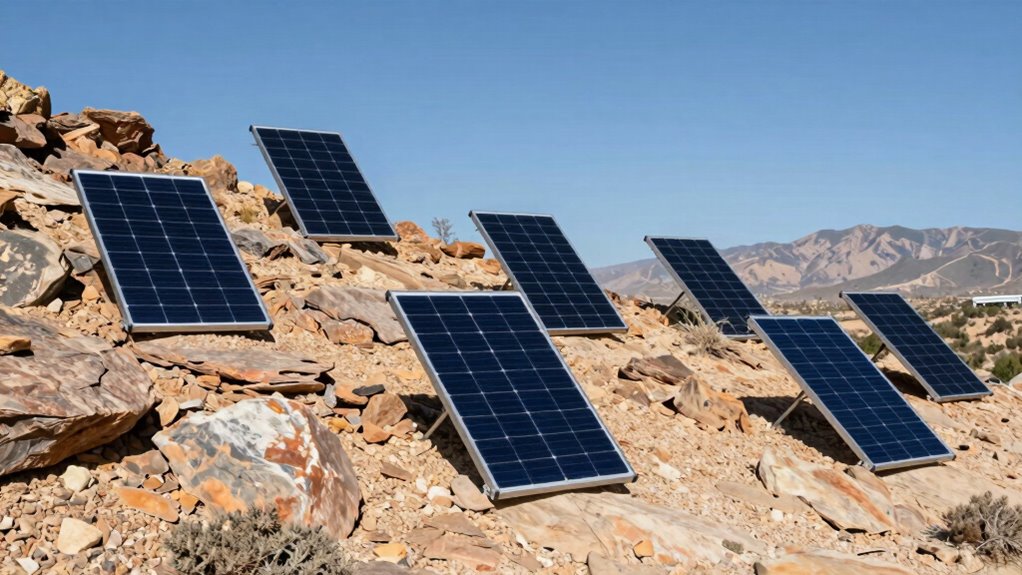
Shopping for a portable solar panel 600 watt setup in 2026 means sorting through panels that promise the same headline number but behave very differently in the field. Some deliver a true 600W in a single foldable briefcase; others hit 600W only by combining multiple panels in a kit. After comparing the current field, my top pick is the EYONGPV 600W Foldable Panel, which balances genuine 600W output, 26% cell efficiency, and a portable kickstand design better than anything else here. The DOKIO 600W Flexible Kit is my runner-up for anyone mounting panels permanently on an RV or boat roof, while the ZOUPW 480W bifacial panel earns a spot because its dual-sided design can close the gap to 600W in the right conditions — at a lower weight. The main tradeoffs you will need to weigh: single-panel portability versus multi-panel mounting flexibility, raw wattage versus efficiency per pound, and whether your setup lives outdoors full-time or only comes out on trips.

Get business pricing on tools and workshop supplies
- Business-only prices and quantity discounts
- Tax-exempt purchasing
- Multiple users, one account, clear invoices
Complete the kit


Key Takeaways
- A ‘600 watt’ label can mean one foldable panel or a six-panel kit — the EYONGPV and generic 600W panels are single units, while DOKIO reaches 600W by combining six 100W flexible panels.
- Bifacial designs like the ZOUPW 480W can generate up to 30% extra power from reflected light, effectively approaching 600W output without the full weight penalty.
- Expect 22.5 to 30.8 pounds across this category; every panel here trades backpacking portability for high output.
- Waterproof ratings matter for durability: IP68 (ZOUPW) and IP67 (PECRON) offer more confidence than IP65 (EYONGPV) for prolonged rain exposure.
- None of these panels store power — all five require a compatible power station, 12V battery bank, or off-grid system to be useful.


| portable solar panel 600 watt | Weight | Maximum Power | Cell Type | Efficiency |
|---|---|---|---|---|
| DOKIO 600W Flexible Solar Pane | — | — | — | — |
| EYONGPV 600W Foldable Solar Pa | 28.7 pounds | 600 watts | HPBC monocrystalline | 26% |
| ZOUPW 480W Bifacial Portable S | 22.5 lbs | 480 watts | N-Type 16BB monocrystalline | 25% |
| PECRON 500W Portable Foldable | 22.5 lbs | 500W | Monocrystalline silicon | — |
| Portable 600W Foldable Solar P | 30.8 pounds | — | — | 26% |
More Details on Our Top Picks
DOKIO 600W Flexible Solar Panel Kit (6-Pack, 100W Each, 18V, ETFE)
Unlike every other panel in this lineup, the DOKIO 600W kit is not something you fold up and carry — it is a mounting project that pays off with a cleaner, more permanent installation. Six individual 100W panels give you layout flexibility the single-unit options cannot match: I can picture these conforming to a curved boat hull or an RV roof with obstacles, thanks to the 30° bending arc on each panel. The ETFE coating is the same premium surface material EYONGPV uses, so light transmission and longevity are comparable despite the lower per-panel wattage.
The tradeoff is real, though. Where the EYONGPV or generic 600W foldables go from trunk to charging in minutes, this kit requires you to plan series or parallel wiring, ventilate the space beneath the panels, and avoid running cables underneath them — DOKIO is explicit that cables must not pass beneath the panels and that combustible mounting surfaces are off-limits. Compared with the PECRON 500W, you get 100 more watts but sacrifice the grab-and-go convenience entirely. This kit makes the most sense for a buyer who wants solar that lives on the vehicle, not in a gear closet. It is also the lightest path to a roof-mounted 600W array, since flexible panels weigh far less than rigid glass equivalents.
Pros:- True 600W total output that scales via series or parallel wiring
- 30° bending arc conforms to curved roofs and hulls where rigid panels fail
- Lightweight and far easier to handle than rigid glass panels
- Durable ETFE coating improves light transmission and lifespan
Cons:- Requires ventilation space and cannot be mounted on combustible materials
- Cables cannot be run beneath the panels, limiting installation layouts
- Permanent installation means no grab-and-go portability like foldable rivals
Best for: RV, boat, and trailer owners who want a permanently mounted 600W array on curved or uneven surfaces
Not ideal for: Campers who want a portable panel they can set up and pack away in minutes, or anyone unwilling to handle wiring and mounting themselves
- Total Power:600W
- Number of Panels:6 (100W each)
- Voltage:18V
- System Compatibility:12V
- Surface Material:ETFE
- Bending Arc:30°
- Connectors:MC4
- Wiring Options:Series or parallel
Our verdict“The strongest choice when 600W needs to live on a roof or hull rather than travel in a trunk, provided you accept the installation work involved.”
EYONGPV 600W Foldable Solar Panel, HPBC Portable Charger
The EYONGPV 600W takes my top spot because it delivers the headline wattage in a single foldable unit without the compromises that plague the competition. Its HPBC monocrystalline cells at 26% efficiency match the best conversion rate in this lineup, which means more of the sunlight hitting the panel becomes usable charge — a genuine advantage over the ZOUPW’s 25% and the PECRON’s 25.1% on cloudy or low-angle days. The book-style fold, built-in handles, and adjustable kickstands mean one person can position and reposition it to track the sun, something the DOKIO kit simply cannot do once mounted.
Connectivity is where this model pulls ahead of the generic 600W panel: instead of vague ‘universal compatibility,’ you get a concrete 30A Anderson output plus a 4.5m extension cable, which covers most large power stations and 12V systems without adapter hunting. The weaknesses are honest ones. At 28.7 pounds it is heavier than the ZOUPW and PECRON (both 22.5 lbs), so moving it between sites is a two-handed job rather than a casual carry. Its IP65 rating also sits below the IP67 and IP68 seals on those rivals — fine for rain splashes, but I would not leave it out in a sustained storm. And like every panel here, it is a charger, not a battery; without a compatible power station or 12V bank, the 600W output has nowhere to go.
Pros:- Genuine 600W output with class-leading 26% HPBC cell efficiency
- Foldable design with handles and adjustable kickstands for fast solo setup
- IP65 waterproofing and durable ETFE/EVA lamination for outdoor use
- 30A Anderson output and 4.5m cable provide broad, concrete compatibility
Cons:- At 28.7 pounds it is one of the heaviest panels in this comparison
- IP65 rating trails the IP67/IP68 sealing on rival models
- Requires a compatible power station, battery, or 12V system to deliver value
Best for: RV travelers and off-grid campers who want maximum real-world output from one foldable panel connected to a large power station
Not ideal for: Backpackers or anyone needing a panel that survives extended submersion-grade weather exposure without being brought inside
- Maximum Power:600 watts
- Cell Type:HPBC monocrystalline
- Efficiency:26%
- Output Port:30A Anderson
- Cable Length:4.5 m
- Waterproof Rating:IP65
- Construction:ETFE coating and EVA dual-layer lamination
- Dimensions:24.21 x 23.62 x 3.14 inches
- Weight:28.7 pounds
Our verdict“The most complete package here: true 600W, top-tier efficiency, and practical connectivity, offset only by its weight and mid-tier waterproofing.”
ZOUPW 480W Bifacial Portable Solar Panel, N-Type 16BB, for Power Stations
On paper, the ZOUPW 480W looks underpowered next to the two true 600W panels. In practice, its bifacial design captures reflected light on the rear side for up to 30% extra output, which means that over snow, sand, light-colored gravel, or a reflective surface, its effective production can approach the EYONGPV’s — while weighing 6 pounds less and carrying the best waterproofing in this lineup at IP68. Those 6 pounds matter more than they sound: this is the panel I would recommend to someone who moves camp frequently and feels the difference between 22.5 and 28.7 pounds on every trip.
The N-Type 16BB cells are a genuinely higher grade than standard monocrystalline, delivering 25% efficiency and better performance in heat — up to 140°F versus the EYONGPV’s 60°C ceiling. ZOUPW also bundles cables, a storage bag, and ground stakes, and backs the panel with a 36-month warranty, the only explicit warranty in this group. The catches: the manufacturer advises against long-term fixed installations and series/parallel connections, which rules it out for the DOKIO-style permanent-roof use case, and the enormous unfolded footprint (over 11 feet long) makes it awkward to site in tight campsites. Partial shading and dirt hit bifacial output harder than single-sided panels, so it rewards an owner who keeps it clean and repositions it through the day.
Pros:- Bifacial design delivers up to 30% extra power from reflected light
- Lightest panel per watt here at 22.5 lbs with 21.3 W/lb power density
- IP68 waterproofing and 140°F heat tolerance lead this lineup
- Includes cables, storage bag, ground stakes, and a 36-month warranty
Cons:- Not recommended for long-term fixed installation or series/parallel wiring
- Output drops noticeably under partial shading or dirty surfaces
- Oversized 138-inch unfolded footprint is hard to place in tight sites
Best for: Mobile campers and RV owners who want near-600W production at the lowest weight, especially over reflective ground like sand or snow
Not ideal for: Anyone wanting a permanently mounted array, or buyers in shaded, dirty, or cramped campsites where bifacial gains disappear
- Maximum Power:480 watts
- Cell Type:N-Type 16BB monocrystalline
- Efficiency:25%
- Weight:22.5 lbs
- Power Density:21.3 W/lb
- Waterproof Rating:IP68
- Upper Temperature Rating:140°F
- Warranty:36 months
Our verdict“The smart pick when weight and weather resistance matter more than the sticker wattage, provided you can give it reflective ground and regular attention.”
PECRON 500W Portable Foldable Monocrystalline Solar Panel
The PECRON 500W earns its place through out-of-box compatibility. While the EYONGPV leans on an Anderson connector and the generic 600W panel promises vague universal fit, PECRON ships with an MC4 extension cable and an MC4-to-XT60 adapter — the exact cable most portable power station owners need. If you already run a PECRON or similar station, this panel plugs in with zero extra purchases, which is a friction point the other options do not solve as cleanly.
Its 25.1% cell efficiency actually edges out the ZOUPW’s 25%, and the IP67 rating with a -10°C to +70°C operating range makes it the most temperature-flexible choice for winter camping or desert summers. The four-panel fold with a carry handle and kickstands matches the EYONGPV’s deployment experience at the same 22.5-pound weight as the ZOUPW. Where it falls short: 500W is 100W less than the top picks, so charging a very large station takes meaningfully longer, and the folded footprint is bulky relative to its weight — the panel is thick when closed and occupies real cargo space. PECRON also publishes no clear warranty terms, which contrasts poorly with ZOUPW’s 36-month coverage. This model is better suited to buyers who prioritize ecosystem fit and cable completeness over squeezing out maximum wattage.
Pros:- 25.1% efficient monocrystalline cells deliver fast large-station charging
- Included MC4 and MC4-to-XT60 cables fit most power stations out of the box
- IP67 waterproofing and a -10°C to +70°C range handle extreme climates
- Foldable, 22.5-lb design with carry handle and adjustable kickstands
Cons:- 500W output trails the true 600W panels by a meaningful margin
- Bulky folded footprint eats cargo space despite moderate weight
- No clearly stated price or warranty details from the manufacturer
Best for: Owners of MC4/XT60-based power stations who want plug-and-play charging without buying adapters
Not ideal for: Buyers chasing every last watt, or anyone who values a clearly documented warranty before spending this much
- Maximum Power:500W
- Cell Type:Monocrystalline silicon
- Cell Efficiency:25.1%
- Vmp:42.5V
- Waterproof Rating:IP67
- Operating Temperature:-10°C to +70°C
- Weight:22.5 lbs
- Included Accessories:MC4 extension cable, MC4-to-XT60 adapter, manual
Our verdict“The right call when connector compatibility and weather versatility top your list, as long as 500W is enough for your charging window.”
Portable 600W Foldable Solar Panel with 26% High Efficiency for Camping, RV, Marine, and Off-Grid Use
This unbranded 600W foldable matches the EYONGPV on the two headline specs — 600W output and 26% efficient HPBC cells — and typically undercuts it on price, which is why I include it as the value play. The ETFE surface carries a corrosion-resistant, self-cleaning coating that sheds dust and rain residue, a small but genuine quality-of-life feature for marine and dusty desert use, and its 185°F upper temperature rating beats every other panel here, including the ZOUPW’s 140°F.
Where it loses ground to the EYONGPV is specificity. ‘Universal compatibility with various connectors’ is not the same as a named 30A Anderson port and a 4.5m cable in the box, so I would confirm your power station’s input before ordering. At 30.8 pounds it is also the heaviest panel in this comparison — heavier than the EYONGPV despite near-identical folded dimensions — and the folding-and-connecting setup routine takes longer than the kickstand designs on the PECRON or ZOUPW. As a 36V, 17-amp panel, it is really aimed at large-capacity systems; pairing it with a small battery bank wastes its output ceiling. This pick makes the most sense for a budget-conscious buyer who verifies compatibility first and accepts a bit more bulk in exchange for top-tier wattage per dollar.
Pros:- Full 600W output with 26% high-efficiency HPBC cells
- Corrosion-resistant ETFE surface with self-cleaning properties
- Highest heat tolerance here at up to 185°F operating temperature
- Compact folded footprint relative to its output class
Cons:- Heaviest panel in this lineup at 30.8 pounds
- Connector compatibility is vague compared with named ports on rivals
- Folding and connection setup takes longer than kickstand-based designs
Best for: Budget-focused buyers with large power stations who want 600W and 26% efficiency at the lowest price
Not ideal for: Anyone who needs guaranteed connector fit out of the box, or buyers with smaller battery systems that cannot absorb 600W
- Power:600W
- Voltage:36V
- Efficiency:26%
- Maximum Output:17 amps
- Operating Temperature:up to 185°F
- Material:ETFE film surface
- Dimensions:24.2 x 23.6 x 3.2 inches
- Weight:30.8 pounds
Our verdict“A competitive wattage-per-dollar option that trades connector clarity and carry weight for headline specs that match panels costing more.”
How We Picked
Since a 600W-class panel is a serious investment, I judged each option against the criteria that actually determine satisfaction at this power level. Real output and cell efficiency came first: a 600W panel with 26% efficient HPBC cells will outperform a 600W panel with cheaper cells in the same afternoon sun, so I weighted conversion rates heavily. Form factor was the second filter, because this category splits between foldable briefcase-style panels you carry to a campsite and flexible kits you screw to a roof once and leave there — those serve completely different buyers. Weather resistance and build materials separated the contenders, with ETFE coatings, IP65–IP68 ratings, and operating temperature ranges compared directly. I also weighed included accessories and connector compatibility, since a 600W panel is useless if it does not mate with your power station or 12V system without buying extra adapters. Finally, I factored in weight and packed size per watt delivered, which is where bifacial and lower-wattage panels earn their place against full 600W units. No single product wins every category, and I have been explicit about where each one falls short.
| portable solar panel 600 watt | Cell Type | Waterproof Rating |
|---|---|---|
| DOKIO 600W Flexible Solar Pane | — | — |
| EYONGPV 600W Foldable Solar Pa | HPBC monocrystalline | IP65 |
| ZOUPW 480W Bifacial Portable S | N-Type 16BB monocrystalline | IP68 |
| PECRON 500W Portable Foldable | Monocrystalline silicon | IP67 |
| Portable 600W Foldable Solar P | — | — |
Factors to Consider When Choosing Portable Solar Panel 600 Watt
A 600W-class solar purchase goes wrong when buyers focus on the wattage label and ignore everything else that determines daily output. These are the factors I would weigh before clicking buy on any panel in this roundup.True 600W vs. Effective 600W
Only two panels here deliver 600W from a single unit. The DOKIO kit reaches 600W through six panels, and the ZOUPW’s 480W bifacial design can approach 600W only over reflective ground. None of these approaches is wrong, but you should know which one you are buying: single units are portable but heavy, kits are mountable but permanent, and bifacial panels are efficient but conditional. Match the approach to how you actually travel.
Cell Efficiency and Type
Efficiency ranges from 25% to 26% across this lineup, and the differences compound daily. Higher-efficiency HPBC and N-Type cells produce more power in early mornings, late afternoons, and overcast conditions — exactly when you need it most. If you camp in variable weather, I would prioritize the 26% panels (EYONGPV and the generic 600W) over saving a small amount on lower-efficiency options.
Weight and Packed Size
These panels span 22.5 to 30.8 pounds, and the packed footprint varies even more. The ZOUPW’s 138-inch unfolded length is a logistical challenge even though it weighs the least. Check both numbers against your storage space and how far you carry gear from vehicle to campsite — a panel you dread moving is a panel that stays packed.
Weatherproofing and Durability
IP ratings are not marketing fluff at this price. IP68 (ZOUPW) handles sustained wet weather best, IP67 (PECRON) follows closely, and IP65 (EYONGPV) covers splashes and light rain. ETFE surfaces across most of this lineup resist yellowing and scratching better than PET. Temperature ratings matter too if you camp in deserts or cold climates — the generic 600W panel’s 185°F ceiling is the most forgiving.
Connector Compatibility
Your panel must mate with your power station or battery bank. Anderson outputs, MC4 cables, and XT60 adapters are not interchangeable without extras. The PECRON is the standout for bundled cables, while the generic 600W panel requires verification before purchase. Always check your station’s maximum solar input voltage and amperage — a 36V, 17A panel can overwhelm a small unit.
Frequently Asked Questions
Will a 600W solar panel actually produce 600 watts?
Rarely, and you should plan around that. The 600W rating reflects output under standardized lab conditions — ideal sun angle, cool panel temperature, clean surface. In real-world use, expect 70–80% of rated output on a good sunny day, less in heat (panels lose efficiency as they warm) or when the sun is low. The efficiency ratings in this lineup matter exactly here: a 26% HPBC panel holds its output better through imperfect conditions than a cheaper cell at the same wattage. If your daily energy budget requires the full 600W, consider oversizing or planning a longer charging window rather than assuming peak output all day.
Can I use a 600W panel with any portable power station?
No, and this is the most common purchasing mistake at this power level. Every power station has a maximum solar input voltage and wattage it can accept, and exceeding the voltage limit can damage the unit. A 36V, 17A panel like the ones in this roundup pairs well with large 1000Wh-plus stations but can be problematic for smaller units. Check your station’s input specifications against the panel’s Vmp and amperage before buying. Connector type matters too — the EYONGPV’s Anderson plug, PECRON’s included XT60 adapter, and MC4 cables each fit different ecosystems, so factor in any adapters you would need to purchase separately.
Is a flexible panel kit better than a foldable panel?
It depends entirely on whether your solar travels or lives in one place. The DOKIO flexible kit is designed to be mounted once on an RV roof, boat deck, or trailer and left there — it offers a cleaner installation and conforms to curved surfaces, but it involves real mounting and wiring work and offers no portability. Foldable panels like the EYONGPV or PECRON deploy in minutes and can track the sun by repositioning, which actually boosts daily harvest, but they take up cargo space and require setup each time. Campers who move frequently usually prefer foldables; full-time RVers and boaters typically prefer mounted kits.
Are bifacial panels like the ZOUPW worth it over standard panels?
Bifacial panels earn their premium only under specific conditions. The ZOUPW captures reflected light on its rear face, generating up to 30% extra output — but only when there is a reflective surface below, such as snow, sand, pale gravel, or water. Over grass or dark soil, the gain shrinks considerably. Bifacial panels are also more sensitive to shading and surface dirt, and the ZOUPW specifically is not recommended for permanent installation or series/parallel wiring. If you camp in bright, reflective environments and can reposition the panel through the day, bifacial is a genuine advantage; otherwise a conventional 600W panel is the more predictable choice.
Do I need to clean and maintain these solar panels?
Yes, and maintenance has a measurable effect on output. Dust, pollen, bird droppings, and road grime can cut production by 5–15%, and the panels most affected are those left flat or mounted permanently, like the DOKIO kit on an RV roof. A rinse with water and a soft brush every few weeks is usually enough; avoid abrasive cleaners that can scratch the surface coating. The generic 600W panel’s self-cleaning ETFE coating helps rain rinse debris away, which reduces — but does not eliminate — the chore. Foldable panels stored between trips generally stay cleaner since they are only exposed during use, but check the surface before each deployment.
Conclusion
After comparing all five options, my recommendations break down cleanly by buyer type. If you want the best all-around 600W portable panel, the EYONGPV 600W is my top pick — it pairs genuine output with 26% efficiency, a defined Anderson connectivity path, and a practical kickstand design, and its weight and IP65 rating are acceptable tradeoffs for most campers and RV travelers. RV, boat, and trailer owners doing a permanent installation should choose the DOKIO 600W flexible kit instead, accepting the wiring and mounting work in exchange for a clean, curved-surface-ready array. Weight-conscious mobile campers, especially those traveling over sand or snow, will get more from the ZOUPW 480W bifacial, whose reflected-light gains and IP68 sealing offset its lower sticker wattage. If you already own an MC4/XT60-based power station and want zero adapter friction, the PECRON 500W is the pragmatic choice. Finally, budget-focused buyers with large stations who verify connector compatibility first will find the generic 600W foldable delivers the strongest wattage-per-dollar in the group. Whatever you choose, remember that none of these panels store energy — budget for a capable power station or battery bank to make that 600W actually work for you.
Fall Picks
fall essentials
As an affiliate, we earn on qualifying purchases.