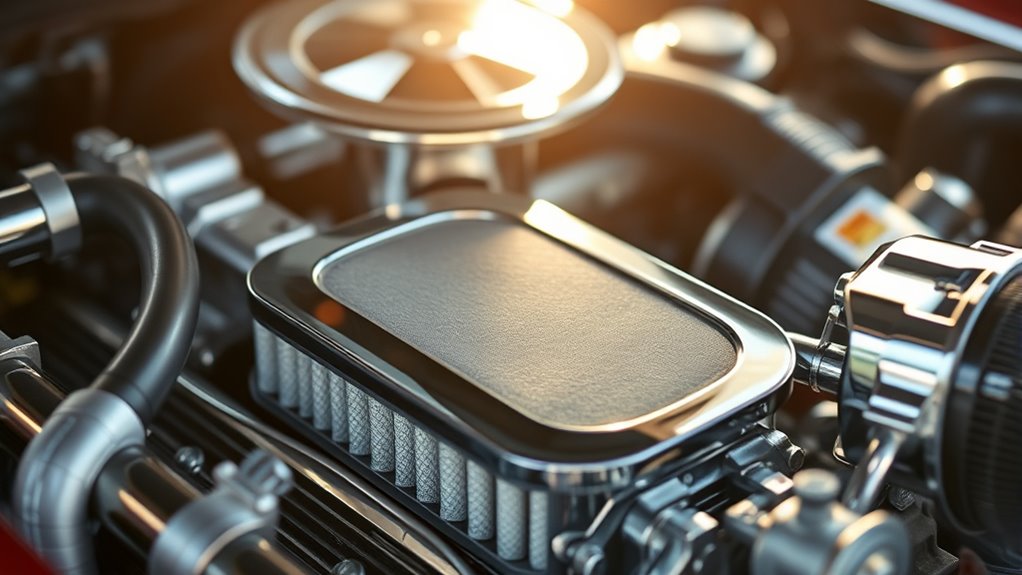

Keeping your filters clean is key to extending your engine’s life and maintaining ideal performance. Regularly check and replace filters for air, oil, and fuel to prevent dirt and debris from causing engine wear, overheating, and reduced efficiency. When filters are dirty or clogged, they restrict airflow and fluid flow, leading to more engine strain and potential damage. Continuing with proper maintenance can save you costly repairs and improve your vehicle’s reliability over time.
Key Takeaways
- Regularly inspect and replace filters to prevent dirt buildup that can cause engine wear and damage.
- Use high-quality, manufacturer-recommended filters to ensure optimal filtration and protection of engine components.
- Maintaining clean filters improves airflow, fuel efficiency, and overall engine performance, reducing stress on engine parts.
- Schedule routine maintenance intervals, especially in dusty environments, to keep filters and engine components in top condition.
- Proper filter maintenance minimizes contaminants circulating in the engine, extending its lifespan and reducing costly repairs.
Understanding the Role of Filters in Your Engine

Filters play an essential role in keeping your engine running smoothly by removing dirt, debris, and other contaminants from critical fluids. When these particles enter your engine, they can cause wear, reduce efficiency, and lead to costly repairs. By trapping contaminants before they reach sensitive components, filters help maintain ideal performance and extend your engine’s lifespan. Regularly checking and replacing filters ensures that clean fluids circulate through your engine, preventing buildup that can clog passages or damage parts. Without effective filtration, dirt and debris can accelerate engine wear and cause breakdowns. Understanding the importance of filters means you’re taking proactive steps to protect your engine, ensuring it runs reliably and efficiently for miles to come. High-quality filters are designed to maximize filtration efficiency and durability, further safeguarding your engine’s health. Clean filters are a simple yet crucial part of vehicle maintenance.
Types of Filters and Their Functions
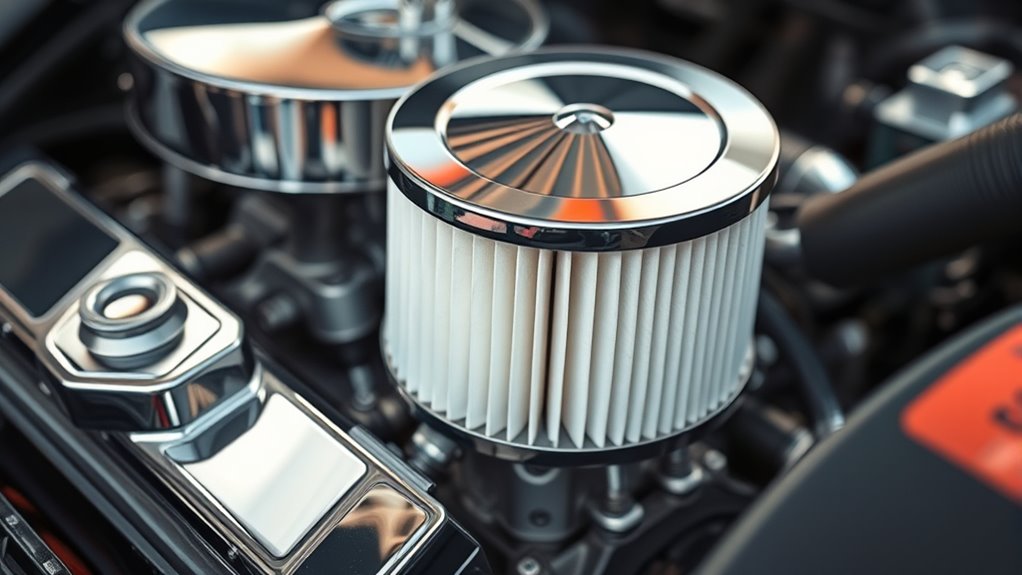
Have you ever wondered how different filters work together to keep your engine running smoothly? Your engine uses several filter types, each with a specific job. Air filters trap dust, dirt, and debris before they enter the engine, preventing damage and guaranteeing efficient combustion. Oil filters remove contaminants from the oil, keeping the lubrication clean and reducing wear on engine parts. Fuel filters screen out dirt, rust, and debris from the fuel, guaranteeing proper fuel flow and combustion. Some engines also use cabin air filters to improve air quality inside your vehicle. Each filter is designed for a particular fluid or air system, working in harmony to protect your engine and optimize performance. Proper filter maintenance is crucial for extending engine life and ensuring optimal operation. Additionally, using the correct filter type and ensuring they are properly installed can significantly impact overall engine durability and efficiency. Regular inspections and timely replacements help prevent potential engine damage caused by contaminants, ultimately contributing to a longer engine lifespan. Regularly checking and replacing filters at recommended intervals also helps maintain the cleanliness of engine components, reducing the risk of costly repairs.
Signs That Your Filters Need Replacing
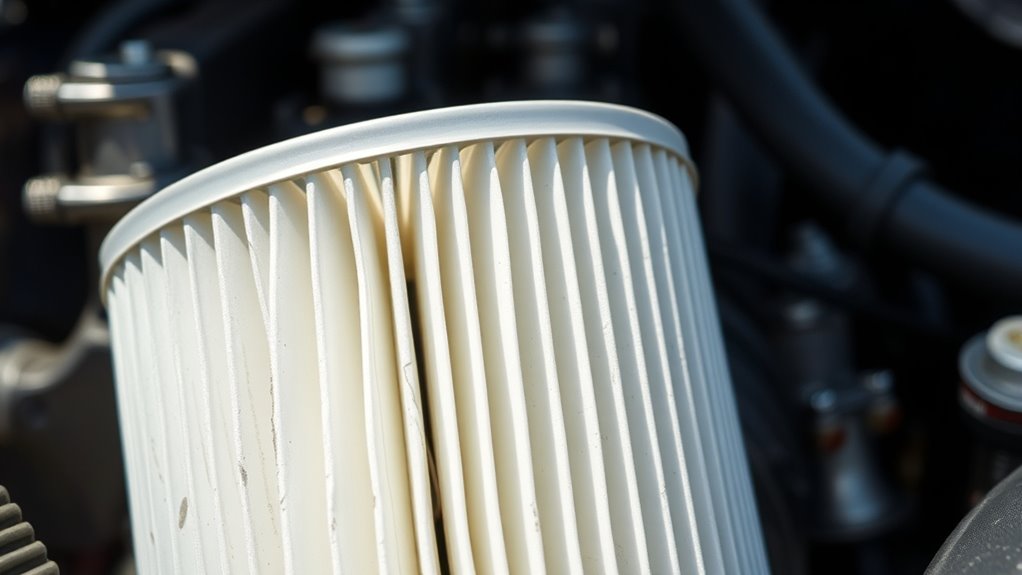
As your vehicle relies on different filters to keep the engine running smoothly, noticing when these filters start to fail is key to maintaining peak performance. Here are four signs that your filters need replacing:
- Reduced engine power or acceleration
- Unusual noises from the engine area
- Decreased fuel efficiency
- Visible dirt or debris around filter housing
If you experience any of these, it’s a clear indicator that your filters are no longer doing their job effectively. Regular checks and timely replacements are essential to extend your engine’s lifespan and ensure prime performance. Proper filter maintenance can help prevent issues caused by dirt and debris buildup, ensuring your engine remains in optimal condition. Being aware of filter lifespan and replacing filters at recommended intervals is also crucial for avoiding unexpected breakdowns. Additionally, understanding currency fluctuations and their impact on vehicle costs can help you budget for replacements more effectively. Upgrading to high-quality filters can further enhance engine protection and overall reliability.
How Dirty Filters Impact Engine Performance
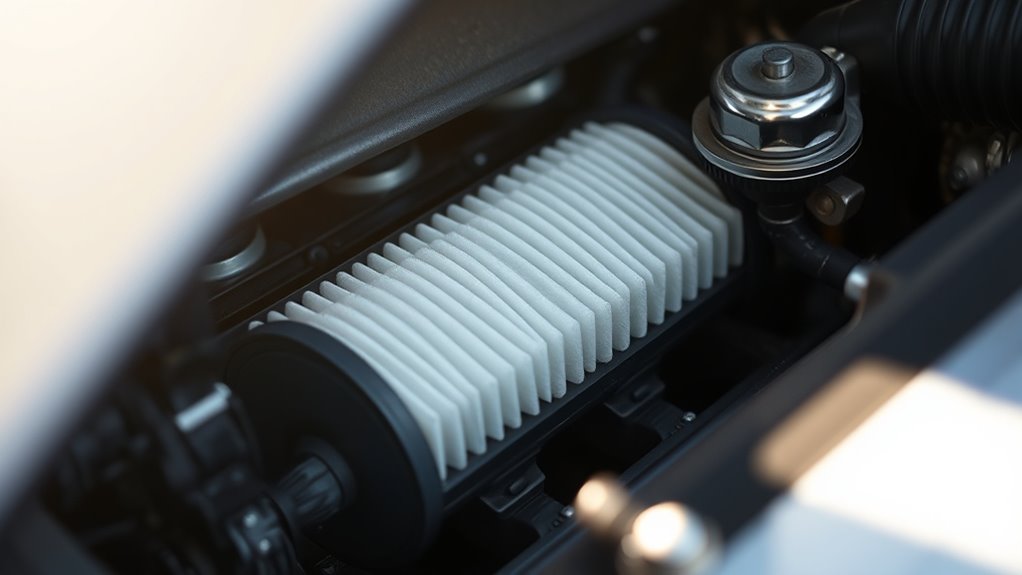
When filters become dirty, they restrict the flow of air, fuel, or oil to your engine, which can considerably decrease its efficiency. With limited airflow, your engine has to work harder to perform, leading to reduced power and sluggish acceleration. Dirty filters also cause improper fuel combustion, resulting in lower fuel economy and increased emissions. Over time, the strain from restricted oil flow can cause excessive engine wear and overheating. You might notice your engine running rough or stalling more often. Additionally, contaminants trapped in dirty filters can circulate through your engine, causing damage to crucial components. Regular maintenance of filters can prevent engine damage and ensure optimal performance. Moreover, dirty filters can contribute to increased emissions, impacting both vehicle performance and environmental health. Understanding filter maintenance is essential for prolonging your engine’s lifespan and maintaining efficiency. Overall, neglecting filter maintenance impacts your engine’s performance, making it less responsive, more fuel-consuming, and more prone to breakdowns. Keeping filters clean ensures ideal engine function and longevity.
Best Practices for Regular Filter Maintenance

To keep your engine running smoothly, make sure you schedule regular inspections of your filters. Replace them promptly when they’re dirty or worn out, and always use the correct filter type for your vehicle. Automation in business can facilitate timely maintenance reminders and streamline scheduling processes. Consistent maintenance like this helps prevent damage and extends your engine’s lifespan. Embracing preventive care is essential for maintaining optimal performance over time. Additionally, upgrading to high-quality filters can further enhance your vehicle’s tuning and reliability. Recognizing the significance of angel numbers can also inspire you to stay attentive to signs of upcoming changes or opportunities in your vehicle maintenance routine and strengthen your overall love and relationships with your vehicle as a trusted companion.
Schedule Routine Inspections
How often should you schedule routine inspections for your engine’s filters? You should check them at least every 3,000 to 5,000 miles, or more frequently if you operate in dusty environments. Regular inspections help catch issues early, preventing damage and extending filter life. To stay on top of maintenance, consider these key steps:
- Visual Check: Look for dirt, debris, or damage that could impair performance.
- Monitor Performance: Notice any drops in engine efficiency or unusual noises.
- Check Filter Condition: Ensure filters aren’t clogged or excessively worn.
- Document Inspections: Keep a record to track when inspections and maintenance are due.
Following this routine guarantees your filters stay clean and your engine runs smoothly longer.
Replace Filters Promptly
Ever wondered why timely filter replacement is essential for your engine’s health? Dirty or clogged filters restrict airflow and cause your engine to work harder, leading to increased wear and potential damage. By replacing filters promptly, you guarantee your engine receives clean air and fluids, which maintains peak performance. Delaying replacements allows dirt and debris to build up, reducing fuel efficiency and accelerating component wear. Regularly checking your filters and swapping them out at recommended intervals keeps your engine running smoothly and extends its lifespan. Don’t wait for performance issues to arise; proactive filter replacement is a simple yet effective step to safeguard your engine’s longevity. Remember, clean filters are your engine’s first line of defense against unnecessary strain and damage.
Use Correct Filter Types
Using the correct filter types is key to maintaining ideal engine performance and avoiding unnecessary repairs. Choosing the right filter ensures maximum airflow and protects engine components from dirt and debris. Here are four essential tips:
- Match the filter to your engine’s specifications—using the wrong type can reduce efficiency.
- Opt for high-quality filters designed for your vehicle’s make and model.
- Avoid generic filters that might not filter effectively or fit properly.
- Consult your owner’s manual for recommended filter types and change intervals.
Step-by-Step Guide to Replacing Your Filters
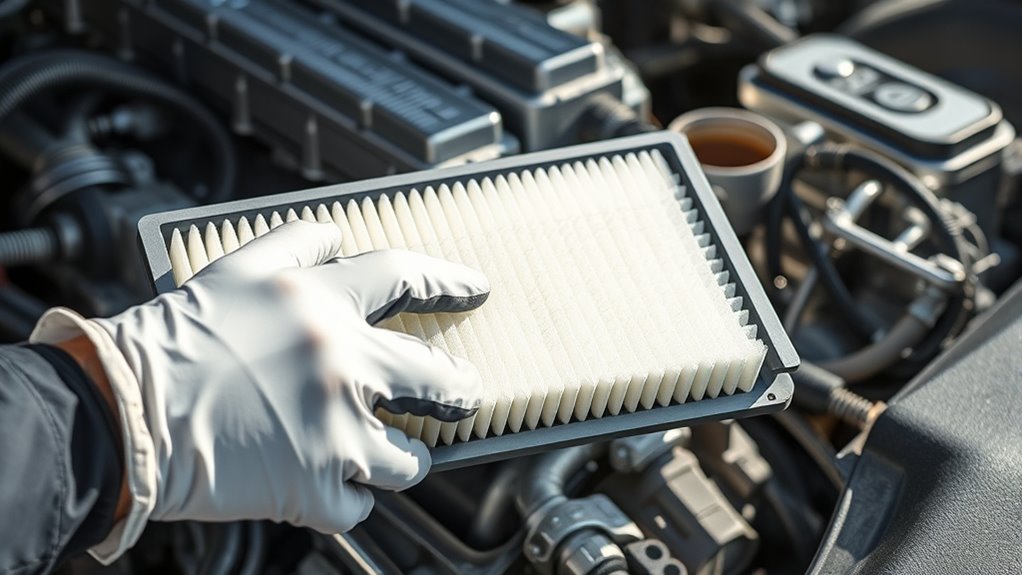
To replace your filters properly, start by gathering the necessary tools to make the process smooth. Next, locate the filters in your engine and carefully remove the old ones. Finally, install the new filters and run a quick test to guarantee everything is working correctly.
Gather Necessary Tools
Before you start replacing your filters, acquiring all the tools you’ll need to complete the job efficiently is essential. Having the right tools on hand prevents delays and makes the process smoother. Here are four essentials you should gather:
- Screwdriver (flathead or Phillips, depending on your filter housing)
- Socket wrench set
- Clean rags or paper towels
- Gloves to protect your hands from dirt and debris
Make sure your tools are in good condition and compatible with your vehicle. Having everything ready before you begin helps you stay organized and minimizes interruptions. Keep these tools nearby so you can work confidently and efficiently, ensuring your filter replacement goes smoothly and your engine gets the care it needs.
Locate and Remove Old Filters
Locating and removing the old filters is a straightforward process that sets the stage for a successful replacement. Start by consulting your vehicle’s manual to identify the filter’s exact location. Typically, filters are found near the engine, often behind accessible panels or covers. Once located, turn off the engine and ensure it’s cool to prevent burns. Carefully remove any covers or protective shields blocking access. Use your hands or tools to loosen and take out the filter, being mindful not to damage surrounding components. Take note of how the filter sits and its orientation. Dispose of the old filter properly, following local regulations. Removing the old filter carefully ensures a clean workspace and prepares you for the next step: installing the new filter.
Install and Test New Filters
Are you ready to install your new filter and guarantee your vehicle runs smoothly? Follow these steps to verify proper installation and testing:
- Carefully insert the new filter into its housing, making sure it fits snugly.
- Secure the filter with any clips or covers, tightening them properly.
- Start your engine and let it run for a few minutes, checking for leaks or unusual noises.
- Turn off the engine and inspect the filter area for any signs of leakage or looseness.
Tips for Choosing Quality Replacement Filters
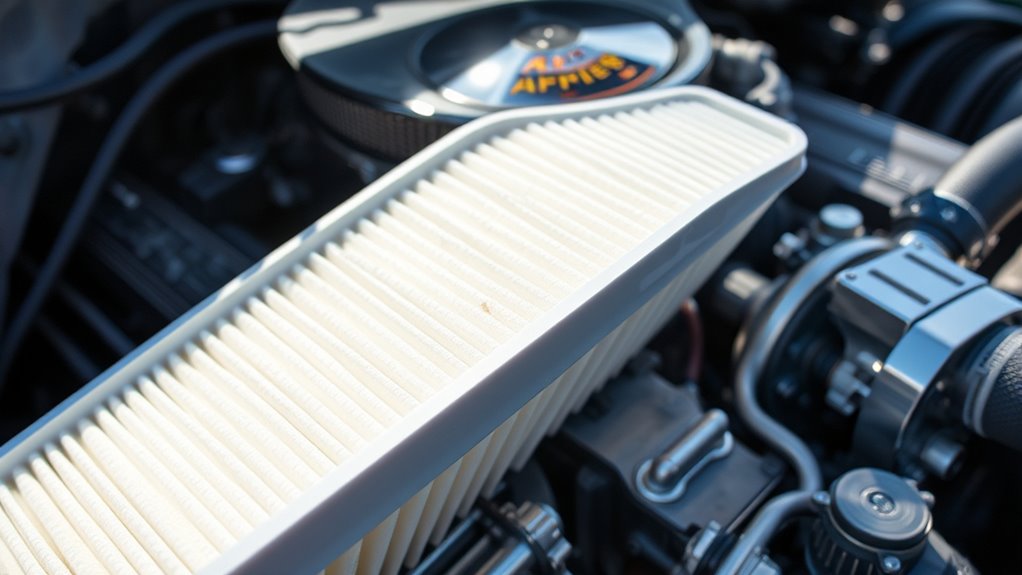
Choosing the right replacement filters is essential for maintaining your engine’s performance and longevity. Start by checking your vehicle’s manual for the exact filter specifications and size. Opt for filters from reputable brands known for quality and durability; cheap, off-brand filters often don’t meet standards and can cause damage. Look for filters with high-quality media that trap dirt without restricting airflow, ensuring your engine runs smoothly. Consider filters with a good seal to prevent leaks and unfiltered air from entering. Read reviews and ask for recommendations from trusted mechanics to find reliable options. Ultimately, avoid overly cheap filters, as they tend to wear out faster and may compromise your engine’s health. Prioritizing quality ensures your engine stays cleaner and runs more efficiently.
The Long-Term Benefits of Maintaining Clean Filters
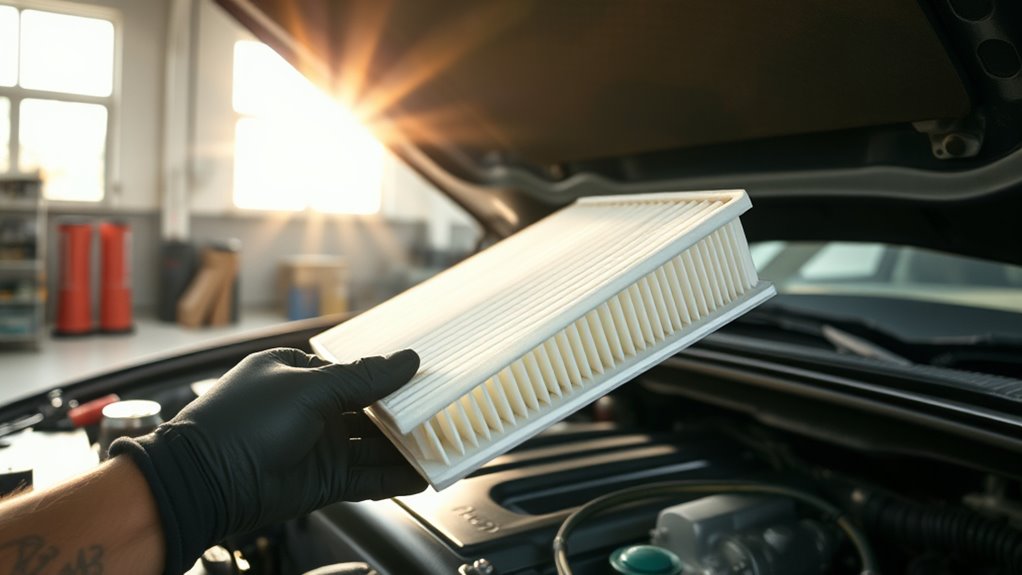
Have you ever considered how maintaining clean filters can considerably extend your engine’s lifespan? When filters stay clean, your engine operates more efficiently and faces less wear and tear. This leads to several long-term benefits:
- Reduced engine wear and fewer repairs over time
- Improved fuel efficiency, saving you money
- Longer intervals between filter replacements
- Enhanced overall engine performance and reliability
Keeping filters clean prevents dirt and debris from clogging essential components, which can cause overheating or damage. Consistent maintenance ensures your engine runs smoothly and lasts longer. By investing a little time in regular filter checks and replacements, you set yourself up for fewer breakdowns and lower maintenance costs in the future. Clean filters are a simple, effective way to extend your engine’s life and maximize its performance.
Frequently Asked Questions
How Do Filters Affect Overall Engine Fuel Efficiency?
Filters play a vital role in your engine’s fuel efficiency. When filters are clean, they guarantee proper airflow and fuel combustion, helping your engine run smoothly. Dirty or clogged filters restrict airflow, causing your engine to work harder and consume more fuel. Regularly replacing or cleaning filters keeps your engine optimized, saving you money on fuel and reducing emissions. So, maintaining clean filters directly boosts your vehicle’s overall fuel efficiency.
Can Using Aftermarket Filters Damage My Engine?
Think of your engine as a delicate garden; using the right filters helps it thrive. While aftermarket filters can sometimes fit poorly or restrict airflow, causing potential damage, many high-quality ones are designed to meet or exceed OEM standards. If you choose reputable brands and replace filters regularly, you’re unlikely to harm your engine. Just avoid cheap, poorly made filters that might clog or let debris through.
Are There Eco-Friendly Filter Options Available?
You’re wondering if eco-friendly filter options exist. Yes, they do! Many brands now offer filters made from sustainable or biodegradable materials, reducing environmental impact. These filters work just as well as traditional ones, helping you maintain engine performance while being kinder to the planet. When choosing eco-friendly filters, look for certifications or labels indicating environmental benefits, and verify they’re compatible with your vehicle to keep everything running smoothly.
How Often Should Filters Be Checked in Extreme Climates?
In extreme climates, you should check your filters more frequently than usual. Hot, cold, or dusty environments accelerate dirt buildup, so inspect filters at least every 1 to 2 months. If you notice reduced airflow or increased engine strain, replace or clean the filters immediately. Regular inspections help prevent damage, guarantee ideal engine performance, and extend the lifespan of your engine, especially in challenging weather conditions.
Do High-Performance Filters Require Different Maintenance?
You might wonder if high-performance filters need different maintenance. Generally, yes, they often require more frequent checks and replacements because they trap more contaminants and operate under demanding conditions. You should follow the manufacturer’s guidelines, inspect them regularly, and clean or replace them as needed to guarantee peak engine performance. Neglecting these filters can lead to reduced efficiency and potential engine damage over time.
Conclusion
By keeping your filters spotless, you’re not just maintaining your engine—you’re revealing a secret superpower that could make your vehicle last for eternity! Imagine your engine running so smoothly, it could outrun a cheetah or sail forever without a hitch. Don’t underestimate the power of clean filters; they’re the tiny heroes fighting off dirt and grime, saving your engine from a fiery doom. Stay vigilant, stay clean, and watch your engine become unstoppable!