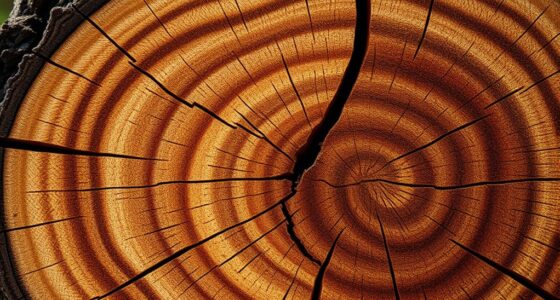
When deciding whether to split or save burl wood, consider its size, condition, and your intended project. Large or flawed burls are better split to reveal stunning patterns and remove weak areas, while smaller or healthy burls are great to keep intact for maximum visual impact. Saving the whole burl supports sustainable practices and preserves nature’s artistry. If you want to make more informed choices, there’s more to explore about how to handle burl wood effectively.

Get business pricing on tools and workshop supplies
- Business-only prices and quantity discounts
- Tax-exempt purchasing
- Multiple users, one account, clear invoices
Key Takeaways
- Consider the size and condition of the burl to determine if splitting is necessary for manageability or flaw removal.
- Saving the whole burl preserves its full visual impact and intricate grain patterns for aesthetic appeal.
- Splitting is ideal when the burl contains internal flaws or is too large for practical use in projects.
- Focus on your intended use—decorative, artistic, or functional—to decide whether to split or preserve the entire burl.
- Prioritize sustainable harvesting practices by minimally processing the burl to support environmental conservation.
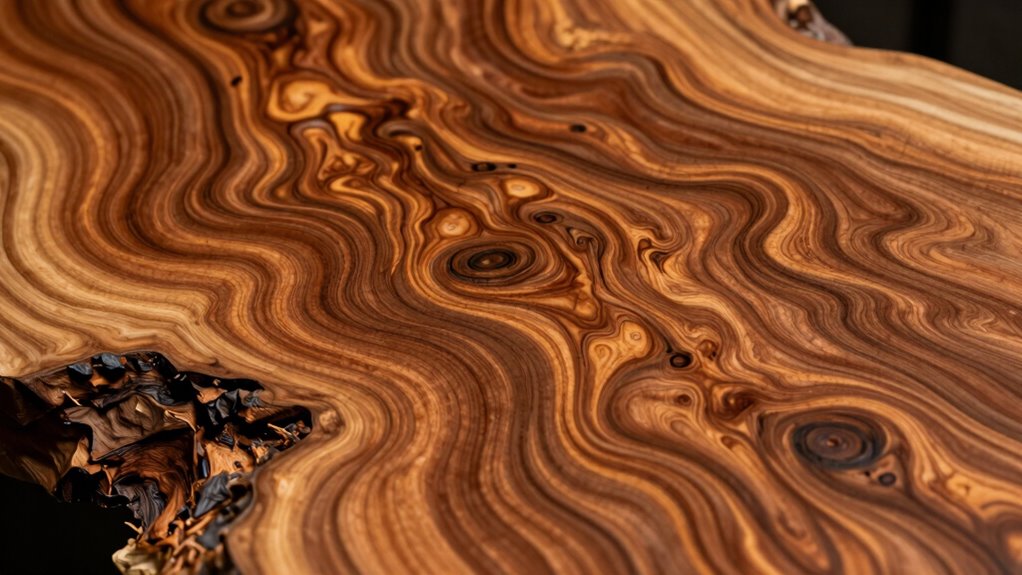
Have you ever wondered what gives burl wood its unique, eye-catching appearance? It’s the intricate, swirling grain patterns and vibrant figures that make it so sought after. These distinctive features come from abnormal growths on trees, often caused by stress, injury, or disease. When you encounter burl wood, you’re looking at a natural masterpiece that’s been shaped by nature’s unpredictable artistry. Because of its rarity and beauty, burl wood is highly prized for decorative applications—think furniture, veneer, sculptures, and musical instruments. But with its popularity, the question arises: should you split it or save it?
Burl wood’s swirling patterns and vibrant figures make it a natural masterpiece for decorative arts.
Deciding whether to split burl wood depends on several factors, including its size, quality, and intended use. If you come across a large, healthy burl, it’s often better to save it whole. Preserving the entire burl allows you to showcase its full visual impact and maintain the integrity of its unique grain patterns. Plus, saving the burl supports sustainable harvesting practices. When you harvest burl wood responsibly, you minimize waste and help ensure that future generations can enjoy similar natural wonders. Sustainable harvesting involves only taking what’s necessary, avoiding damage to the tree, and ensuring the health of the surrounding ecosystem. By choosing to save rather than split, you’re contributing to environmentally conscious practices that respect the tree’s life and the forest’s balance.
However, there are cases where splitting a burl makes sense. If the burl is excessively large or contains internal flaws such as cracks or rot, splitting it into smaller pieces might be the practical choice. Smaller sections can be more manageable and easier to work with for specific decorative applications. For instance, you might want a particular pattern or size for a custom piece, and splitting the burl allows you to focus on those areas with the best aesthetic qualities. Additionally, splitting can sometimes reveal hidden figure patterns that aren’t visible until the wood is cut open, giving you a chance to select the most striking portions for your project.
Furthermore, understanding wood movement is essential when working with burl wood, as its unique grain and figure can influence how it reacts to environmental changes. Ultimately, whether you split or save burl wood hinges on its condition, your goals, and your commitment to sustainable practices. If you’re passionate about preserving natural beauty and supporting eco-friendly harvesting, saving the entire burl is usually the better path. Not only does it maximize the visual impact for decorative applications, but it also aligns with responsible stewardship of forest resources. By making mindful choices, you can enjoy the beauty of burl wood while respecting the environment it comes from.
As an affiliate, we earn on qualifying purchases.
Frequently Asked Questions
How Do I Identify High-Quality Burl Wood for Projects?
To identify high-quality burl wood, look for rich, vibrant burl patterns and interesting wood grain variation that catch your eye. You should examine the burl’s surface for tight, well-defined grain and minimal cracks or voids. High-quality burl typically has a deep, consistent color, and the pattern should be intricate yet balanced. Avoid pieces with excessive defects or irregularities, as these can weaken the wood and diminish its aesthetic appeal.
What Safety Precautions Are Necessary When Working With Burl Wood?
When working with burl wood, always wear safety gear like goggles, masks, and gloves to protect yourself from dust and splinters. Use handling tools carefully, keeping them sharp and in good condition to avoid slips and accidents. Work in a well-ventilated area, and follow proper procedures for cutting and sanding. Stay focused, take your time, and never rush to make certain of your safety while handling this beautiful but delicate material.
Can Burl Wood Be Repaired if Damaged During Splitting?
Yes, burl wood can be repaired if damaged during splitting. While splitting burl wood can seem destructive, with careful burl wood repair, you can restore its beauty. Use epoxy resin or wood glue to mend cracks or chips, aligning the pieces precisely. Patience is key—allow the repair to cure fully before working further. This approach lets you salvage your piece, turning a potential loss into a stunning, repaired work of art.
How Long Does Untreated Burl Wood Typically Last?
Untreated burl wood typically lasts around 5 to 10 years, depending on environmental conditions. To extend its lifespan, you should focus on burl wood preservation by sealing it properly and keeping it away from excessive moisture and sunlight. Without treatment, your burl wood’s longevity decreases because it’s vulnerable to decay and cracking. Regular maintenance and protective finishes can markedly improve its durability and preserve its natural beauty over time.
Are There Eco-Friendly Ways to Harvest Burl Wood Sustainably?
Yes, there are eco-friendly ways to harvest burl wood sustainably. You might worry about harming trees, but sustainable harvesting practices guarantee minimal impact, like collecting burls from fallen or dead trees instead of cutting live ones. Choose sources that prioritize eco-friendly sourcing, and work with suppliers committed to environmental responsibility. This approach helps preserve forests while allowing you to enjoy beautiful burl wood, knowing you’re supporting responsible forestry practices.
Conclusion
Deciding whether to split or save burl wood depends on your project and goals. Keep in mind, burl wood is incredibly valued, with some pieces fetching thousands at auction. Notably, burl wood accounts for less than 1% of a tree’s total volume, yet its unique patterns make it highly sought after. So, whether you choose to split or preserve it, know that your decision impacts not just the piece, but also its future craftsmanship and beauty.
Halloween Picks
halloween
As an affiliate, we earn on qualifying purchases.