To make a rolling round rack for heavy logs, start by choosing durable, weather-resistant wood and treat it properly to prevent rot and pests. Cut the wood to your desired size, then assemble the supporting circular sides and cross braces, securing everything with heavy-duty bolts or screws. Attach sturdy, lockable caster wheels and verify they are tightly fastened for stability. Regular maintenance and safety checks will keep your rack functional for years, so keep exploring for detailed steps.

Get business pricing on tools and workshop supplies
- Business-only prices and quantity discounts
- Tax-exempt purchasing
- Multiple users, one account, clear invoices
Key Takeaways
- Design a circular frame using pressure-treated wood with reinforced supports for heavy load capacity.
- Attach sturdy, locking caster wheels to the base for mobility and stability during use.
- Incorporate cross braces and additional reinforcements to enhance stability and prevent wobbling.
- Ensure all wood is properly treated and sealed to withstand outdoor conditions and prolong lifespan.
- Test the rack with logs, tightening all connections and checking wheel functionality regularly for safety.
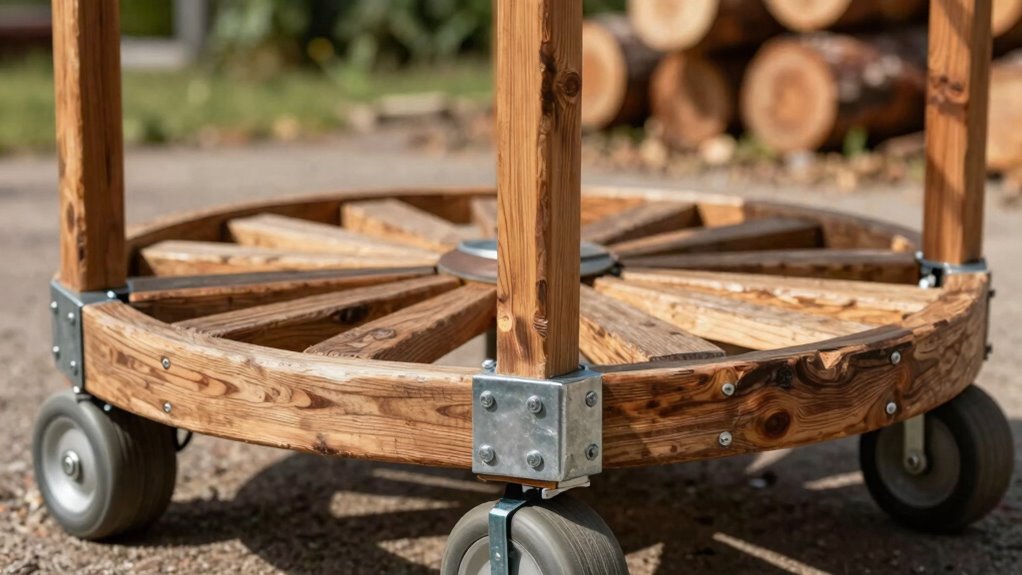
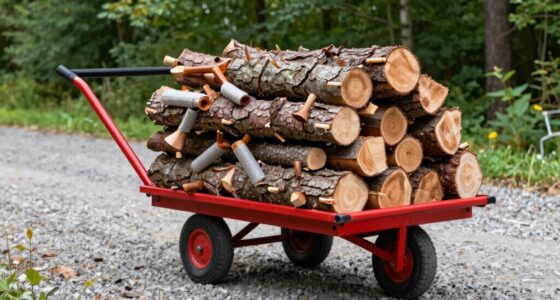
If you need to handle heavy logs more easily, building a rolling round rack can be a practical solution. This project not only makes moving large logs simpler but also enhances safety by reducing the risk of injury. Before starting, you should consider proper wood treatment to ensure the rack’s durability. Using pressure-treated wood or applying a weatherproof sealant helps protect against rot, moisture, and pests, especially if you plan to leave the rack outdoors. This step prolongs the life of your rack and maintains its strength over time.
Building a rolling rack makes handling heavy logs safer and easier with proper wood treatment for durability.
When constructing your rolling rack, safety precautions are paramount. Always wear protective gear such as gloves, goggles, and a dust mask, especially during cutting, sanding, or handling treated wood. Keep your workspace clean and organized to prevent accidents. Make sure your tools are in good condition, and follow manufacturer instructions for each. When working with power tools, secure the wood firmly to avoid slips or kickback. If you’re unfamiliar with certain techniques, consult tutorials or seek advice to prevent mistakes that could compromise the structure or cause injuries. Additionally, understanding the importance of proper load support can help ensure your rack withstands heavy logs safely. Proper load support is crucial because it directly influences the longevity and safety of your rack under heavy use. Ensuring your design accounts for load distribution helps prevent uneven stress that could lead to failure. Incorporating structural reinforcement can further enhance the durability and stability of your rack, especially when supporting very heavy logs. It’s also beneficial to verify that all components are rated for the intended weight capacity to prevent overload issues.
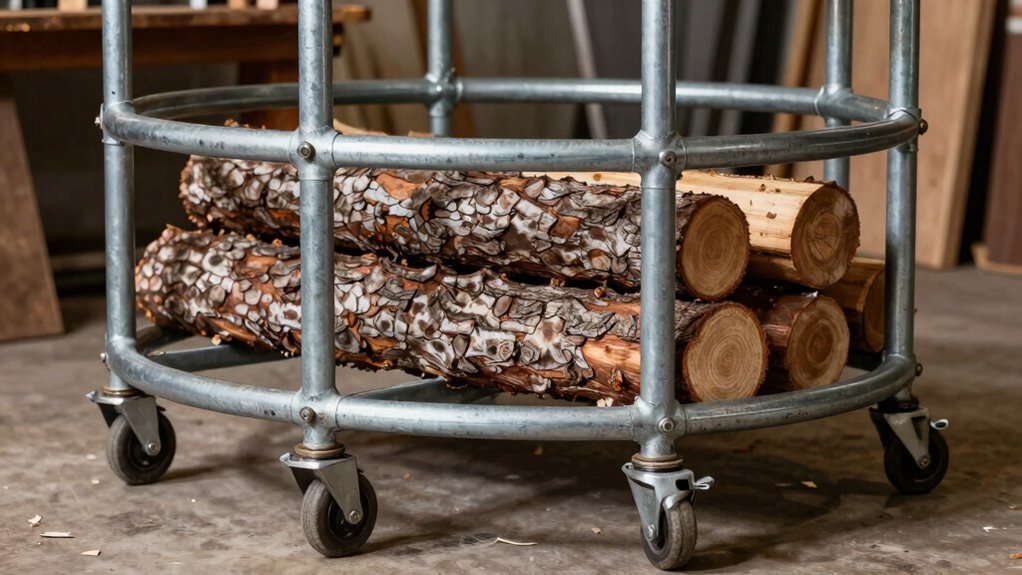
To build the rack, start by cutting your wood pieces to size based on your desired dimensions. Typically, you’ll need two circular side pieces and several supports for the base. For the round sides, you might find it easiest to use a jigsaw or a router to carve perfect circles, or you could purchase pre-cut round pieces if available. Attach the supports to the circular sides using heavy-duty bolts or screws, ensuring everything is tightly secured. Adding cross braces in the middle enhances stability, especially when rolling heavy logs. Using sturdy materials ensures the frame can support the weight over time without warping or breaking.
Next, select sturdy caster wheels designed to support significant weight. Locking casters are ideal because they keep the rack stationary during loading and unloading. Attach the wheels securely to the bottom of the rack frame, following the manufacturer’s specifications. Double-check all connections, tightening bolts and screws to ensure the rack can handle the weight of heavy logs without wobbling or collapsing. Regular inspection and maintenance, such as tightening loose bolts or reapplying protective finishes, will help extend the lifespan of your rack. When choosing casters, consider weight capacity to ensure they can handle the load safely and avoid failure during use.
Finally, test your rolling round rack with some logs to make sure it moves smoothly and supports the load safely. Regularly inspect the structure, especially after exposure to the elements, and reapply wood treatment if needed. By following safety precautions and properly treating your wood, your rolling rack will serve you reliably for years to come, making the task of handling heavy logs safer and more efficient.
heavy duty caster wheels for outdoor racks
As an affiliate, we earn on qualifying purchases.
As an affiliate, we earn on qualifying purchases.
Frequently Asked Questions
What Tools Are Essential for Building the Rack?
You’ll need essential tools like a saw, drill, measuring tape, and a wrench for building your rolling round rack. When considering design variations and material selection, make sure you choose sturdy materials like steel or hardwood to support heavy logs. Accurate measurements and precise drilling are vital for stability and mobility. With these tools and attention to design and material choice, you’ll create a durable, functional rack tailored to your needs.
How Much Does the Project Cost?
Coincidentally, your project’s cost estimation aligns with your budget planning. Expect to spend around $50 to $150, depending on materials like steel or wood and whether you already have tools. You’ll need to factor in costs for wheels, fasteners, and paint or sealant. Planning your budget carefully guarantees you don’t overspend, making the project both affordable and achievable as you build your rolling rack for heavy logs.
Can I Customize the Size of the Rack?
Yes, you can customize the size of your rolling round rack. You have the option of adjustable dimensions, allowing you to tailor the rack’s size to fit your specific needs. When designing, consider your storage space and log dimensions to determine the right custom size options. This flexibility guarantees your rack will be practical, stable, and perfectly suited for your heavy logs, making your project both functional and easy to use.
How Do I Ensure Safety During Construction?
Think of construction safety as your sturdy shield. You need to wear safety gear—gloves, goggles, and a helmet—to protect yourself from flying debris and accidents. Follow construction safety practices like securing all parts tightly and working on a stable surface. Keep a clear workspace and avoid rushing. These steps act like your safety armor, ensuring you build your rolling rack securely and prevent injuries during construction.
What Type of Wood Is Best for Durability?
You should choose hardwoods like oak, hickory, or maple for durability, as they withstand heavy use and resist wear. To enhance longevity, apply wood treatment to protect against moisture and pests. Opt for weather-resistant finishes, such as sealants or exterior-grade stains, to shield your rack from the elements. This combination guarantees your rolling round rack stays sturdy and in good condition, even when exposed to outdoor weather conditions.
Conclusion
So, after all that effort, you now have a sturdy rolling rack for your heavy logs—who knew building one could be so simple? Just imagine, all those logs rolling effortlessly, thanks to your handy work. It’s almost funny how something so basic can make such a big difference. Just don’t forget to actually use it, or all this work might just be a fancy storage rack for your stubborn logs—talk about irony!
Fall yard work Picks
leaf blowers
As an affiliate, we earn on qualifying purchases.