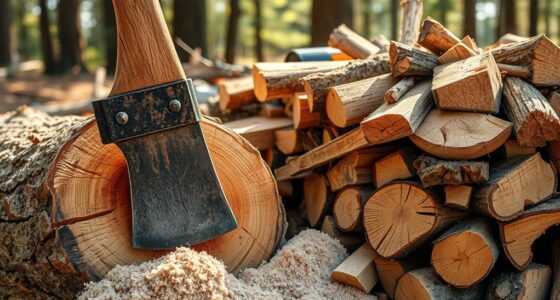

Splitting fresh-cut wood is tougher than older rounds because the high moisture content makes the fibers tightly bound and resistant to separation. You’ll find it harder to split since the wood is denser and requires more force to initiate cracks. Proper technique, like focusing on natural cracks or knots, and patience are key. If you stick with it, you’ll discover more tips to make the job easier as you go along.

Get business pricing on tools and workshop supplies
- Business-only prices and quantity discounts
- Tax-exempt purchasing
- Multiple users, one account, clear invoices
Key Takeaways
- Fresh-cut wood has higher moisture content, making it denser and more resistant to splitting than seasoned, drier rounds.
- Moisture in fresh wood causes fibers to be tightly bound, requiring more force and specific techniques for effective splitting.
- Proper tool maintenance and timing, such as splitting after partial drying, can reduce effort when working with fresh wood.
- Identifying natural cracks or knots in fresh wood can facilitate easier splitting compared to older, seasoned rounds.
- Allowing fresh wood to season reduces moisture, making future splitting easier and more efficient.
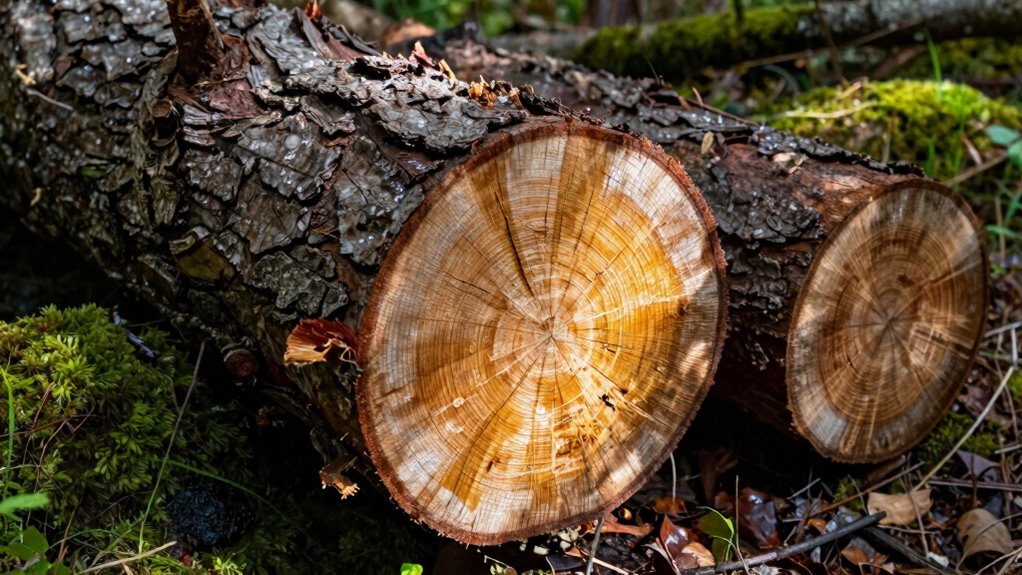
Splitting fresh-cut wood often presents more challenges than working with older rounds, primarily because fresh wood retains higher moisture content and is denser. This increased moisture makes the wood tougher to split, requiring you to adjust your approach. If you’ve ever tried to split freshly cut logs, you know they resist your efforts more than seasoned wood. The key to successfully splitting fresh wood lies in understanding its moisture content and applying the right splitting techniques.
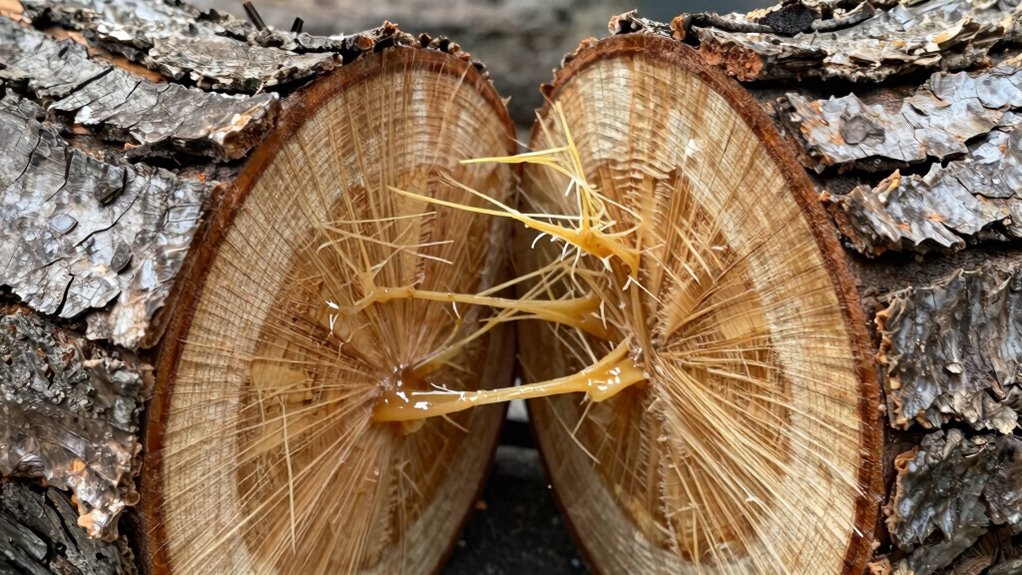
When wood is freshly cut, its high moisture content causes the fibers to be tightly bound, making it more resistant to force. As the moisture gradually evaporates over time, the wood becomes easier to split because the fibers loosen and become less dense. But until that happens, you need to focus on your splitting techniques to get through the tougher, wetter wood. One effective approach is to use a splitting wedge, which concentrates force on a small area, helping to initiate a crack. Position the wedge carefully along the natural grain, and strike it with a sledgehammer, aiming for controlled, firm blows. This method helps the wedge penetrate more effectively, reducing the amount of force needed and minimizing the risk of the wedge bouncing out.
Another technique involves choosing the right spot to split. Look for natural cracks or knots where the wood is more likely to split easily. If none are visible, aim for the center of the log, where internal tension often exists. Be patient and work slowly, gradually increasing force as needed. It’s also important to keep your tools sharp; a dull axe or wedge will require more effort and can cause accidents. Additionally, understanding the moisture content of the wood can help you determine the right timing and technique for splitting. Recognizing the seasoning process can aid in planning your splitting tasks more effectively. Properly seasoned wood tends to split more cleanly and with less effort once it’s adequately dried.
As an affiliate, we earn on qualifying purchases.
Frequently Asked Questions
How Long Should I Wait Before Splitting Freshly Cut Wood?
You should wait at least 6 to 12 months before splitting freshly cut wood, allowing it to undergo the seasoning process. This helps the wood dry out properly, making it easier to split and burn efficiently. Use a proper split technique, applying steady force and aiming for clean splits. Waiting guarantees the wood’s moisture content decreases, resulting in better burning and less creosote buildup in your chimney.
Does Splitting Age Affect Firewood Seasoning Time?
Think of the seasoning process like aging wine — the longer, the better, up to a point. Age does affect firewood seasoning time because older rounds often have lower moisture content, making them easier to dry and ignite. Freshly cut wood retains more moisture, so it takes longer to season thoroughly. Splitting age influences how quickly your firewood reaches ideal dryness, ensuring a cleaner, hotter burn and reducing smoke.
Are There Safety Concerns With Splitting Older Rounds?
Yes, there are safety concerns when splitting older rounds. As wood ages, its moisture content decreases, making it harder and more likely to bind your splitting tool, which can cause accidents. Additionally, older rounds may have hidden nails or foreign objects that can damage your tool or cause injury. Always inspect the wood thoroughly and make sure your splitting tools are durable enough to handle the increased resistance and potential hazards.
Can Splitting Fresh Wood Damage My Tools?
Imagine a sharp axe striking a dense block of fresh wood, sparks flying as the blade bites deep. Splitting fresh wood can strain your tools if you neglect proper tool maintenance or use poor splitting techniques. To prevent damage, keep your tools sharp, inspect handles regularly, and employ correct angles and force. Using the right technique minimizes stress and prolongs your tools’ lifespan, making each split safer and more efficient.
Which Type of Wood Splits Easier, Softwood or Hardwood?
Softwood generally splits easier than hardwood because of its lower wood density. You’ll find that softer woods, like pine or cedar, require less effort and force during splitting. To make the job even easier, use the right splitting technique—aim for the grain and strike the wood at the right angle. Hardwoods, with their higher density, need more power and precision, but with practice, you can master splitting both types effectively.
Conclusion
When splitting wood, fresh-cut logs tend to be softer, making them easier to split than older rounds that have dried and become harder. Did you know that freshly cut wood can be up to 50% easier to split within the first week? So, if you want less effort and quicker results, split your wood soon after cutting. Understanding these differences helps you work smarter, not harder, and keeps your firewood game running smoothly.
Fall yard work Picks
leaf blowers
As an affiliate, we earn on qualifying purchases.