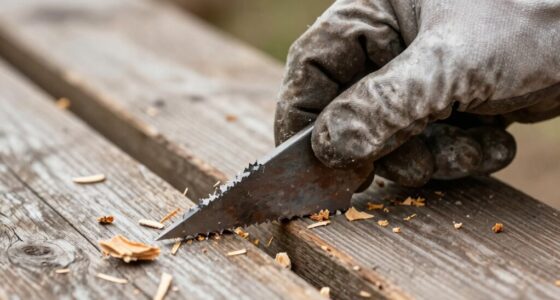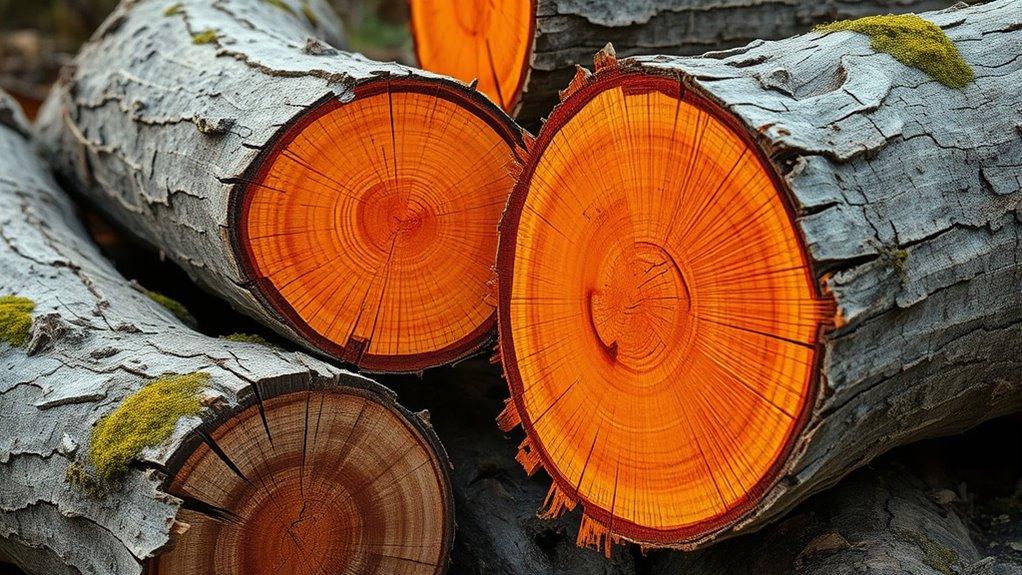

When you split freshly felled logs, you’ll find it’s more difficult because they contain high moisture levels, making the wood denser and resistant to splitting. You’ll need more force and careful strikes, often targeting natural cracks or knots. Aged logs, with lower moisture content, are brittle and easier to split with fewer hits. If you want to master efficient techniques and tools, keep exploring to learn more about how seasoning affects your work.

Get business pricing on tools and workshop supplies
- Business-only prices and quantity discounts
- Tax-exempt purchasing
- Multiple users, one account, clear invoices
Key Takeaways
- Freshly felled logs are denser and contain higher moisture, requiring more force and strategic strikes to split.
- Aged logs have lower moisture content, making them more brittle and easier to split with fewer hits.
- Proper seasoning reduces moisture in logs, significantly easing the splitting process for both fresh and aged wood.
- Tools need to be sharper and well-maintained to handle the density of green wood effectively.
- Understanding wood fiber structure and natural cracks helps optimize splitting techniques for each type of log.
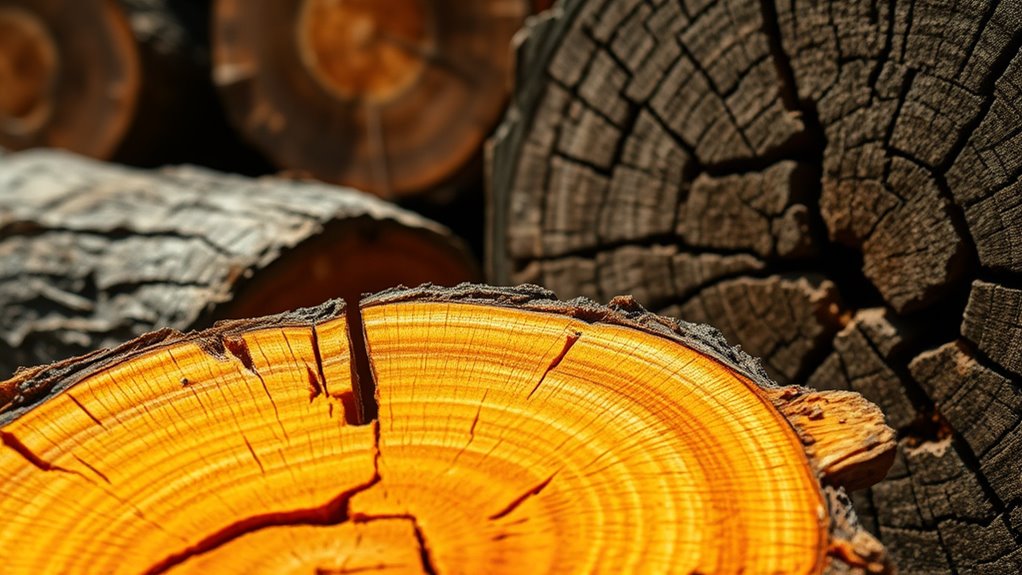
Splitting logs is a fundamental skill for anyone who burns firewood, whether for warmth or cooking. When you’re tackling freshly felled logs versus aged ones, the approach and results can differ considerably. Freshly cut wood, often called green wood, contains more moisture, making it denser and harder to split. It’s essential to understand how firewood seasoning plays a role here; seasoned wood is drier, easier to split, and burns more efficiently. If you neglect proper seasoning, you’ll find that your axe takes more hits, and the wood resists splitting, leading to frustration and increased wear on your tools. Regular axe maintenance, such as sharpening the blade and checking the handle for cracks, guarantees your tool stays in top shape, especially when dealing with tougher, green wood.
When you start splitting freshly felled logs, expect the process to be more labor-intensive. The moisture content causes the wood fibers to bind tightly, requiring more force and strategic strikes. It’s wise to choose the right axe—ideally one with a sharp, sturdy blade designed for splitting. With green wood, you’ll want to apply more deliberate force, aiming for the natural cracks or knots in the log. Proper axe maintenance becomes even more important here; a dull blade will struggle to penetrate the dense fibers, and a damaged handle might break under pressure. Regularly check your axe for nicks and dullness, and sharpen it as needed to make splitting safer and more efficient. Additionally, understanding the structure of wood fibers can help you identify the best splitting points for easier work.
In contrast, aged logs that have been properly seasoned are much easier to split. As the moisture evaporates over months of drying, the wood’s structure becomes more brittle. This allows you to split the logs with fewer strikes, conserving time and effort. When working with seasoned wood, you can focus more on precision rather than brute force. Your axe will glide through the dry fibers smoothly if it’s well-maintained. It’s also easier to find the right splitting points, as the cracks in seasoned wood tend to be more visible.
Products Worth Considering

Google Nest Cam Indoor (Wired, 3rd Gen) – Security Camera – Snow

Philips Hue Secure Wired Video Doorbell, 2K, Black

Levoit Eleva 300X HEPA Air Purifier for Home and Bedroom
As an affiliate, we earn on qualifying purchases.
Frequently Asked Questions
How Does Moisture Content Affect Splitting Ease?
Moisture content greatly impacts splitting difficulty. When logs are too wet, the moisture impact makes the wood tougher and more resistant, requiring more effort to split. Dry logs, with lower moisture levels, split more easily because the wood fibers are less compressed and more brittle. To make splitting easier, aim for logs with moderate moisture content, as overly wet or dry wood can both pose challenges.
What Safety Gear Is Recommended for Splitting Logs?
When splitting logs, you should always wear safety gear for your protection. Protective gloves help prevent splinters and improve your grip, reducing the risk of blisters or hand injuries. Safety glasses shield your eyes from flying debris and wood chips. Make sure your gear is well-fitted and durable. Always stay alert, use proper technique, and inspect your tools regularly to keep yourself safe during this task.
Which Tools Are Best for Splitting Different Wood Types?
Think of choosing tools like selecting a paintbrush for a masterpiece. For soft woods like cedar, a lighter axe with a sharp edge works best, while hardwoods like oak demand a heavier axe with a wider blade. Your splitting technique should adapt: aim for precise strikes and let the axe do the work. Proper axe selection guarantees efficiency and safety, making each split feel like a smooth, confident stroke.
How Long Should Logs Age Before Splitting?
You should wait at least 6 to 12 months for logs to age before splitting, especially for seasoned wood. During the log aging process, the moisture content decreases, making the wood easier to split and burn efficiently. Unseasoned logs, which are freshly felled, contain more moisture and are harder to split. Letting logs sit allows the wood to become seasoned, ensuring better splits and improved firewood quality.
Does Splitting Affect the Wood’s Burning Efficiency?
In the days of yore, splitting wood was an art, and it still is today. Splitting definitely improves burning efficiency because it alters the wood’s density and makes it easier to ignite. Proper splitting techniques ensure the wood dries faster and burns more evenly. When you split logs, you create smaller, more uniform pieces, which help your fire burn hotter and longer, saving you time and fuel in the long run.
Conclusion
Just like a blacksmith forging steel, choosing whether to split fresh or aged logs shapes your fire’s strength. Fresh logs are like unrefined gems, demanding patience to unseal their full potential, while aged logs offer ready warmth, like seasoned warriors ready for battle. By understanding their differences, you harness nature’s elements more wisely. So, when you strike your axe, remember you’re shaping more than wood—you’re forging comfort and tradition, one split at a time.