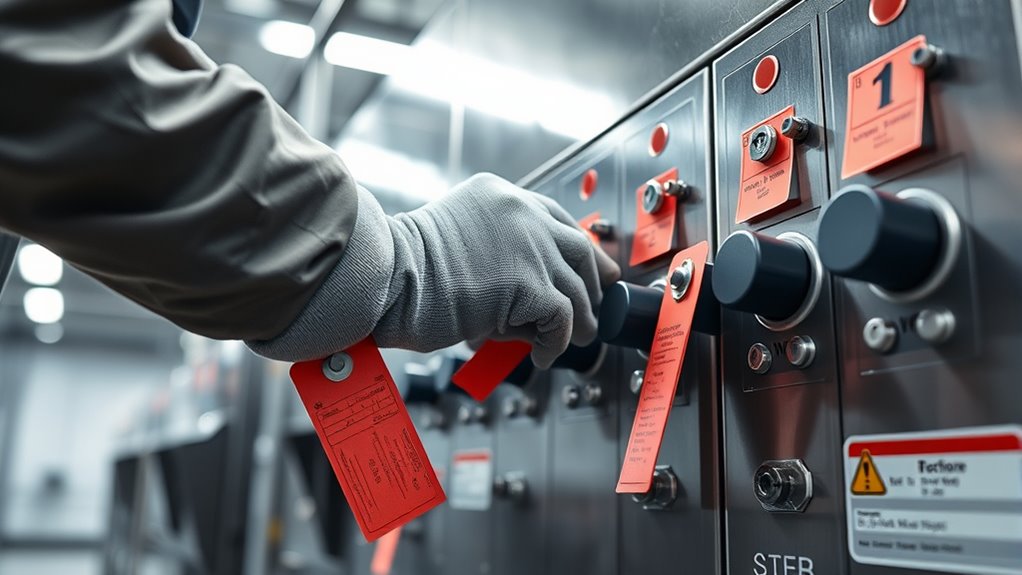

To follow proper lockout-tagout procedures during repair, you first identify all energy sources linked to the equipment, then prepare by gathering lockout devices and notifying affected personnel. Next, shut down the equipment using the correct sequence, apply lockout devices securely, and tag the equipment to indicate it’s under maintenance. Verify that all energy sources are isolated and equipment is de-energized before starting work. When you’re ready to restore, carefully remove lockout devices and re-energize, ensuring safety throughout the process. If you continue, you’ll learn important safety steps to get it right.
Key Takeaways
- Identify and isolate all energy sources before beginning repair work.
- Notify affected employees about the lockout procedures and equipment status.
- Properly apply lockout devices to prevent accidental energization during repair.
- Verify that all energy sources are fully disconnected and equipment is de-energized.
- Remove lockout devices only after ensuring the work area is safe and all tools are clear.
Identifying Energy Sources
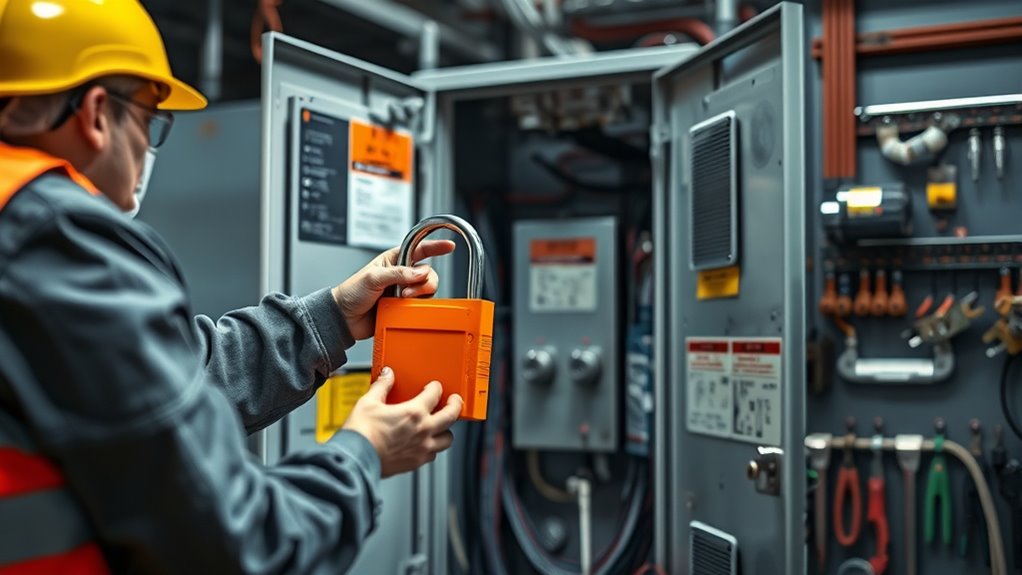
Before you begin lockout-tagout procedures, you need to identify all energy sources that could pose a hazard. This includes electrical, hydraulic, pneumatic, thermal, and mechanical energies. You should thoroughly inspect the equipment and review technical manuals or diagrams to locate all sources of energy. Remember, some energy sources may not be obvious, such as stored energy in capacitors or residual pressure in hoses. Make a exhaustive list of these sources before proceeding. Ensuring all energy sources are identified helps prevent accidental energization during maintenance, protecting you from injuries. Always consider both primary and secondary sources, and involve experienced personnel if you’re unsure. Proper identification is the critical first step to a safe lockout-tagout process.
Preparing for Lockout-Tagout
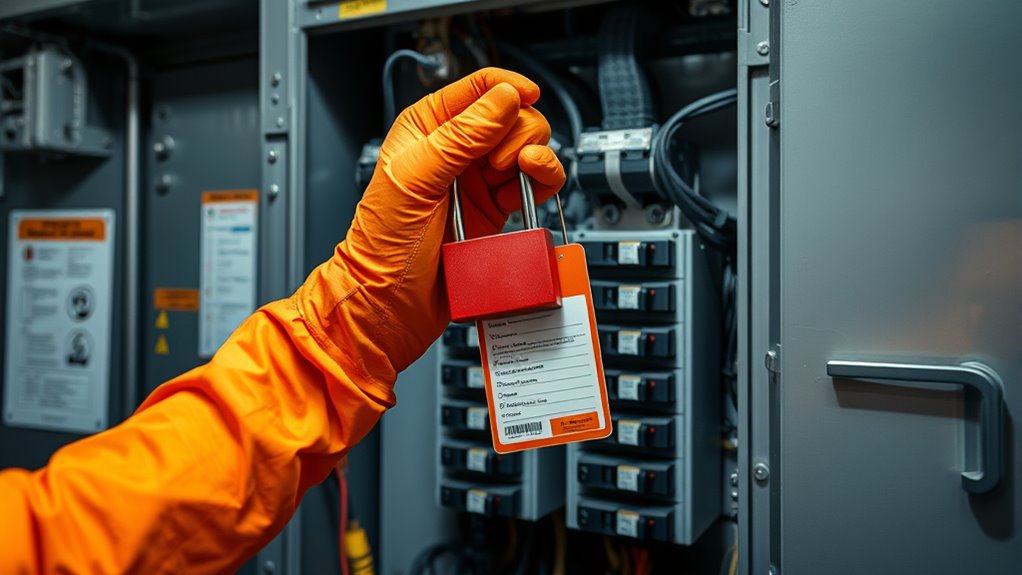
Once you’ve identified all energy sources, the next step is to prepare effectively for the lockout-tagout process. This involves gathering the necessary tools and equipment to guarantee a smooth procedure. First, you should review the equipment’s lockout/tagout procedures and safety protocols to confirm you’re following the correct steps. Second, verify that all employees involved are trained and understand their roles. Third, prepare any lockout devices, tags, and labels needed to secure the energy sources. Make sure these tools are in good condition and accessible. Proper preparation minimizes risks and keeps everyone safe during repair. Additionally, understanding the specific water-related hazards associated with the equipment can help prevent accidental releases or injuries. Recognizing potential for misinformation and ensuring all instructions are current can further enhance safety measures. Conducting a hazard assessment beforehand can identify unforeseen risks and improve safety planning. Incorporating an understanding of energy control principles ensures comprehensive safety coverage. Taking these steps ensures a controlled environment before you proceed with shutting down and locking out the machinery. Furthermore, reviewing safety procedures regularly can help maintain awareness of best practices and reduce the likelihood of errors during lockout-tagout.
Notifying Affected Employees

Why is notifying affected employees a critical step in the lockout-tagout process? Because it guarantees everyone knows that equipment will be shut down and locked out, preventing accidental energization or operation. When you inform employees, you reduce the risk of injuries and misunderstandings. Make sure you clearly communicate which equipment will be locked out, the reason for the shutdown, and the expected duration. Encourage questions and confirm they understand the process. Keeping affected employees informed also helps coordinate work and ensures they don’t attempt to operate or bypass the equipment during maintenance. This step fosters safety awareness and promotes collaboration, which is essential for a safe and efficient repair process. Proper notification keeps everyone on the same page and minimizes hazards. Additionally, understanding the roles of AI ethicists and cybersecurity professionals in workplace safety can further enhance hazard prevention strategies. Recognizing the importance of outdoor seating options in customer satisfaction, especially in coastal areas like Laguna Beach, can also contribute to a comprehensive safety and service approach. Ensuring effective communication enhances overall safety and can prevent potential accidents during repairs. Being aware of the importance of hazardous energy control helps in establishing thorough procedures that protect all personnel involved. Implementing compliance with safety standards is also vital to maintain a safe working environment and adhere to legal requirements.
Shutting Down Equipment Properly
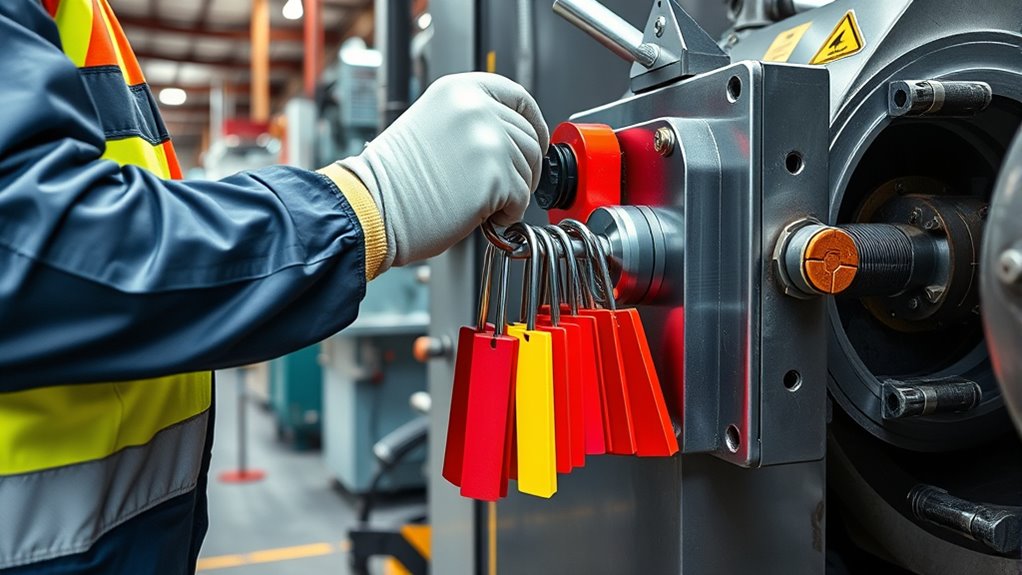
You need to follow the correct power down sequence to guarantee the equipment shuts off safely. Make certain you verify that the shutdown is complete before moving on. This step is vital to prevent accidents during maintenance or repairs. Additionally, ensuring the equipment is fully powered down helps avoid equipment damage and ensures safe cleanup and inspection afterward. Properly engine tuning can also contribute to more predictable shutdown procedures by optimizing system responses. Incorporating Powerful persuasive words in safety communications can further reinforce the importance of proper shutdown procedures. Being aware of local safety regulations ensures compliance and enhances overall safety during the process.
Power Down Sequence
Before performing lockout-tagout procedures, it’s essential to shut down equipment properly to prevent accidents and guarantee safety. A proper power down sequence ensures the equipment stops safely and reduces risks during maintenance. Follow these steps: 1. Turn off the equipment using the designated control switch or button, avoiding abrupt disconnections. 2. Disconnect all auxiliary power sources, like external power cords or backup batteries. 3. Allow the machinery to come to a complete stop, ensuring moving parts are stationary before proceeding. Implementing automation in shutdown procedures can further enhance safety by minimizing human error during power down, especially when integrated with safety protocols. Additionally, verifying that all safety devices are engaged before starting maintenance helps maintain compliance with safety standards.
Verify Complete Shutdown
Ensuring the equipment has completely shut down is a critical step before applying lockout-tagout. You should verify that all moving parts have stopped, and there’s no residual energy present. Check control panels, gauges, and indicator lights to confirm the machine is off. If necessary, listen for any sounds indicating ongoing activity. Attempt to manually rotate parts or move controls to ensure they’re disengaged. Never assume the equipment is off based solely on the control switch; always confirm visually and physically. Confirming a complete shutdown prevents accidental energization during maintenance, protecting you from injury. Once you’re certain the machine is fully powered down, proceed with lockout-tagout to ensure safety during repair work.
Applying Lockout Devices

When applying lockout devices, you must choose the right type for the equipment and guarantee it’s secure. Proper placement is essential to prevent accidental energization. After securing, verify that the lockout is effective before starting maintenance or repair work.
Selecting Appropriate Devices
Choosing the right lockout devices is crucial to effectively control hazardous energy during repair work. The devices you select must suit the specific equipment and energy sources involved. First, confirm the device is compatible with the energy control method used. Second, verify that it provides a secure lock that cannot be easily bypassed or removed. Third, consider ease of application and removal to avoid delays during the process. Using improper devices can compromise safety and increase the risk of accidental energization. Always check that the lockout device is rated for the energy type—electrical, hydraulic, pneumatic, or mechanical—and follow manufacturer instructions. Selecting appropriate devices is essential for maintaining a safe environment and ensuring compliance with safety protocols.
Securing Equipment Properly
To effectively secure equipment during lockout-tagout procedures, you must carefully apply the chosen lockout devices to make certain the energy sources are fully isolated. Start by ensuring all energy sources are turned off and in the off position. Attach the lockout devices securely to the energy-isolating controls or switches, making sure they cannot be removed without a key or tool. Verify that the devices are properly positioned and firmly in place. Use padlocks, hasps, or other approved lockout devices designed for the equipment. Double-check that the lockout devices prevent operation of the machinery. Keep the locks and tags in place until the work is complete and you’re ready to restore power. Proper application guarantees safety and prevents accidental energization during maintenance.
Verifying Lockout Effectiveness
How can you guarantee that your lockout devices are effectively preventing energy from reactivating the equipment? First, test the equipment after applying lockout devices to ensure it won’t energize. Next, verify that all energy sources—electrical, hydraulic, pneumatic—are isolated and secured. Finally, confirm that lockout devices are correctly placed and secured, preventing accidental removal. To ascertain effectiveness, you should:
- Conduct a test run to verify the equipment remains inactive.
- Double-check that all energy sources are disconnected and locked out.
- Inspect lockout devices regularly for signs of tampering or wear, replacing them if necessary.
Tagging and Labeling Equipment
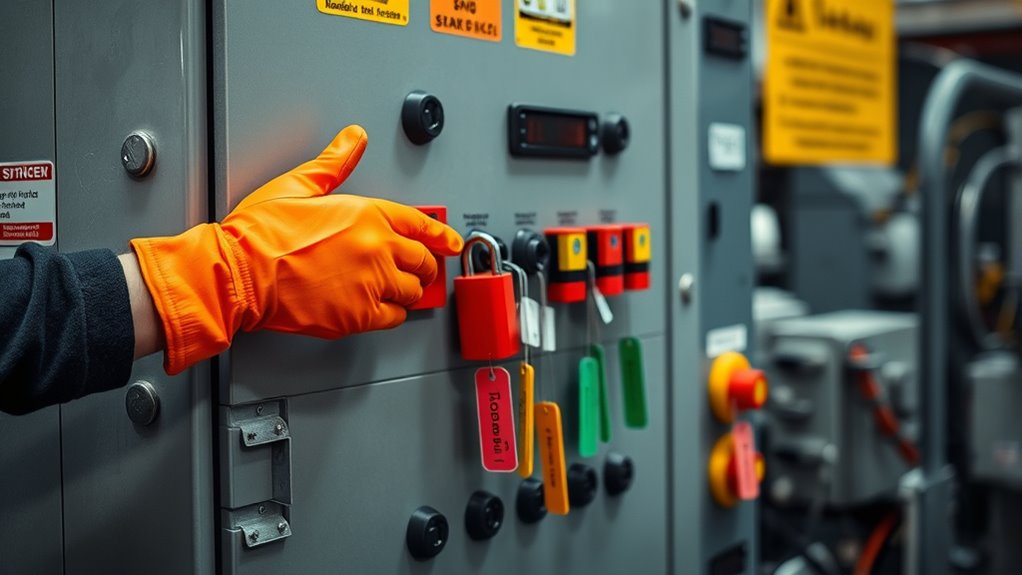
Effective tagging and labeling of equipment are essential steps in lockout-tagout procedures because they communicate the equipment’s status clearly to all personnel. Proper tags and labels ensure everyone knows the equipment is locked out and not safe to operate. Use durable, clearly visible tags with specific information such as the lockout date, reason, and responsible person. Labels should include warnings and instructions to prevent accidental startup. Maintain consistency in design and wording to avoid confusion. Here’s a quick reference:
| Tagging Element | Purpose | Example |
|---|---|---|
| Warning Tag | Signal lockout | “Do Not Operate” |
| Identification | Identify equipment | Machine ID number |
| Date & Person | Track lockout status | 2024-04-27, John |
Effective tags prevent mistakes and enhance safety during repairs.
Verifying Lockout Effectiveness

Before starting repairs, it’s crucial to verify that the lockout has been successfully applied and is effective. You want to confirm the equipment is completely de-energized and cannot accidentally start during maintenance. To do this, follow these steps:
- Attempt to operate the controls or switches to confirm the equipment won’t respond.
- Check that all energy sources are isolated, locked out, and tagged properly.
- Use testing devices to verify no residual energy remains in the system.
Performing Maintenance Safely
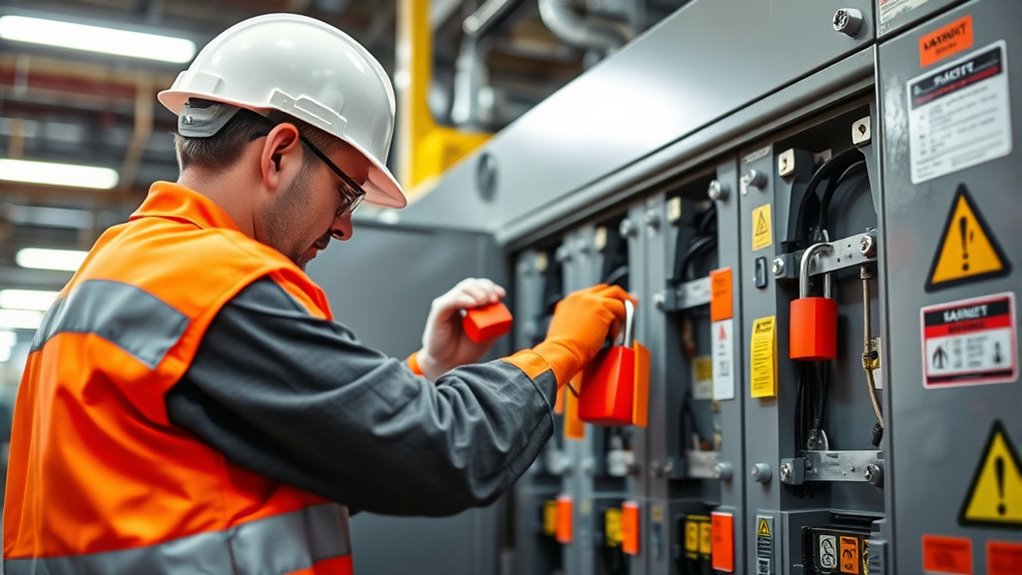
Once you’ve confirmed that the equipment is fully de-energized and the lockout is secure, you can begin performing maintenance tasks. Stay alert and focused to avoid accidents. Use proper tools and follow safety procedures at every step. Communicate clearly with coworkers to coordinate efforts. Check regularly for signs of equipment movement or unexpected energization. Keep your workspace organized to prevent slips or trips. Always wear the necessary personal protective equipment. Prioritize safety over speed, and don’t rush through tasks. Remember, safety is everyone’s responsibility. Here’s a quick overview:
| Step | Action | Reminder |
|---|---|---|
| 1 | Confirm lockout and de-energization | Never skip verification |
| 2 | Use proper PPE | Protect yourself at all times |
| 3 | Follow procedures precisely | Adhere to safety protocols |
| 4 | Stay alert during maintenance | Be vigilant throughout |
Restoring Equipment and Removing Lockout Devices

After completing maintenance tasks, you can begin the process of restoring equipment and removing lockout devices. First, verify all tools and personnel are clear from the equipment. Then, follow these steps:
- Inspect the equipment to confirm it’s in safe working condition and free of obstructions.
- Remove lockout and tagout devices in the reverse order of application, making sure only authorized personnel do this.
- Notify affected employees that the equipment is ready to operate again, and verify all safety precautions are in place.
Frequently Asked Questions
How Often Should Lockout-Tagout Procedures Be Reviewed or Updated?
You should review and update lockout-tagout procedures regularly to make certain of safety. Typically, it’s recommended to do this at least annually or whenever there are changes in equipment, processes, or regulations. You need to stay proactive, so keep an eye on any incident reports or near misses that suggest improvements. Regular reviews help prevent accidents, keep your team informed, and ensure compliance with safety standards.
What Are the Consequences of Improper Lockout-Tagout Implementation?
Ignoring proper lockout-tagout procedures can lead to catastrophic accidents, risking severe injuries or fatalities. When you don’t implement these safety measures correctly, equipment can unexpectedly energize, causing crushing, electrocution, or fires. You might face legal penalties, hefty fines, and damage to your reputation. Most importantly, lives are at stake. Proper lockout-tagout is your safeguard against these dangers, ensuring safety and compliance during maintenance or repair activities.
How Can Workers Identify Hidden or Secondary Energy Sources?
You can identify hidden or secondary energy sources by thoroughly inspecting equipment and understanding its operation. Always review schematics, manuals, and labels for potential energy points beyond the obvious. Test systems carefully, and use appropriate tools to detect energy that may not be immediately visible. Communicate with colleagues, and never assume all energy sources are apparent—double-check to guarantee your safety before starting repairs.
Are There Specific PPE Requirements During Lockout-Tagout Procedures?
Like a seasoned detective, you need to be equipped for every scenario. During lockout-tagout procedures, you must wear specific PPE such as gloves, eye protection, and possibly face shields, depending on the energy sources involved. This gear shields you from unexpected releases or energization, ensuring your safety. Always follow your company’s safety protocols, and remember that the right PPE is your armor against injury during repair work.
What Are the Steps for Emergency Release if Lockout Devices Fail?
If lockout devices fail during an emergency, you should first alert others nearby and safeguard your safety. Then, follow your company’s emergency procedures, which may include using special tools or techniques to release the lock safely. If you’re unsure, contact a supervisor or trained maintenance personnel immediately. Always prioritize safety, never attempt to bypass lockout devices without proper authorization and trained assistance.
Conclusion
By following these lockout-tagout procedures, you guarantee a safer environment for everyone involved. Think of it as giving equipment a gentle pause, allowing repairs to happen smoothly and securely. When you carefully apply and verify your safety measures, you’re helping create a workplace where risks are minimized, and everyone can return to their tasks with confidence. Remember, a little caution goes a long way in keeping your team protected and your workday uninterrupted.