To split small diameter logs efficiently, grip a sharp axe or splitting wedge and work on a stable surface. Score the wood with shallow cuts to guide your split and concentrate on making controlled, deliberate strikes rather than forcing the handle. Wear safety gear and keep your hands clear of the blade. Reposition or score further if needed, and use proper tools for better control. Keep these tips in mind, and discover how to make the process even safer and faster.
Key Takeaways
- Use a sturdy chopping surface and position the log perpendicular to the grain for controlled splitting.
- Score the log with shallow cuts along its length to guide and weaken the wood before splitting.
- Employ a splitting wedge and hammer for better leverage on stubborn or small diameter logs.
- Wear safety gear, keep tools sharp, and maintain a safe distance to ensure safe, efficient splitting.
- Take your time, reposition or score further if needed, focusing on precision and steady strikes for cleaner splits.
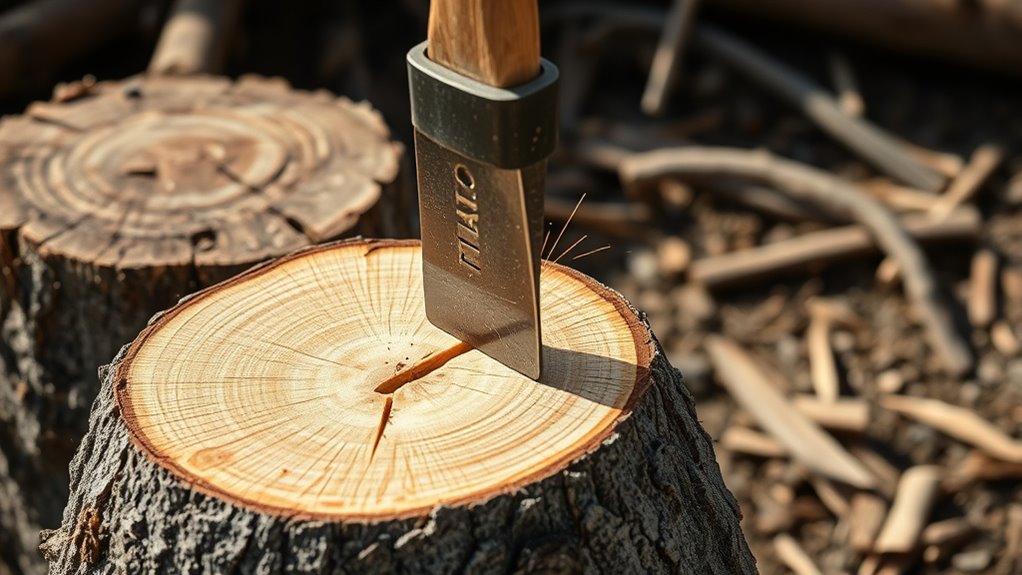
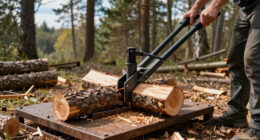
Have you ever struggled to split small diameter logs? If so, you’re not alone. These tiny logs can be tricky because they tend to shift or slip, making them frustrating to handle. To make the process smoother and safer, it’s essential to focus on proper kindling preparation and safety precautions. When splitting small logs, your goal is to create thin, uniform pieces that dry quickly and ignite easily. To do this effectively, you need to start with the right technique. First, select a sturdy chopping surface, like a chopping block or a solid stump, to keep the logs stable. Position the log so that the grain runs perpendicular to your chopping angle, which helps prevent the wood from splitting sideways or bouncing. When prepping the logs for kindling, score the wood with a utility knife or a small axe to create shallow cuts along its length. This not only guides your split but also minimizes the risk of the wood slipping unexpectedly. Incorporating balancing poses can help improve your focus and steadiness during the splitting process.
Safety precautions are vital, especially when working with small logs that tend to jump or roll. Always wear safety gear—eye protection, gloves, and sturdy footwear—to shield yourself from flying splinters or accidental hits. Keep your hands at a safe distance from the blade or axe, and ensure your grip is firm but relaxed to avoid slipping. Before you start, inspect your tools to confirm they’re sharp and in good condition; dull tools require more force and increase the risk of accidents. When you’re ready to split, use controlled, deliberate strikes rather than forceful hacks. Small logs can sometimes bounce or glance off the target, so focus on accuracy and steady pressure. If a log doesn’t split after the first strike, don’t force it—try repositioning or scoring it further.
Additionally, be mindful of your surroundings. Keep other people at a safe distance and clear the area of any tripping hazards. If the log is particularly stubborn, you can use a splitting wedge and hammer instead of a traditional axe, which provides better control and reduces the risk of mishaps. Remember, proper kindling preparation means not rushing the process; taking your time ensures cleaner splits and minimizes injury risk. Developing a steady, mindful approach will help you split small diameter logs more efficiently and safely. With patience, the right tools, and safety measures in place, you’ll find that creating perfect kindling and splitting those tiny logs becomes a manageable, even enjoyable task.

Fiskars 8 lb. Splitting Maul – 36" Shock-Absorbing, Comfort Grip Handle – Rust Resistant Forged Steel Blade – Wood Splitter Maul for Hardwood – Split Wood for Campfires – Bushcraft Gear
MULTI-USE AXE: Sharp blade axe with inseparable riveted head is an ideal wood chopper designed for firewood, yard…
As an affiliate, we earn on qualifying purchases.
As an affiliate, we earn on qualifying purchases.
Frequently Asked Questions
What Safety Gear Is Recommended When Splitting Small Logs?
When splitting small logs, you should wear protective gloves to prevent cuts and blisters, and eye protection like safety glasses or goggles to shield your eyes from flying wood chips. Make sure your gloves fit well and are made of durable material. Always check your safety gear before starting, and stay alert to avoid accidents. Proper safety gear keeps you safe and lets you focus on the task at hand.
Can I Use a Regular Axe for Small Diameter Logs?
Sure, you can use a regular axe for small diameter logs, but don’t expect finesse or ease. A standard axe might be like bringing a sword to a paper cut—overkill or underperforming. For logs with a small diameter, a hatchet or a splitting axe with a suitable axe size makes the job smoother. It’s all about matching the tool to the log diameter, not just grabbing whatever’s handy.
How Do I Prevent Logs From Bouncing During Splitting?
To prevent logs from bouncing during splitting, focus on log stabilization by securely positioning the wood on a stable splitting surface. Hold the log firmly if needed and use a sharp, well-maintained axe to make clean cuts, reducing the force needed and minimizing bounce. Keep your stance solid, and aim accurately to guarantee the log stays in place, making splitting safer and more efficient.
What Is the Best Technique for Splitting Round Logs?
To split round logs effectively, you should use proper log splitting techniques like positioning the wedge correctly and applying consistent force. Handle round logs carefully by securing them firmly and using a sharp axe or splitting maul. When you strike, aim for the center and follow through with controlled swings. This approach minimizes bounce, guarantees safety, and makes the splitting process smoother and more efficient.
Are Electric or Manual Tools More Effective for Small Logs?
You’ll find electric tools more effective than manual ones for small logs—unless you enjoy arm workouts with a side of frustration. Electric splitters quickly tame tiny logs with minimal effort, saving your energy for more important tasks. Manual tools, while cheaper, often require Herculean strength and patience, making them less practical. So, if efficiency matters, go electric; if you love a good workout, manual tools might just be your thing.

ESTWING Sure Split Wedge – 5-Pound USA Made Wood Splitting Tool with Forged Steel Construction & 1-7/8" Cutting Edge – E-5
WOOD SPLITTING MADE EASY – The hefty 5 pound build of our splitting wedge makes splitting logs and…
As an affiliate, we earn on qualifying purchases.
As an affiliate, we earn on qualifying purchases.
Conclusion
So, next time you’re faced with those tiny, stubborn logs, remember: with a little patience and the right technique, you can turn them into fire-starting masterpieces. Or, you might just end up flinging splinters into the air, imagining you’re a lumberjack in a slapstick comedy. Either way, mastering this skill keeps you from feeling like a firewood failure. Embrace the chaos, and soon those small logs will be nothing but memories—and maybe a few bruises.

Kindling Cracker Firewood Kindling Splitter — Original Cast Iron Wood Splitting Wedge, 6.5" Safety Ring, Large 12" Frame, No Axe Needed, New Zealand Designed & Australian Made
THE WORLD'S SAFEST WAY TO SPLIT KINDLING – INVENTED BY A TEENAGER: The Kindling Cracker was designed by…
As an affiliate, we earn on qualifying purchases.
As an affiliate, we earn on qualifying purchases.
Kindling Cracker Firewood Kindling Splitter — Original Cast Iron Wood Splitting Wedge, 6.5" Safety Ring, Large 12" Frame, No Axe Needed, New Zealand Designed & Australian Made
THE WORLD'S SAFEST WAY TO SPLIT KINDLING – INVENTED BY A TEENAGER: The Kindling Cracker was designed by…
As an affiliate, we earn on qualifying purchases.
As an affiliate, we earn on qualifying purchases.