To choose a splitter for dense woods like oak, hickory, or elm, focus on models with high tonnage and powerful hydraulics to handle stubborn, twisted grain logs. Look for safety features like blade guards and emergency stops for secure operation. Opt for horizontal splitters for larger logs and verify the build quality is durable. Pay attention to fuel efficiency to keep costs low. Keep exploring to find the best tips for selecting a reliable, efficient splitter that meets your needs.

Get business pricing on tools and workshop supplies
- Business-only prices and quantity discounts
- Tax-exempt purchasing
- Multiple users, one account, clear invoices
Key Takeaways
- Select a hydraulic splitter with high force output to handle dense and twisted woods effectively.
- Opt for models with adjustable rams and pressure controls for better splitting of knotty or irregular logs.
- Use horizontal splitters for stability with large, heavy oak, hickory, or elm logs.
- Prioritize safety features like blade guards and emergency stops to protect during tough splitting tasks.
- Choose durable, heavy-duty construction to withstand frequent use with tough, dense wood types.

If you’re looking to make your firewood preparation easier and more efficient, choosing the right log splitter is essential. When dealing with dense woods like oak, hickory, or elm, you need equipment that can handle tough, twisted grain without risking safety or wasting fuel. One of your top priorities should be selecting a splitter with excellent fuel efficiency. A model that consumes less fuel saves you money over time and lets you work longer without frequent refueling. Look for splitters with features like efficient hydraulic systems or dual-stage engines, which are designed to maximize power while reducing fuel consumption. This fuel-efficient operation not only saves you money but also reduces environmental impact. To ensure you select the best equipment, consider models engineered with advanced hydraulic technology, which can further enhance efficiency and performance when splitting stubborn, twisted grain logs. Additionally, choosing a splitter with precision control systems can help you manage difficult logs more effectively and safely.
Choose fuel-efficient log splitters with advanced hydraulic systems to save money and work longer with tough, twisted-grain wood.
Safety features are equally important, especially when working with hard or twisted-grain logs that can kick back or shift unexpectedly. You want a splitter with robust safety mechanisms like blade guards, automatic shut-offs, and emergency stop buttons. These features protect you from injury if the log shifts suddenly or if you need to halt operation quickly. Consider models with adjustable stopping points or pressure controls, which give you better control and reduce the risk of accidents. When handling dense or knotted wood, safety should never be compromised, so choose a splitter that prioritizes user protection without sacrificing power or efficiency. Additionally, selecting a splitter with safety certification can provide extra assurance of its safety standards.
In addition to fuel efficiency and safety, think about the type of splitter that best suits your needs. Horizontal splitters are generally more stable and easier to operate for large, heavy logs, making them ideal for oak or hickory. Vertical models might be better if you prefer working with smaller logs or need a more compact setup. For twisted or knotty wood, look for splitters with adjustable rams or more powerful hydraulics that can exert enough force to split stubborn grain. You should also evaluate the log capacity—larger trees require a splitter with higher tonnage, ensuring it can handle the toughest wood types without strain. Selecting a splitter built with durable construction will ensure it withstands frequent use and tough conditions.
Finally, consider the durability and build quality of the machine. Heavy-duty steel frames and high-quality hydraulic components will stand up to the rigors of splitting dense, twisted-grain wood. A reliable, well-constructed splitter will last longer and require less maintenance, saving you time and money. When choosing your splitter, balance fuel efficiency, safety features, power, and durability to find the best fit for your wood-splitting needs. This thoughtful approach ensures you work safely, save fuel, and make quick progress, even with the toughest logs.
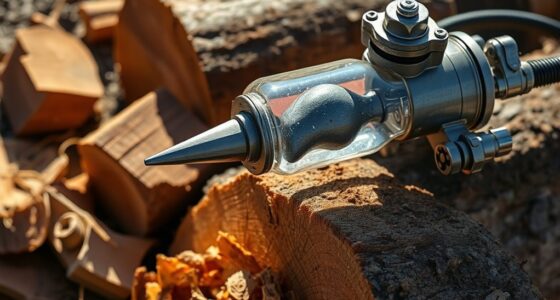
hydraulic log splitter for dense wood
As an affiliate, we earn on qualifying purchases.
As an affiliate, we earn on qualifying purchases.
Frequently Asked Questions
What Safety Gear Should I Wear When Using a Splitter?
When using a splitter, you should wear protective clothing to shield your skin from wood chips and debris. Safety glasses are essential to protect your eyes from flying splinters. Consider wearing gloves for added grip and a dust mask if you’re working in dusty conditions. Always make certain loose clothing and jewelry are secured to prevent entanglement. These safety measures keep you protected and make your splitting task safer and more efficient.
How Often Should I Maintain My Log Splitter?
Like a well-tuned vintage car, your log splitter needs regular care. You should perform a maintenance schedule every 50-60 hours of use or at least once a season. Focus on lubrication tips, ensuring all moving parts are well-oiled to prevent rust and wear. Regular checks help keep your splitter running smoothly, making your work safer and more efficient. Don’t forget, consistent maintenance extends its lifespan considerably.
Can I Use a Hydraulic Splitter for All Wood Types?
Yes, you can use a hydraulic splitter for all wood types, but keep in mind that fuel efficiency varies depending on the wood’s density and grain. Hardwoods like oak and hickory may require more power, leading to increased fuel consumption. Additionally, noise levels tend to be higher with tougher woods, so consider a splitter with noise reduction features for a more comfortable experience. Adjust your splitter settings accordingly for different wood types.
What’s the Best Way to Store a Log Splitter?
Storing your log splitter is like tucking in a friend for the night. To keep it in top shape, use weather protection like a waterproof cover or a shed, especially if you live in a damp climate. Store it on a level surface to prevent tipping. Incorporate storage solutions like hanging tools or spare parts nearby, so everything stays organized and ready for the next time you’re ready to split wood.
Are Electric Splitters Suitable for Large, Dense Logs?
Electric splitters can handle large, dense logs if they have enough splitter horsepower, but they’re generally better for softer woods. For seasoned firewood, especially with tougher woods like oak or hickory, you might need a gas-powered splitter. Keep in mind, the right horsepower guarantees efficient splitting, preventing jams or damage. If you regularly process large, dense logs, investing in a higher-capacity electric splitter or a gas model is wise.
Conclusion
Ultimately, selecting the perfect splitter depends on your specific needs and the nature of your wood. By balancing budget, brute strength, and your burning desire for efficiency, you’ll break through any log with ease. Remember, a well-wielded splitter saves time, toil, and tears—transforming tough timber into tender fuel. So, stay savvy, choose wisely, and enjoy the warm, wonderful wonder of well-wielded woodwork all winter long.
Evergreen bestsellers Picks
bestsellers
As an affiliate, we earn on qualifying purchases.