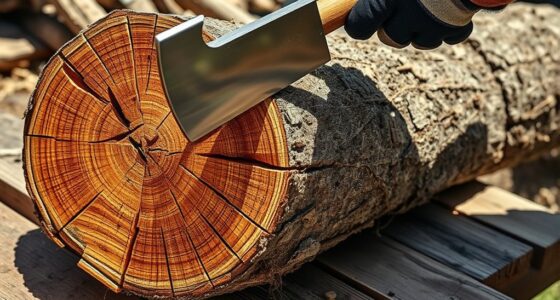

To master your maul, axe, or wedge, focus on proper technique: keep your blade aligned straight with the handle, and grip firmly but comfortably. Adjust your grip pressure based on the task, tightening for heavy chopping and loosening for precision. Consistently check your blade’s condition and make small alignment tweaks to guarantee efficiency and safety. Paying attention to these fundamentals will sharpen your skills—stay tuned to learn even more about technique essentials.
Key Takeaways
- Ensure blade alignment is square to the handle for straight, accurate cuts.
- Use a firm but relaxed grip, adjusting pressure based on task difficulty.
- Maintain blade sharpness and check for damage to improve safety and efficiency.
- Position the tool correctly with a controlled, smooth swing to maximize power and precision.
- Consistently practice small adjustments to technique for improved control and reduced fatigue.
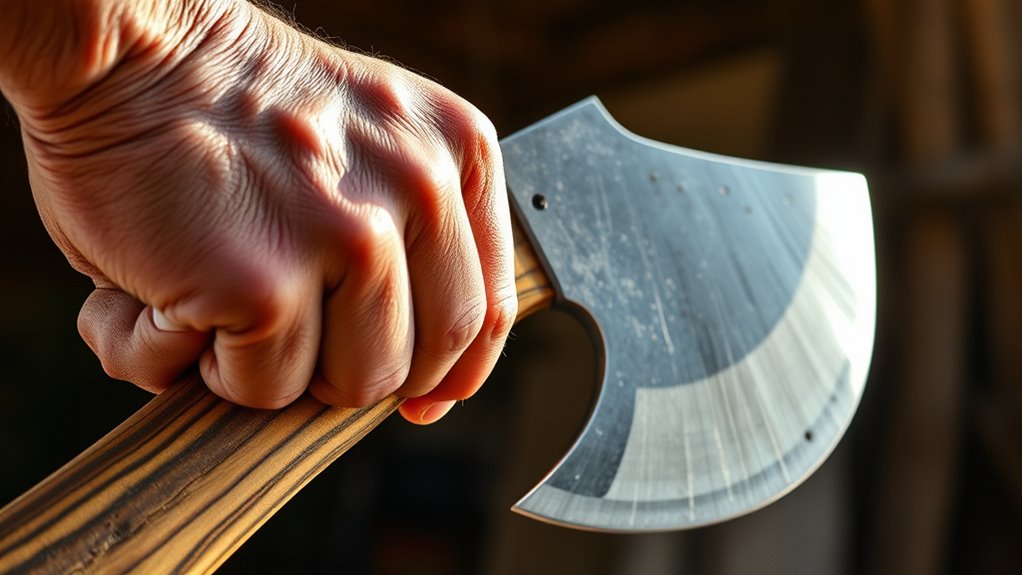
Mastering the basics of technique is vital for anyone looking to improve their skills and achieve better results. Whether you’re swinging a maul, axe, or wedge, paying attention to fundamental aspects like blade alignment and grip pressure can make a significant difference in your effectiveness. Proper blade alignment ensures that your tool cuts or splits efficiently, while the right grip pressure provides control without sacrificing power or causing fatigue.
When it comes to blade alignment, you want to make sure that the cutting edge is properly oriented for the task at hand. For axes, this means keeping the blade square to the handle, so the edge strikes straight and true. Misalignment can lead to uneven cuts, increased effort, and even dangerous slips. Before each swing, check the blade’s position relative to the handle and adjust your grip if needed. A well-aligned blade allows for a smoother, more accurate strike, conserving your energy and reducing the chance of accidents.
Grip pressure plays a vital role in how confidently and safely you wield your tool. You don’t want to grip the handle too tightly, as this can cause unnecessary fatigue and reduce your ability to feel the tool’s response. Conversely, gripping too loosely can lead to a loss of control, especially when swinging with force. Find a balance by gripping firmly enough to maintain control but loose enough to allow for natural wrist movement. Think of your grip as a connection—firm enough to direct the tool but relaxed enough to absorb shocks and adapt to the swing’s rhythm.
Additionally, paying attention to the blade’s condition can help ensure safe and effective use, as dull or damaged blades require more force and can be dangerous. As you practice, focus on maintaining consistent blade alignment and grip pressure. When you align the blade correctly, your swings will become more precise and efficient, making each strike count. Adjust your grip pressure based on the task—tightening slightly for heavy-duty chopping and loosening for more delicate or precise work. Over time, these small adjustments will become second nature, improving your overall technique.
Frequently Asked Questions
What Materials Are Best for Making Mauls and Wedges?
You should choose durable metal alloys like forged steel or high-carbon steel for making mauls and wedges, as they provide strength and resilience. For handles, consider materials like hickory, fiberglass, or reinforced composite to guarantee a secure grip and shock absorption. These combinations help create tools that withstand heavy impacts and last longer, making your work more efficient and safe. Always prioritize quality materials for peak performance.
How Do I Choose the Right Size for My Tool?
When choosing the right size, you need to find the perfect fit for your task and strength. Think of it as Goldilocks—nothing too big or small. Consider the tool weight; a lighter tool is easier to control, while a heavier one delivers more power. Also, check handle length—longer handles give more leverage, but shorter ones offer better maneuverability. Pick a size that feels comfortable and suits your work.
Are There Safety Tips for Using These Tools Effectively?
To use these tools safely, always wear protective gear like gloves and eye protection. Focus on safe striking techniques by maintaining a firm grip, controlled swings, and proper stance to prevent accidents. Keep your work area clear, verify the tool is in good condition, and never rush your strikes. Staying attentive and disciplined helps avoid injuries, making your work both effective and safe.
Can These Tools Be Used for Modern Woodworking Projects?
Yes, you can definitely use these tools for modern woodworking projects. They bring a timeless touch, blending historical context with current craftsmanship. Their cultural significance highlights durability and tradition, making your projects stand out. With proper safety measures and skill, these tools can enhance your woodworking, offering precision and power. Embrace their historic heritage and harness their hearty heft for a handcrafted, authentic finish in your contemporary creations.
How Do I Maintain and Sharpen My Axe or Wedge?
To maintain and sharpen your axe or wedge, start by checking the blade alignment, ensuring it’s straight and true. Use a sharpening stone or file to hone the edge, maintaining a consistent angle. After sharpening, apply a light coat of rust prevention oil to protect against corrosion. Regularly clean your tools after use, store them in a dry place, and recheck the edge periodically to keep them in top condition.
Conclusion
Mastering the choice between a maul, axe, or wedge isn’t just a skill; it’s the key to wielding the power of gods in your hands. With each strike, you can summon the force of a thunderstorm or carve through wood like a lightning bolt. When you understand their secrets, you become unstoppable—an unstoppable force of nature. So go ahead, release your inner titan and make every swing echo with the might of the universe itself.