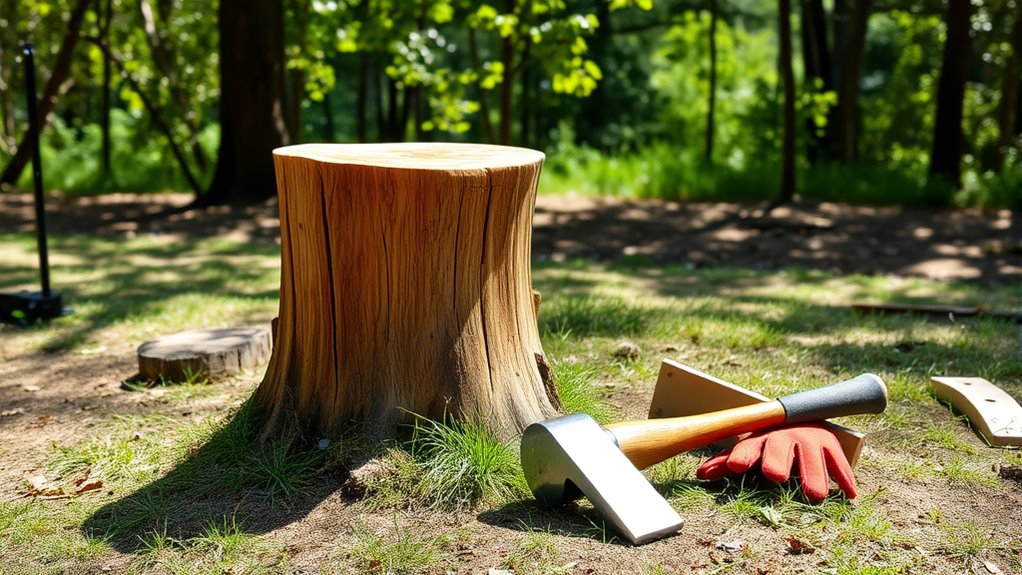
To set up a splitting stump properly, start by ensuring the ground around it is stable and level. Clear the area of obstacles and secure the stump with wedges or chocks to prevent shifting. Check your splitting equipment, like wedges and axes, for sharpness and safety. Wear protective gear and maintain a firm stance for control. Carefully position your tools and plan your cuts to avoid accidents. Keep going to discover tips that make splitting safer and more efficient.
Key Takeaways
- Ensure the ground around the stump is stable and level for safe splitting.
- Clear the area of obstacles and debris to prevent tripping hazards.
- Position the stump securely on a firm surface or use wedges to prevent shifting.
- Use proper safety gear such as gloves, eye protection, and steel-toed boots.
- Plan the splitting direction and create a clear, accessible workspace around the stump.
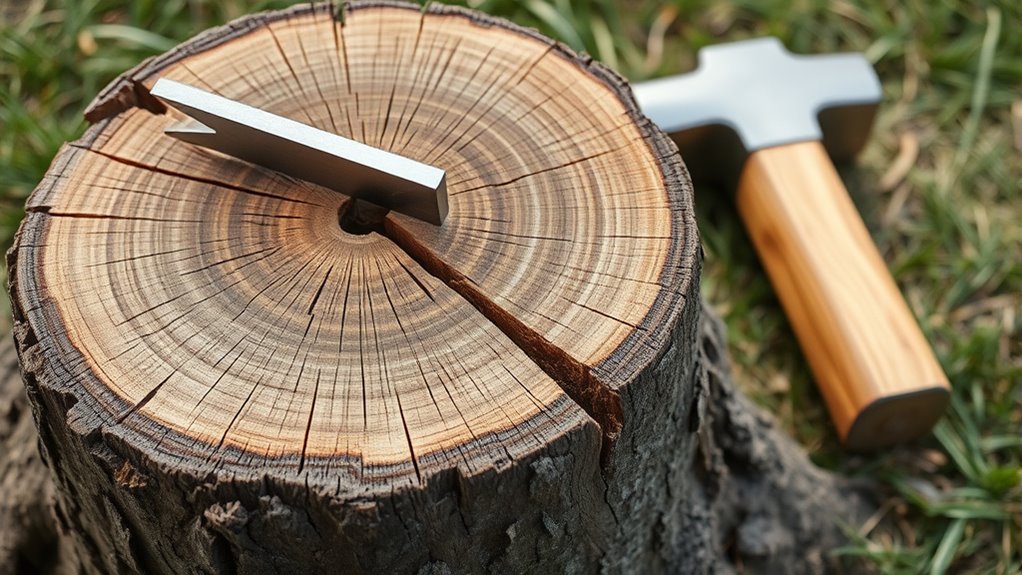
Setting up for splitting a stump requires proper preparation to guarantee safety and efficiency. Before you even pick up the axe or sledgehammer, take a moment to examine your equipment and workspace. Ensuring your chainsaw is in good condition is critical, especially when it comes to chain alignment. A properly aligned chain cuts more smoothly, reducing the risk of kickback or accidental slips. Check that the chain is sharp and tensioned correctly; a loose or dull chain can cause dangerous jerks or require extra force, increasing the chance of injury. When you’re confident your chainsaw is functioning properly, focus on your safety gear. Wearing sturdy gloves, eye protection, earplugs, and steel-toed boots is non-negotiable. Safety gear shields you from flying debris, loud noise, and potential impacts, making your work safer and more comfortable. Don’t skip these steps—cutting a stump can be unpredictable, and safety gear acts as your first line of defense.
Once your tools are in order, clear the work area of any obstacles or tripping hazards. Make sure the ground around the stump is stable and level so that your footing remains secure during the process. Set up your chopping station at a comfortable distance from other people or animals to avoid accidents. When you’re ready to start, double-check that your chainsaw’s chain is properly aligned. Proper chain alignment is key; a misaligned chain can cause uneven cuts, potential kickbacks, or a jammed saw. Adjust the chain guide bar if necessary, ensuring the chain runs smoothly along the bar without wobbling or slipping. This small step considerably boosts your control and safety during the split. Additionally, understanding the physical properties of the wood can help you determine the best approach and cutting angles for more efficient splitting.
Position the stump securely on a stable surface or ground, and if possible, use wedges or chocks to prevent it from shifting unexpectedly. When you’re confident everything is in place, put on your full safety gear. Gloves protect your hands from splinters and accidental cuts, while eye protection keeps sawdust and debris out of your eyes. Earplugs help shield your hearing from the loud noise of the chainsaw, and steel-toed boots provide support and protect your feet if the tool slips. Once your safety measures are in place, carefully start your chainsaw, making sure the chain is running smoothly and correctly aligned. Keep a firm grip on the saw, maintain a balanced stance, and begin your cut with controlled, deliberate motions. Proper setup, including chain alignment and safety gear, guarantees you work efficiently and minimize risks throughout the stump splitting process.
Frequently Asked Questions
What Tools Are Best for Splitting a Stump Effectively?
You should use a sharp chain saw to cut the stump into manageable pieces, making it easier to split. Then, grab a heavy splitting maul to break the wood apart effectively. The chain saw speeds up initial cuts, while the splitting maul provides the force needed for splitting logs. Always wear safety gear, and confirm your tools are in good condition for the safest, most efficient results.
How Do I Prevent the Stump From Shifting During Splitting?
Did you know that improper stabilization can cause accidents in 30% of stump splitting injuries? To prevent shifting during splitting, focus on stump stabilization by securing it firmly with wedges or clamps. Use a sturdy work surface and position the splitting wedge carefully. Keep your hands clear and maintain steady pressure to guarantee shifting prevention, making your work safer and more efficient. Proper stabilization is key to a successful, safe split.
Is It Necessary to Remove All Roots Before Splitting?
No, you don’t need to remove all roots before splitting a stump. However, stump removal and root grinding can make the process easier and safer. Removing larger roots helps prevent shifting and makes splitting more controlled. Root grinding can clear smaller roots, reducing obstacles. These steps ensure the stump stays stable during splitting, minimizing hazards and making the job more efficient. Always consider professional help for thorough removal and grinding.
How Do Weather Conditions Affect Splitting a Stump?
Weather conditions greatly impact splitting a stump. You should avoid splitting during high moisture levels, as the wood becomes too soft and difficult to split effectively. Temperature fluctuations can also cause the wood to expand or contract, making the process harder and potentially damaging your tools. For best results, pick a dry, moderate day with stable temperatures to ensure the wood splits cleanly and safely.
What Safety Precautions Should I Take During the Process?
Imagine a neighbor’s careless move causing a dangerous kickback; safety is essential. Always wear protective gear like gloves, goggles, and ear protection. guarantee site clearance, removing bystanders and obstacles. Keep a firm stance, use the tool correctly, and stay alert during the entire process. These precautions prevent injuries and accidents, making your stump splitting safe and efficient. Your safety depends on careful planning and proper protective measures.
Conclusion
Now that you’ve mastered setting up your splitting stump, you’re ready to unleash its full potential. Think of it as planting a seed for future success—every precise cut and sturdy setup nurtures the tree of your craftsmanship. With patience and care, your work will grow strong and dependable, like a mighty oak standing tall against the storm. So go ahead, embrace the process, and watch your efforts blossom into reliable, powerful results.