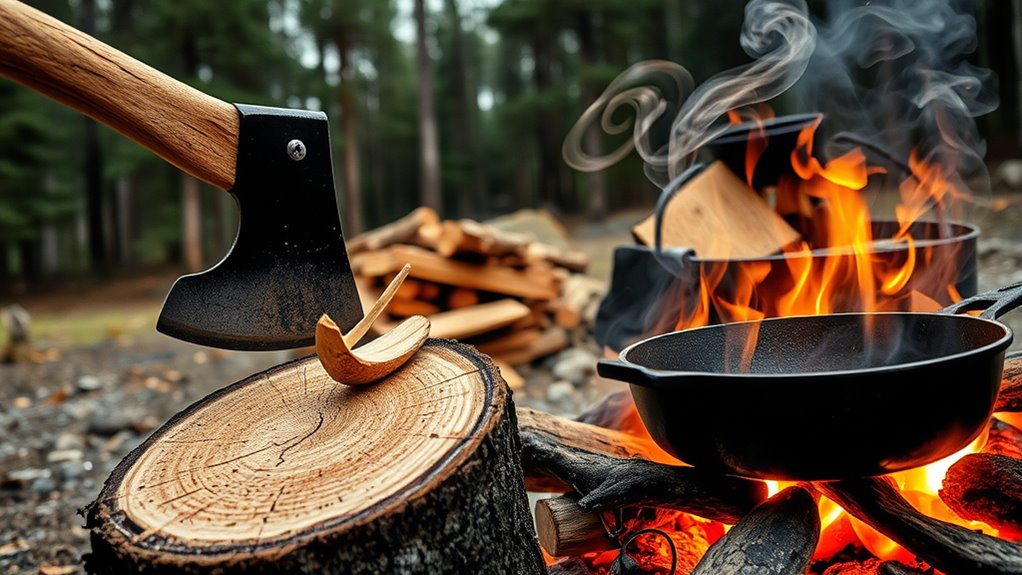

To prepare firewood for campfires and cooking, split your wood into smaller, manageable pieces using a sharp axe or maul on a stable surface. Properly seasoned, dry wood burns cleaner and produces less smoke, making your fire more efficient. Focus on creating even halves or small chunks to increase surface area and speed up drying. Good placement and safe chopping habits help you build a better fire. Keep going to discover more tips for effective firewood prep.
Key Takeaways
- Split firewood into smaller, manageable pieces to increase surface area for faster seasoning and easier ignition.
- Properly dry and cure split wood to ensure it burns efficiently with less smoke during campfires and cooking.
- Use safe chopping techniques with sharp tools, standing on stable surfaces, to produce uniform pieces suitable for cooking and fire management.
- Arrange split wood strategically in the fire to promote even burning and optimal heat for cooking.
- Focus on producing even-sized chunks to facilitate easy lighting, efficient burning, and consistent cooking temperatures.

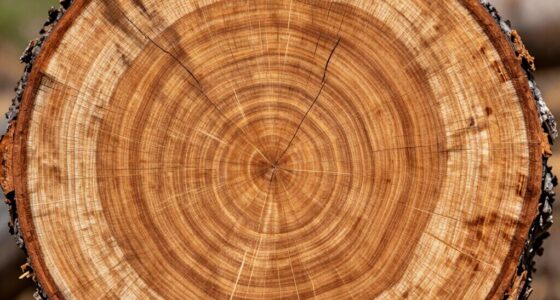
Splitting wood is an essential skill for anyone planning to enjoy a campfire or cook outdoors. Properly split firewood burns more efficiently, produces less smoke, and creates the ideal heat for cooking or warming up around the fire. To get the most out of your wood, you’d want to focus on firewood seasoning, which involves drying and curing the wood so it burns cleanly and effectively. Freshly cut wood contains a high moisture content, making it difficult to ignite and producing excess smoke. As you split your wood, aim to do so into smaller, manageable pieces that expose the inner wood to air. This increases surface area, speeding up the seasoning process and ensuring your firewood is ready when you need it. Additionally, understanding the importance of proper firewood placement can significantly enhance your burning experience.
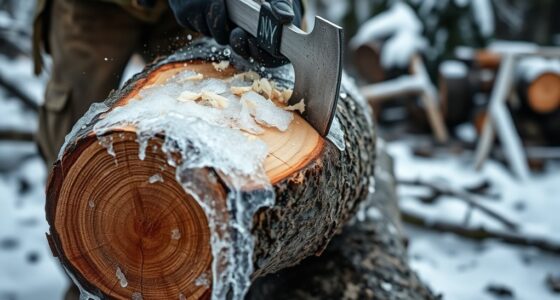
Your chopping techniques play a pivotal role in both safety and efficiency. When splitting wood, always use a sharp axe or maul, and make sure to stand on a stable surface. Position the wood on a sturdy splitter or chopping block, and aim for the grain. Striking along the grain helps split the wood more cleanly and reduces the effort needed. Use controlled, deliberate swings rather than forceful, haphazard hits. Keep your hands clear of the chopping path and maintain a firm grip to prevent slips. As you get more comfortable, you’ll develop a rhythm that makes splitting faster and safer. Remember, the goal is to produce even halves or smaller chunks that will ignite easily and burn thoroughly.
Frequently Asked Questions
What Tools Are Safest for Splitting Wood?
The safest tools for splitting wood are a quality axe or maul with a sharp blade. Always wear safety gear like gloves and eye protection to prevent injuries. Use proper splitting techniques, such as placing the wood on a stable surface and striking with controlled force. Keep a firm grip and stand in a safe stance. Regularly inspect your tools for damage and maintain them to guarantee safe, effective splitting.
How Do I Identify the Best Wood for Splitting?
You identify the best wood for splitting by checking its density and moisture content. Look for hardwoods like oak or hickory, which are dense and split more cleanly. Avoid softwoods with low density, as they’re harder to split. Also, choose wood with low moisture content—dry wood splits easier and burns better. To test moisture, weigh the wood or use a moisture meter for accurate results.
What Are Common Mistakes When Splitting Wood?
When splitting wood, avoid common mistakes like neglecting wood moisture, which makes splitting harder and less effective. Use the right splitting technique, like positioning the axe correctly and applying steady force, to prevent accidents. Don’t rush or use a dull axe, as this can cause injury or uneven splits. Always verify your wood is stable and on a solid surface, helping you split efficiently and safely.
How Do I Prevent Injury During Splitting?
To prevent injury during splitting, always wear safety gear like gloves, eye protection, and sturdy boots. Use proper technique by keeping your hands clear of the splitting area and aiming carefully. Maintain a firm grip on the axe, and make certain your stance is balanced. Stay focused and avoid rushing. These precautions help protect you from accidents and make the process safer and more efficient.
Can Splitting Affect Wood’s Burning Efficiency?
Splitting your wood is like opening a treasure chest, revealing its true potential. Proper splitting techniques allow you to control the size and shape, which directly affects burning efficiency. When wood is split correctly, it dries faster, reducing moisture content, and burns cleaner and hotter. If you neglect this, high moisture levels hinder combustion, making fires smokier and less efficient. So, split wisely to maximize your fire’s power and warmth.
Conclusion
So, next time you’re splitting wood, remember you’re not just creating firewood—you’re building the foundation for your very own wilderness kingdom. Picture yourself as the lumberjack king, wielding your axe like a sword, turning logs into a fiery throne. Just don’t forget: every split brings you closer to that perfect campfire feast, where marshmallows melt and stories get taller. Happy chopping—your kingdom awaits, one split at a time!