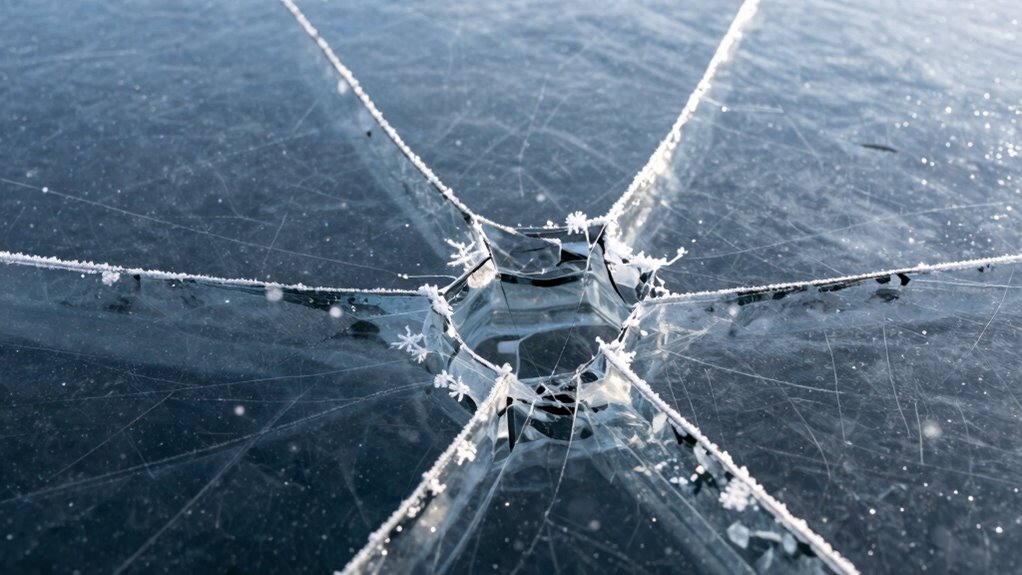

When temperatures drop below freezing, splitting becomes easier because trapped moisture inside materials expands as it turns into ice. This creates internal stresses that force cracks to form, especially if the cooling happens unevenly or quickly. Internal flaws and moisture content also make materials more prone to breaking. By understanding these factors, you can better protect your structures from damage. Keep exploring to discover how to prevent these issues before they cause costly repairs.

Get business pricing on tools and workshop supplies
- Business-only prices and quantity discounts
- Tax-exempt purchasing
- Multiple users, one account, clear invoices
Key Takeaways
- Freezing causes water inside porous materials to expand, exerting pressure that leads to cracking.
- Rapid or uneven cooling creates internal stresses, increasing the likelihood of splits.
- Existing flaws or moisture in materials weaken their resistance to freeze-thaw damage.
- Differential contraction due to material inconsistency or thickness variation causes internal stresses.
- Moisture intrusion during warmer months amplifies freeze-related splitting when temperatures drop.
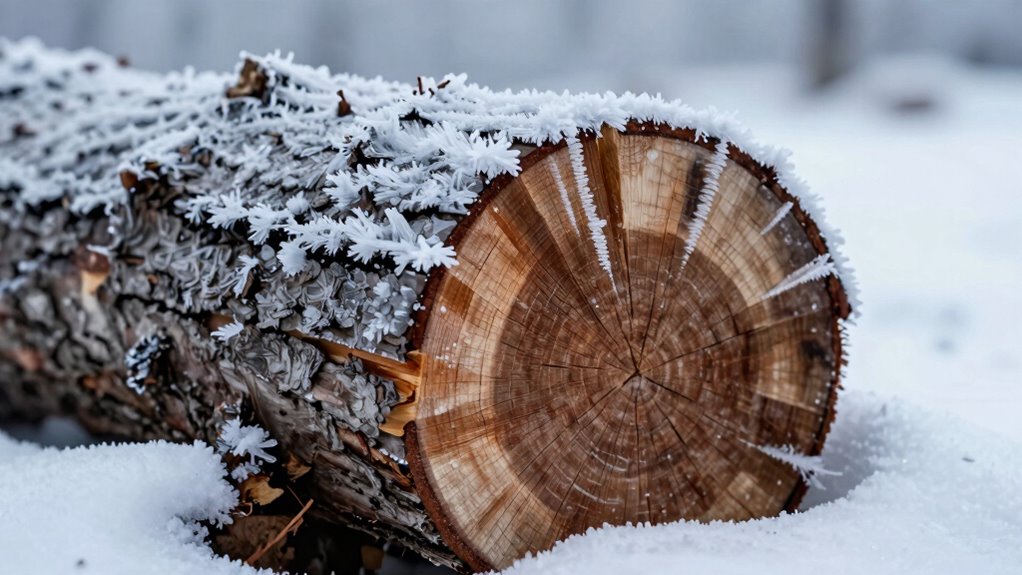
When temperatures drop below freezing, splitting becomes a common problem that can compromise the integrity of materials like wood, glass, and even concrete. You might notice cracks forming or existing ones worsening, and understanding why this happens helps you take better precautions. One of the main reasons is thermal expansion, which refers to how materials expand when they warm and contract when they cool. During cold snaps, these materials contract, and if they’re already under stress or contain internal flaws, the contraction can cause the material to crack or split. The rapid or uneven cooling, especially after a warm day, intensifies this process, making splitting more likely.
Moisture intrusion plays a significant role in this process. When moisture gets into tiny pores or cracks in materials like wood or concrete, it’s usually harmless during warmer weather. However, when temperatures plummet, the water inside expands as it freezes. This expansion exerts pressure on the surrounding material, often beyond its capacity to resist, resulting in cracks or splits. For example, if moisture seeps into the wood’s grain or into concrete’s pores, freezing temperatures can cause the water to expand dramatically, forcing the material to crack open. This is why you often see splits develop after a sudden cold snap following damp conditions.
You should also consider that materials don’t always respond uniformly to cold temperatures. Variations in thickness, internal composition, or previous damage can cause uneven thermal contraction. When different parts of a material contract at different rates, internal stresses build up. These stresses are often the tipping point that causes splitting. Moisture intrusion exacerbates this problem because it creates localized weaknesses where expansion forces are concentrated. In wood, for instance, moisture-laden areas may crack more readily than dry sections, especially if the wood is subjected to repeated freeze-thaw cycles. Additionally, proper material maintenance can help reduce the risk of splitting by minimizing internal flaws and ensuring better resilience against temperature fluctuations.
freeze thaw crack repair for concrete
As an affiliate, we earn on qualifying purchases.
As an affiliate, we earn on qualifying purchases.
Frequently Asked Questions
Can Certain Materials Resist Splitting Better in Cold Temperatures?
Yes, certain materials resist splitting better in cold temperatures because of their thermal expansion properties and inherent material resilience. When exposed to freezing temps, these materials experience less stress from contraction, reducing the risk of cracking or splitting. You’ll find metals like steel and some composites perform well, as their resilience allows them to handle temperature fluctuations without breaking. Choosing materials with low thermal expansion coefficients helps prevent splitting in cold conditions.
How Does Humidity Influence Cracking During Freezing Conditions?
Humidity acts like a sneaky whisperer, guiding moisture absorption into your materials, making them more prone to cracking during freezing conditions. When air circulation is poor, moisture becomes trapped, turning your materials into brittle glass. As temperatures drop, these trapped water molecules expand, exerting pressure that causes splitting. To protect your belongings, guarantee good air flow and control humidity levels, reducing the risk of cracking when it’s cold outside.
Are There Specific Tools to Prevent Splitting in Freezing Weather?
You should use specialized tools like wood treatment products and moisture barriers to prevent splitting in freezing weather. Applying wood treatments helps strengthen the wood and reduces moisture absorption, minimizing the risk of cracks. Moisture barriers, such as sealants or wraps, keep excess moisture out, ensuring the wood stays stable. Regularly inspecting and maintaining these treatments during cold seasons can markedly decrease the chances of splitting caused by freezing conditions.
What Are the Long-Term Effects of Repeated Freezing and Thawing?
Repeated freezing and thawing cause thermal expansion and contraction, which weaken materials over time. You might notice cracks or splits developing as this cycle leads to material fatigue. This process gradually reduces the integrity of structures, making them more prone to damage. To minimize long-term effects, it is crucial to use materials resistant to thermal stress and implement proper insulation strategies, helping prolong their lifespan and maintain safety.
How Does Insulation Impact the Likelihood of Splitting in Cold Environments?
Think of insulation as your home’s armor against winter’s chill. It boosts thermal resistance, keeping warmth in and cold out, which helps prevent splitting caused by freeze-thaw cycles. Moisture barriers work like shields, preventing water from penetrating and freezing inside walls. Together, they reduce the risk of splitting by maintaining consistent temperatures and moisture levels, making your home more resilient against the damaging effects of cold environments.
Conclusion
So, next time you face the cold, remember that splitting can be like a crack in ice—easier to manage when you understand its nature. Embrace the challenge as you would a frozen pond, knowing that with patience and the right techniques, you can navigate the freeze without breaking. Stay calm, work methodically, and let the ice do what it naturally does—split when the time is right, revealing new paths beneath the surface.
Fall Picks
fall essentials
As an affiliate, we earn on qualifying purchases.