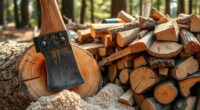
When splitting softwoods like cedar, spruce, and fir, focus on their moisture content and use sharp, well-maintained tools to make the process easier. Wait until their moisture drops to about 20-25% for smoother splits, as wetter wood is more flexible and resistant. Choose the right tool size—heavier for larger logs and lighter for small pieces—and use proper technique to direct force along natural grain lines. Keep exploring for tips to perfect your technique and tools.
Key Takeaways
- Use a sharp, well-maintained splitting axe or maul to efficiently split cedar, spruce, and fir along natural grain lines.
- Ensure the wood’s moisture content is between 20-25% for easier and safer splitting.
- Allow softwoods to dry properly before splitting to reduce resistance and prevent unpredictable cracking.
- Choose tool size and weight based on log dimensions; heavier tools suit larger logs, lighter for smaller pieces.
- Apply focused force along the grain, using proper technique to minimize effort and enhance safety during splitting.

Have you ever wondered why splitting softwoods can sometimes be easier than splitting hardwoods? The answer often comes down to moisture content and the type of splitting tools you use. Softwoods like cedar, spruce, and fir tend to have a lower density and a different internal structure, which makes them generally easier to split. These woods usually have a higher moisture content when freshly cut but tend to dry out more quickly, reducing their resistance over time. When the moisture content drops to an ideal level, the wood becomes less elastic and easier to fracture along natural grain lines. This means that timing your split after the wood has dried sufficiently can make the process smoother and less labor-intensive. Using moisture meters can help you determine the optimal moisture content for splitting softwoods, ensuring better results and less effort.
The key to successful splitting softwoods lies in understanding how moisture content affects their behavior. When wood is too wet, it’s more flexible and resistant to splitting because the water acts as a cushion between fibers. On the other hand, if it’s too dry, the wood can become brittle and prone to unpredictable cracking. The best moisture content for splitting softwoods is usually between 20% and 25%, which strikes a balance between flexibility and brittleness. To achieve this, many people use moisture meters to check their wood’s moisture content before splitting. This small investment can save you time and effort, ensuring you’re working with wood at the right stage of dryness.
Your choice of splitting tools also plays a crucial role in how easily you can split softwoods. For softer woods, a good splitting axe or maul with a sharp, well-maintained blade works best. These tools are designed to deliver concentrated force along the grain, making it easier to split along natural fibers. If your tools are dull or damaged, you’ll need to use more force, increasing fatigue and the risk of injury. Additionally, the size and weight of the splitting tool should match the size of the wood. A heavier maul is better suited for larger logs, while a lighter axe can handle smaller pieces with more control. Proper technique, combined with the right tools, can considerably reduce the effort needed.
Frequently Asked Questions
What Safety Gear Is Recommended for Splitting Softwoods?
When splitting softwoods, you should wear protective gloves to prevent cuts and improve grip, and eye protection to shield your eyes from flying debris. Always guarantee your gloves fit well and are suitable for handling wood. Use safety goggles or glasses to guard against splinters or wood chips. These safety gear pieces keep you protected and make the task safer and more comfortable.
How Does Moisture Content Affect Splitting Difficulty?
You’ll find that moisture levels dramatically influence splitting ease—dry wood becomes a formidable fortress, almost impossible to crack, while damp wood practically surrenders with a gentle tap. When moisture content is high, softwoods like cedar, spruce, and fir are much easier to split because the water weakens the fibers. Conversely, drier wood resists, turning your task into a battle of strength. So, always check moisture levels before splitting for smoother, safer work.
Can Softwoods Be Split With Power Tools?
Yes, you can split softwoods with power tools, but you need to prioritize power tool safety and softwood preparation. Use a chainsaw or hydraulic splitter designed for wood, wearing safety gear like goggles and gloves. guarantee the wood is properly secured and free of knots or debris before splitting. Always follow the manufacturer’s instructions and work carefully to avoid accidents, making your splitting process more efficient and safe.
What Are Common Mistakes to Avoid When Splitting Softwoods?
When splitting softwoods, avoid rushing and using the wrong tools, as it can lead to cracks and uneven splits. To prevent cracking, use proper techniques and choose the right wedge size for your wood. Don’t pry too aggressively, which can damage the grain. Instead, work patiently, applying steady force, and focus on correct wedge placement. These steps help you split softwoods smoothly and efficiently.
How Should Split Softwoods Be Stored Afterward?
After splitting softwoods, you should store them in a well-ventilated, dry environment to control moisture levels. Keep the wood elevated off the ground to prevent ground moisture from seeping in. Cover the pile loosely with a tarp to protect it from rain while allowing airflow. Proper moisture control and a suitable storage environment help prevent mold, rot, and warping, ensuring your split softwoods stay in good condition for future use.
Conclusion
Now that you know how to split cedar, spruce, and fir, you’re practically an unstoppable force of woodworking mastery. With your newfound skills, you could split logs faster than lightning strikes the earth, shaping your project into a masterpiece that’ll leave everyone in awe. Remember, mastering softwoods isn’t just a skill—it’s a superpower that transforms humble logs into works of art. Go ahead, wield that axe like the legend you’re destined to be!