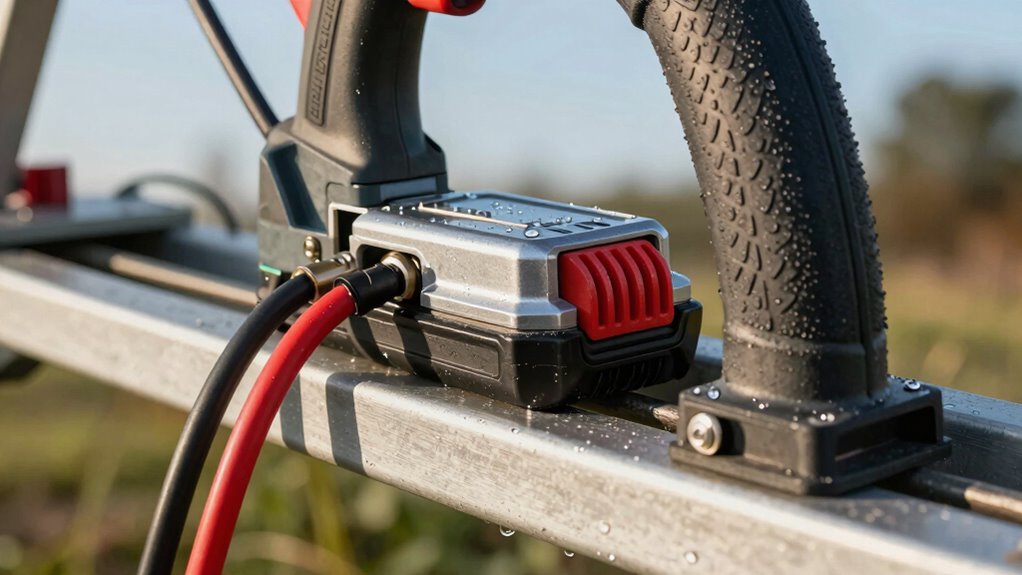

To prevent dead mornings, regularly check and clean your electric start splitter’s battery terminals using a wire brush or baking soda solution. Keep electrolyte levels topped with distilled water if needed, and store the battery in a cool, dry place when not in use. Use the proper charger and avoid overcharging. Periodic inspections and maintenance are key to ensuring reliable starts. Keep going to discover more essential tips for keeping your splitter ready when you need it most.
Key Takeaways
- Regularly inspect and clean battery terminals to prevent corrosion and ensure good connection.
- Keep electrolyte levels topped up with distilled water and check for leaks or damage.
- Fully charge the battery before storage and periodically recharge to prevent capacity loss.
- Use the recommended charger and avoid overcharging or undercharging to prolong battery life.
- Store the splitter in a cool, dry place and disconnect the battery during long periods of inactivity.
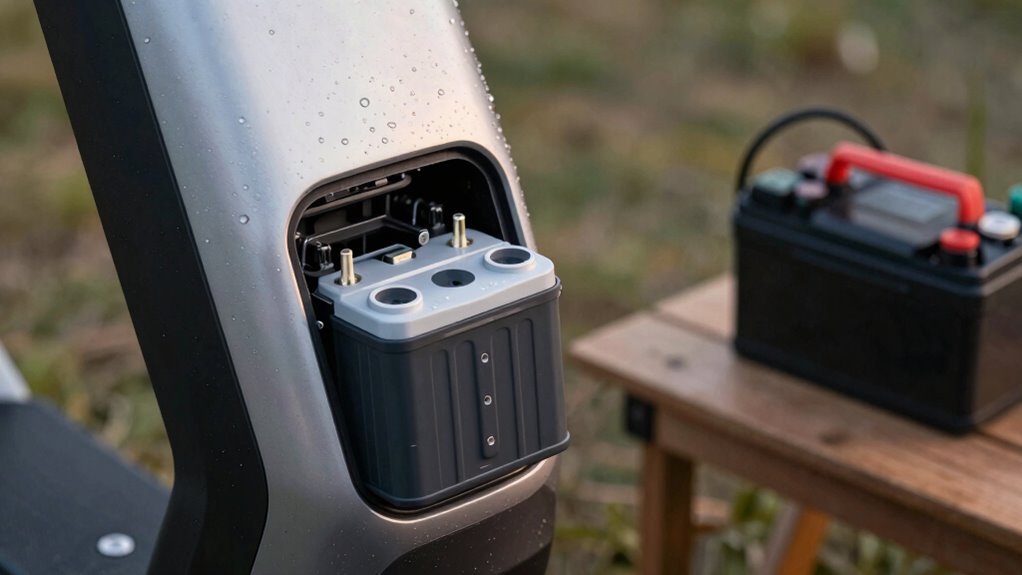
Proper battery care is vital to guarantee your electric start splitter operates reliably when you need it. A well-maintained battery ensures that your equipment starts smoothly, especially during those critical moments when you’re ready to work. To keep your splitter’s battery in top condition, you need to focus on effective battery maintenance and follow charging best practices. Neglecting these aspects can lead to reduced battery life, decreased performance, or even complete failure when you least expect it.
Start by regularly inspecting the battery for any signs of corrosion, leaks, or damage. Keep the terminals clean and free of dirt or corrosion, using a wire brush or a cloth dipped in a mixture of baking soda and water if needed. Proper battery maintenance also involves checking the electrolyte levels if your battery isn’t sealed. If you notice low levels, top up with distilled water, but always do so with the battery turned off and disconnected. This simple step prevents the buildup of internal resistance and guarantees peak performance. Additionally, monitoring battery voltage can help you identify early signs of degradation before failure occurs.
Inspect and keep terminals clean; check electrolyte levels and top up with distilled water when needed.
When it comes to charging best practices, always use the charger recommended by the manufacturer. Using an incompatible charger can cause overcharging or undercharging, both of which harm the battery’s lifespan. Make it a habit to charge your splitter’s battery in a well-ventilated area and avoid leaving it connected to the charger for extended periods once fully charged. Most batteries benefit from a slow, steady charge rather than rapid charging, which can generate excess heat and accelerate wear.
Additionally, don’t let your battery sit unused for long periods. If you plan on storing your electric start splitter for an extended time, charge the battery fully before storage and disconnect it. Store the battery in a cool, dry place, ideally between 50°F and 77°F (10°C to 25°C). During storage, periodically check the battery’s charge level and recharge if necessary to prevent it from becoming completely discharged, which can cause irreversible damage.
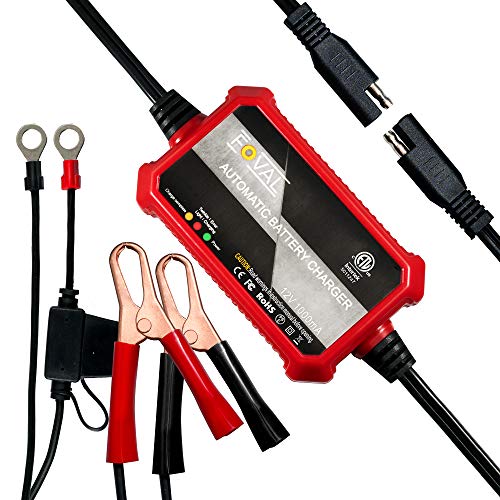
Foval Automatic Trickle Battery Charger 12V 1000mA Smart Battery Charger
Automatic Battery Charger & Maintainer: 1A 12V smart battery charger perfect for SLA / VRLA / GEL CELL…
As an affiliate, we earn on qualifying purchases.
As an affiliate, we earn on qualifying purchases.
Frequently Asked Questions
How Often Should I Check My Splitter’s Battery?
You should check your splitter’s battery at least once a month to make certain it stays in good condition. Regular battery maintenance helps you catch any issues early, like corrosion or low charge. Keep an eye on the charging frequency; if you notice the battery isn’t holding a charge well, it might need a full recharge or replacement. Consistent checks prevent unexpected dead mornings and keep your splitter ready to go.
Can I Use Any Type of Charger for the Battery?
It’s tempting to grab any charger, but coincidence shows that using the wrong one can lead to issues. You should always check the charger compatibility with your splitter’s battery, ensuring it matches the voltage and current specifications. Using an incompatible charger risks damaging the battery or creating safety hazards. Always opt for the manufacturer-recommended charger to guarantee safe, effective charging and avoid voiding your warranty.
What Signs Indicate My Battery Needs Replacement?
If your battery shows signs of reduced performance, it may need replacement. Look for a shorter runtime, difficulty starting the engine, or slow cranking. Conduct a battery testing to assess its health; if it fails, it’s likely at the end of its lifespan. Batteries typically last a few years, so replacing it before failure can prevent inconvenience. When in doubt, consult a professional for an accurate assessment.
How Does Temperature Affect Battery Performance?
Imagine your battery chemistry as a delicate dance that tempers in the right rhythm. When temperatures rise, it speeds up, risking wear and tear; when they drop, it slows down, causing sluggish starts. Proper temperature regulation keeps your battery performing smoothly, preventing premature aging. Maintaining a consistent environment ensures your electric start splitter stays reliable, so you won’t face chilly mornings or overheated surprises.
Is It Safe to Leave the Battery Connected All Winter?
You shouldn’t leave the battery connected all winter. For proper battery storage and winter maintenance, disconnect the battery and store it in a cool, dry place. This prevents drain and damage caused by cold temperatures. Check the charge regularly and keep it topped up to maintain peak performance. Following these steps helps ensure your splitter’s battery stays healthy and ready to start when you need it.

Battery Terminal Cleaner Tool Kit, 2-Pack Battery Post Wire Brush with Metal Case and 10 Anti-Corrosion Fiber Washers (5 Red & 5 Green) for Car, Truck, RV and Marine Batteries
【Effortlessly removes corrosion】The dual-ended battery post cleaning brush, made of stainless steel casing and with steel wire bristles,…
As an affiliate, we earn on qualifying purchases.
As an affiliate, we earn on qualifying purchases.
Conclusion
Taking good care of your splitter’s battery isn’t just about avoiding dead mornings—some say a well-maintained battery can even boost your machine’s overall lifespan. While regular charging and storage are essential, there’s a theory that periodically using a battery conditioner can prevent corrosion and extend its life further. Give your electric start splitter the attention it deserves, and you’ll enjoy reliable starts season after season, proving that proper battery care truly makes a difference.

EZRED BMK1914 5-Piece Battery Maintenance Kit
BATTERY MAINTENANCE KIT: This kit includes every tool that you'll need to service or change a battery in…
As an affiliate, we earn on qualifying purchases.
As an affiliate, we earn on qualifying purchases.
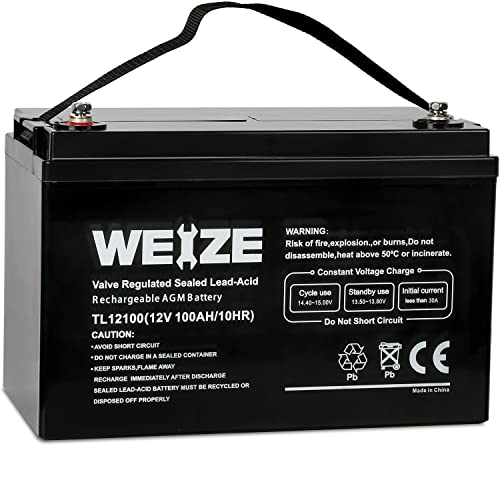
Weize Deep Cycle AGM 12 Volt 100Ah Battery, Maintenance-Free, 3% Self-Discharge Rate, 1150A Max Discharge Current, Perfect for RV, Solar, Trolling Motor, Wind, Marine, Camping and Off-Grid System
MAINTENANCE FREE: 12.99x 6.73x 8.43 inches. Weize 12v 100Ah sealed lead acid battery is manufactured with absorbent glass…
As an affiliate, we earn on qualifying purchases.
As an affiliate, we earn on qualifying purchases.