
Leaving fallen wood in the woods supports your local ecosystem by providing shelter for insects, fungi, and small animals. It helps maintain ecological balance, promotes nutrient recycling, and encourages new plant growth. By leaving this natural debris undisturbed, you help preserve biodiversity and strengthen the forest’s resilience against environmental stresses. If you want to discover how keeping fallen wood benefits more than just the environment, keep exploring these essential natural processes.
Key Takeaways
- Leaving fallen wood supports nutrient recycling and soil enrichment, benefiting overall forest health.
- It provides essential habitats for insects, fungi, and wildlife, promoting biodiversity.
- Fallen wood helps maintain ecological balance and natural forest resilience.
- Retaining dead wood reduces erosion and retains soil moisture, supporting plant growth.
- Protecting fallen wood preserves natural processes crucial for conservation and ecosystem integrity.
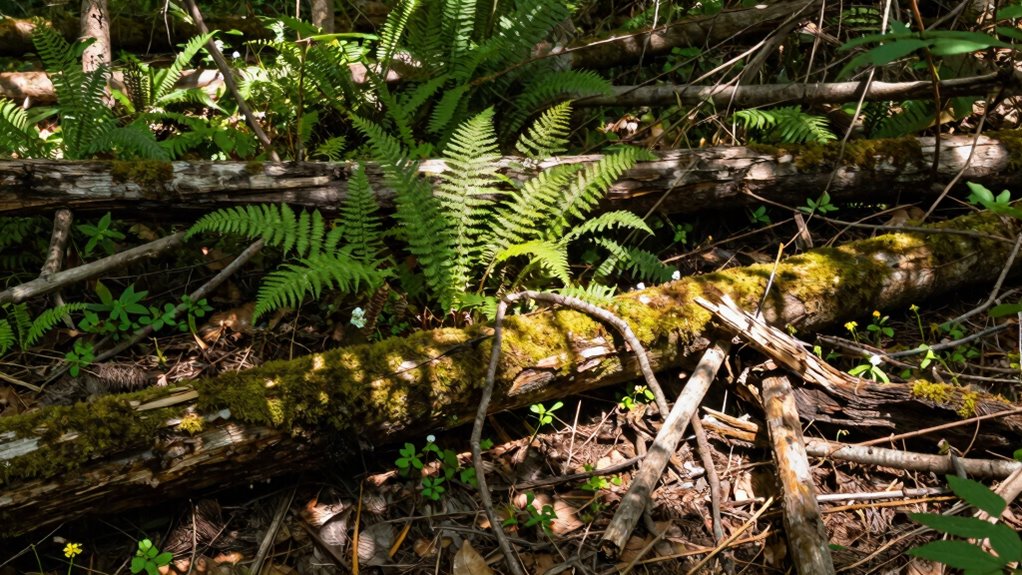
When fallen wood is left undisturbed in the woods, it often provides essential benefits that outweigh the temptation to clear it away. In the domain of forest ecology, fallen logs and branches are much more than debris; they form a critical part of the ecosystem’s natural cycle. Your instinct might be to tidy up the forest floor, but leaving this wood in place supports a complex web of life and helps maintain ecological balance. Fallen wood acts as a cornerstone for many processes that keep the forest healthy and resilient.
Leaving fallen wood undisturbed supports ecosystem health, biodiversity, and natural forest resilience.
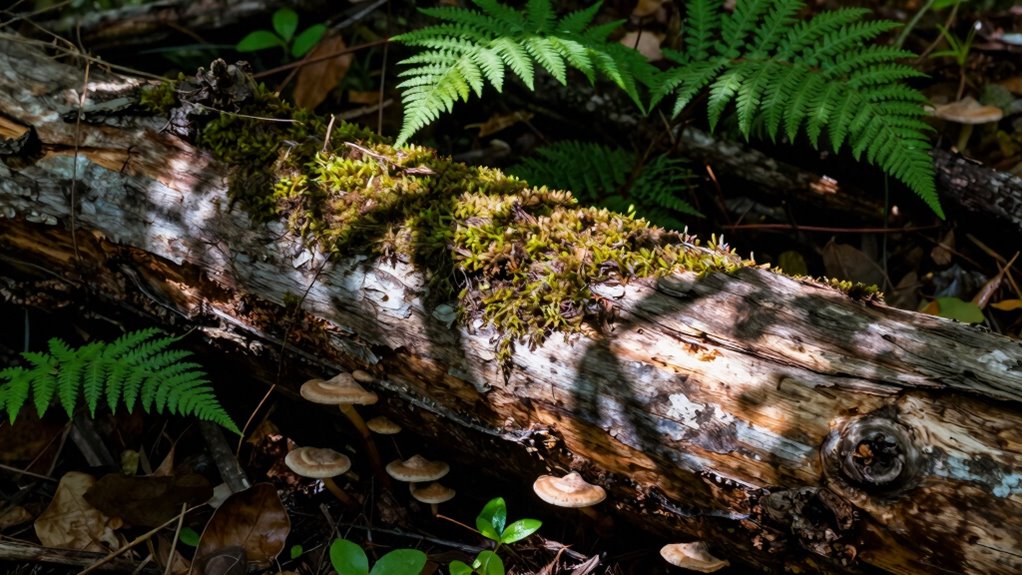
In terms of wildlife habitat, dead and decaying wood is indispensable. Many species of insects, fungi, and microorganisms rely on fallen logs for food and shelter. These organisms break down the wood over time, recycling nutrients back into the soil. By doing so, they enrich the forest floor, encouraging new plant growth and maintaining soil fertility. If you clear fallen wood, you risk disrupting these essential relationships. Numerous small creatures, like beetles and ants, burrow into the wood, creating homes that support larger animals such as birds and amphibians. These habitats are often overlooked, but they serve as key nesting sites and refuge areas for a diverse array of wildlife.
Additionally, fallen wood contributes to the structural complexity of the forest, fostering biodiversity. It creates microhabitats that support species which wouldn’t survive otherwise, especially in mature forests where standing trees alone might not provide enough variety. As the wood decomposes, it also helps retain moisture in the soil, which benefits plants and reduces erosion. This natural process creates a more resilient ecosystem capable of withstanding stresses like droughts or invasive species. Recognizing the importance of natural debris in maintaining ecological health is crucial for forest conservation efforts. Protecting dead and decaying wood is therefore crucial for maintaining a balanced and thriving forest environment.
Leaving fallen wood in the woods isn’t just about preserving aesthetics; it’s about nurturing a self-sustaining environment. By resisting the urge to clear it away, you’re helping promote a healthy forest ecology. You encourage a natural cycle of growth, decay, and renewal that sustains countless forms of life. It’s an act of conservation that benefits everyone—flora, fauna, and even future generations who will enjoy the forest’s richness. In the end, fallen wood is a cornerstone of ecological integrity, and leaving it in place guarantees the forest remains vibrant, balanced, and alive.
fallen wood habitat preservation kit
As an affiliate, we earn on qualifying purchases.
As an affiliate, we earn on qualifying purchases.
Frequently Asked Questions
How Long Does Fallen Wood Typically Decompose Naturally?
Fallen wood typically takes anywhere from a few years to several decades to decompose naturally, depending on various decomposition factors. Factors like wood type, moisture, temperature, and insect activity influence its decay rate. In moist, warm environments, decay speeds up, possibly taking just 3-10 years. In colder, drier conditions, it can last for 20-50 years or more. You’ll notice the wood gradually breaking down as these factors affect its decomposition process.
Can Fallen Wood Attract Pests or Invasive Species?
Fallen wood can attract pests like termites or beetles and may introduce invasive species to your area. When you leave it exposed, pests find food and shelter, increasing their populations nearby. Invasive species can hitch a ride on logs, spreading into new environments and disrupting existing ecosystems. To prevent pest attraction and invasive species spread, consider removing or properly managing fallen wood, especially in sensitive or protected areas.
Is It Safe to Build Shelters With Fallen Wood?
Building shelters with fallen wood can be safe if you assess wildfire risk and aesthetic considerations first. Make sure the wood isn’t too close to your home or other structures, reducing fire danger. Check for pests or invasive species, and avoid using decayed or moldy wood. Using fallen wood thoughtfully balances safety and natural beauty, but always prioritize fire safety and environmental impact to protect yourself and the environment.
How Does Fallen Wood Affect Soil Health Over Time?
Fallen wood enriches soil over time, acting like a natural fertilizer. While it might seem like a dead end, it actually fuels nutrient cycling, breaking down into organic matter that boosts soil health. You’ll notice healthier plants and richer earth where fallen logs decay, creating a cycle of renewal. So, leaving fallen wood in the woods supports soil enrichment, making it a essential part of the ecosystem rather than an obstacle.
Are There Legal Restrictions on Removing Fallen Wood?
You need to check local regulations because legal considerations often restrict removing fallen wood, especially on protected lands. Removing it without permission can lead to fines or penalties. Also, consider the wildlife impact; fallen wood provides habitat for insects, fungi, and small animals. By leaving it in the woods, you support local ecosystems and avoid disrupting wildlife. Always verify with land management authorities before removing fallen wood to stay compliant.
Conclusion
So, next time you see fallen wood in the woods, remember that sometimes, leaving it be is the best option. It’s not just about taking what’s useful, but respecting the natural balance. After all, you don’t want to bite off more than you can chew or disturb the harmony already there. Nature has a way of taking care of itself, and by leaving fallen wood, you’re giving it a hand without rocking the boat.