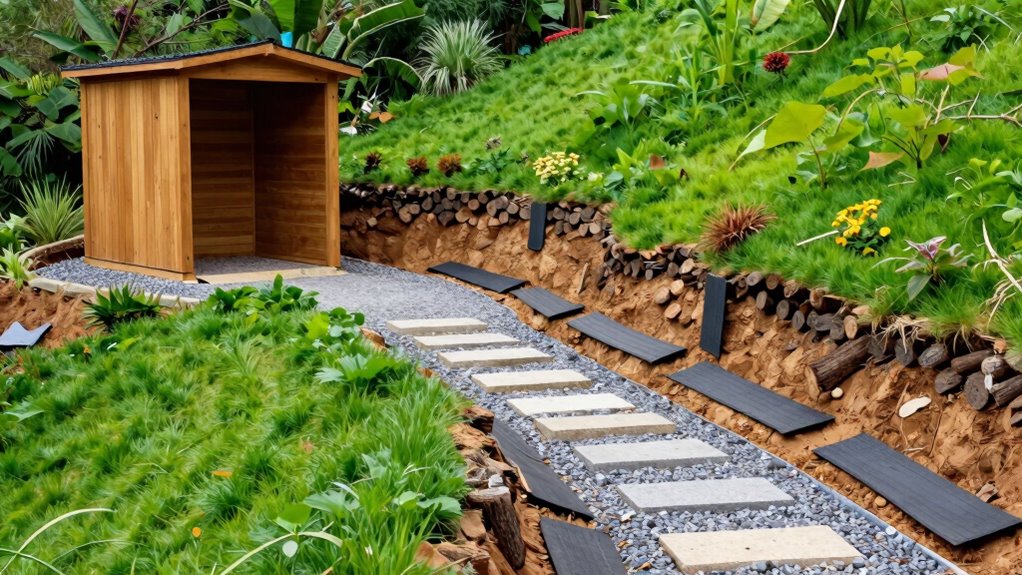

To reduce erosion around sheds, trails, and work zones, start by planting native grasses, shrubs, or ground covers to establish dense root systems that hold soil in place. Use mulch, erosion control fabrics, or mats during plant establishment, especially on slopes and trail edges. Grade terrain to direct water away from vulnerable areas and install drainage features like swales or French drains. Regularly inspect and maintain these measures to guarantee long-term stability and prevent soil loss. Keep exploring to learn more effective techniques.
Key Takeaways
- Plant native grasses, shrubs, or ground covers around sheds and trails to establish dense root systems for soil stabilization.
- Install erosion control fabrics, mats, or blankets on slopes and vulnerable areas to prevent soil displacement.
- Grade terrain to direct water away from structures and create gentle slopes to minimize runoff speed.
- Incorporate permeable pathways and gravel or crushed stone surfaces to facilitate water absorption.
- Regularly inspect and maintain drainage systems and vegetation to ensure continued erosion control effectiveness.

Erosion around sheds and trails can quickly become a serious problem if left unchecked, leading to unstable ground, damage to structures, and environmental degradation. To combat this, you need a multi-faceted approach that includes vegetation planting and drainage improvement. Planting vegetation is one of the most effective ways to stabilize soil. By selecting the right plants—such as grasses, shrubs, or ground covers—you create a root system that holds soil in place, preventing it from washing away during heavy rains. Native plants are often best because they’re adapted to your local climate and soil conditions, ensuring they establish quickly and require less maintenance. When planting, focus on creating a dense cover over vulnerable areas, especially slopes and around the base of sheds or along trails. This not only anchors the soil but also helps absorb rainwater, reducing runoff and erosion. Incorporating erosion control measures like mulch or geotextile fabrics can provide additional support during the establishment phase of vegetation. Using erosion control fabrics can also help stabilize soil temporarily until your plants are well-established.
Drainage improvement is equally critical. Poor drainage leads to water pooling or flowing rapidly over surfaces, accelerating erosion. You should assess the area around your shed and trails to identify spots where water tends to collect or flow too quickly. Installing proper drainage systems—such as French drains, swales, or catch basins—can redirect water away from vulnerable zones. Grading the terrain to slope gently away from structures ensures that water naturally moves away from foundations, protecting your investments. Incorporate permeable materials like gravel or crushed stone in pathways to facilitate water absorption and reduce runoff. Additionally, adding mulch around plants and in bare soil areas helps retain moisture, prevents soil displacement, and promotes healthy plant growth. Regularly inspecting and maintaining these drainage features can prevent blockages and ensure they function effectively over time. Using erosion control materials such as mats or blankets can further protect soil during periods of heavy rainfall or high erosion risk until your vegetation becomes well-established, providing an extra layer of stability.
As an affiliate, we earn on qualifying purchases.
Frequently Asked Questions
How Often Should Erosion Control Measures Be Inspected and Maintained?
You should inspect erosion control measures regularly, ideally after heavy rains or storms. Maintain a consistent schedule, such as monthly inspections, to catch issues early. Your maintenance schedule should include checking for displaced or damaged barriers and sediment buildup. By adhering to a frequent inspection schedule, you can address problems promptly, preventing further erosion and ensuring your control measures stay effective over time.
What Are the Best Native Plants for Erosion Prevention?
Did you know native plants can reduce erosion by up to 90%? For effective soil stabilization, consider native grasses like switchgrass and little bluestem, which establish deep roots quickly. Shrubs such as serviceberry and sumac also help hold soil in place around sheds and trails. Native planting not only stabilizes soil but also promotes local biodiversity, making your erosion control efforts more sustainable and attractive.
Can Erosion Barriers Be Installed During Winter?
Yes, you can install erosion barriers during winter, but seasonal challenges like frozen ground and snow may slow progress. Winter installation requires careful planning to guarantee the barriers stay in place and function effectively. You might need to wait for slightly warmer days or use specialized equipment. Properly installing erosion barriers in winter can protect your site from future runoff issues, even amid the season’s unique challenges.
How Do I Determine the Severity of Erosion on My Property?
Did you know that 80% of soil erosion is caused by water runoff? To determine erosion severity, observe your property for exposed soil, gullies, or sediment buildup. Check for areas where water flows quickly or accumulates, indicating instability. Soil stability drops when water runoff increases, especially after heavy rain. Regular inspections help you identify erosion signs early, so you can take action to protect your land before damage worsens.
Are There Any Eco-Friendly Alternatives to Traditional Erosion Control Methods?
Yes, eco-friendly options like green mulch and compost blankets can effectively reduce erosion. Green mulch, made from natural materials, suppresses weeds and retains soil moisture, while compost blankets protect the soil surface and encourage beneficial microbial activity. You can apply these around sheds, trails, and work zones to stabilize the soil, promote plant growth, and minimize environmental impact without relying on synthetic products.
Conclusion
By taking these simple erosion control steps, you’ll turn your sheds, trails, and work zones into virtually indestructible fortresses against erosion. Imagine your land so resilient that even the fiercest storms and relentless rains bounce right off, leaving your area pristine and untouched. With just a little effort, you’ll prevent erosion from becoming an unstoppable force—more powerful than a hurricane—saving you time, money, and endless headaches. Your land’s future security depends on it!