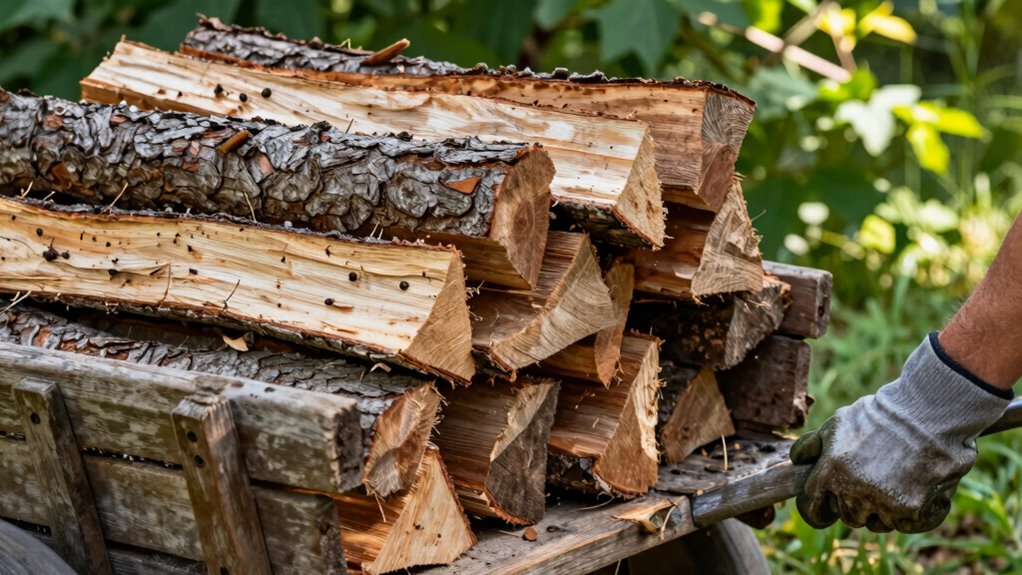

Avoid moving firewood over long distances or across regional borders, as it can hitchhike pests and diseases that threaten local trees and crops. Always buy or gather firewood close to your site and check for signs of insects or damage before transporting. Keep firewood sealed during transport, and burn it on-site whenever possible. Continuing this way helps protect ecosystems, and you’ll discover more tips on how to prevent pest spread effectively.
Key Takeaways
- Avoid transporting firewood over long distances or across regional borders to prevent pest spread.
- Do not move infested or damaged firewood, as pests and diseases can hitchhike on it.
- Never leave firewood exposed or uncontained during transport, which can facilitate pest dispersal.
- Refrain from bringing firewood home from unknown sources; always buy locally or from approved suppliers.
- Do not store or handle firewood near natural habitats to prevent pests from entering ecosystems.
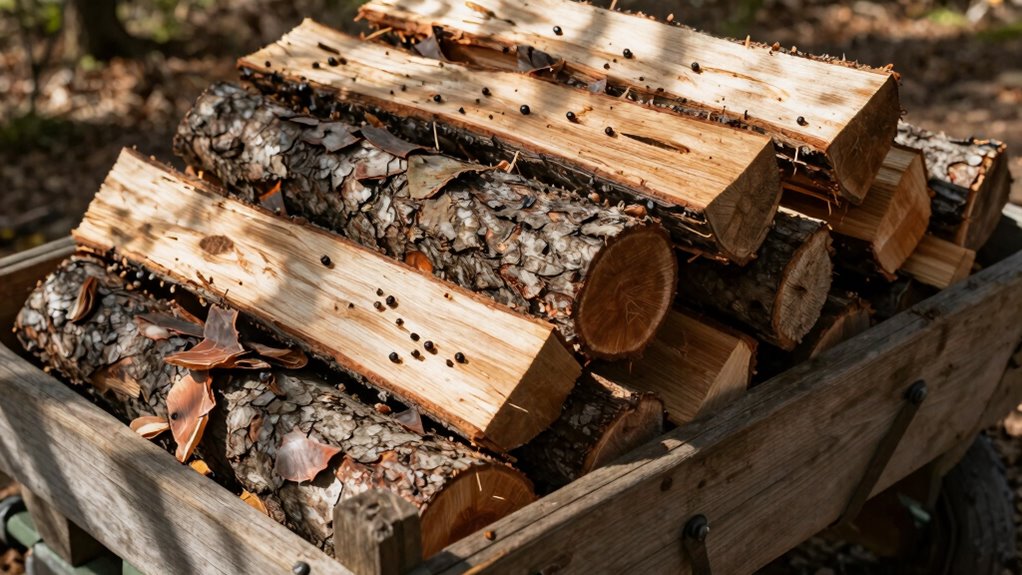
Moving firewood can unintentionally spread harmful pests and diseases to new areas, threatening local ecosystems. Many regions have established firewood regulations to prevent this, but if you’re not careful, you might unknowingly contribute to the problem. Pests like beetles, larvae, and fungi can hitch a ride on firewood and establish themselves far from their original locations. Once introduced, these invasive species can devastate trees, crops, and natural habitats, making it imperative that you follow proper guidelines when transporting firewood.
Transporting firewood risks spreading pests and diseases, threatening ecosystems; always follow local regulations to prevent invasive species spread.
To avoid spreading pests, it’s vital to adhere to firewood regulations set by local and national authorities. These rules often restrict moving firewood across specific distances or encourage purchasing it locally. The goal is to limit the movement of potentially infested wood, reducing the chances of pest outbreaks. Before you take firewood on a trip or bring it home from a different area, always check the regulations applicable in your region. Many states and provinces provide lists of approved sources or recommend buying firewood near your destination, especially for camping or outdoor activities.
In addition to following firewood regulations, you should incorporate pest prevention tips into your routine. For example, inspect firewood carefully before transport, looking for signs of pests or larvae. Never move firewood that appears infested or damaged. When transporting firewood, keep it sealed or contained to prevent accidental dispersal if pests are present. It’s also wise to burn all firewood on-site rather than bringing leftovers home, as this minimizes the risk of spreading pests to new locations.
Another key pest prevention tip is to buy or gather firewood locally. This not only supports nearby businesses but also ensures the wood has already been checked for pests. If you’re camping, use the firewood available at your destination rather than bringing your own from afar. If you must move firewood, try to do so only over short distances and avoid crossing jurisdictional boundaries unless explicitly allowed. Properly storing firewood away from standing trees and natural areas can further prevent pests from spreading.

Greesum 31 Gallon Resin Deck Box All Weather Outdoor Storage Boxes for Patio Furniture Set,Outdoor Toys,Garden Tools,Black
- Material: All-weather waterproof resin
- UV Protection: Resists UV fading
- Weather Resistance: Withstands harsh weather conditions
As an affiliate, we earn on qualifying purchases.
As an affiliate, we earn on qualifying purchases.
Frequently Asked Questions
Are There Safe Ways to Transport Firewood Locally?
Yes, you can transport firewood locally safely by storing it properly and following pest prevention tips. Keep firewood stacked off the ground in a dry, well-ventilated area to reduce pest risks. When moving it, limit the distance and avoid crossing state or regional lines to prevent spreading pests. Cover the wood to protect it from weather, and inspect it thoroughly before setting it down at the new location to guarantee pest-free firewood storage.
How Can I Identify if Firewood Is Infested?
Imagine you’re a detective in a noir film, searching for clues. To identify if firewood is infested, look for wood-borne pests like tiny holes, sawdust, or frass. Check for mold, unusual smells, or live insects crawling on the surface. Infestation signs include discolored or decayed wood and larvae in the bark. If you spot any of these, it’s best not to move or burn that firewood, to prevent spreading pests.
What Are the Legal Regulations for Moving Firewood?
You need to follow firewood regulations and transport laws to avoid spreading pests. Many regions restrict moving firewood across certain borders or require it to be heat-treated or certified pest-free. Always check local, state, or federal guidelines before transporting firewood. Failing to follow these laws can lead to hefty fines or the spread of invasive species. Stay informed and verify your firewood complies with all relevant regulations.
Can Pest Spread Happen Through Small Quantities of Firewood?
Yes, pest transmission can happen through small quantities of firewood. Even tiny pieces can carry firewood contamination, allowing pests like insects or larvae to spread to new areas. When you move small amounts of firewood, you risk unknowingly transporting pests that can infest trees or forests. To prevent this, always inspect and purchase firewood locally, and avoid moving it over long distances, reducing the chance of pest transmission and protecting ecosystems.
Are There Recommended Alternatives to Firewood Transportation?
Yes, there are recommended alternatives to firewood transportation that enhance pest prevention. You can opt for local firewood, purchased near your destination, reducing the need to move it over long distances. Proper firewood storage is essential; keep it away from your home and off the ground. Consider using fire logs or manufactured fire starters. These options minimize pest spread risks while ensuring you enjoy a cozy fire safely.
Conclusion
Remember, moving firewood without caution is like opening Pandora’s box—pests and diseases can hitch a ride to new places. Always buy locally or burn what you have on site. Think of it as keeping your backyard safe and pest-free; don’t let a small mistake turn into a big headache. Stay vigilant and respect nature’s boundaries. After all, a little care now can save you a world of trouble down the road.