
Start by selecting healthy, pest-free logs and use sharp tools for safe, clean cuts. Cut the logs into manageable lengths, then split along the grain to speed up drying and expose more surface area. Stack the split wood loosely on pallets or raised platforms, leaving gaps for good airflow. Cover only the top with a waterproof tarp while keeping sides open for ventilation. Following this order guarantees efficient drying and safety—stick around to discover more detailed tips.

Get business pricing on tools and workshop supplies
- Business-only prices and quantity discounts
- Tax-exempt purchasing
- Multiple users, one account, clear invoices
Key Takeaways
- Select and prepare logs, ensuring they are free of rot and pests before cutting.
- Cut logs into manageable lengths, then split along the grain to maximize surface area for drying.
- Stack split logs loosely on pallets, allowing ample airflow around each piece.
- Cover the top of the stack with waterproof material, leaving sides open for ventilation.
- Maintain tools regularly and keep the workspace clear throughout to ensure safety and efficiency.
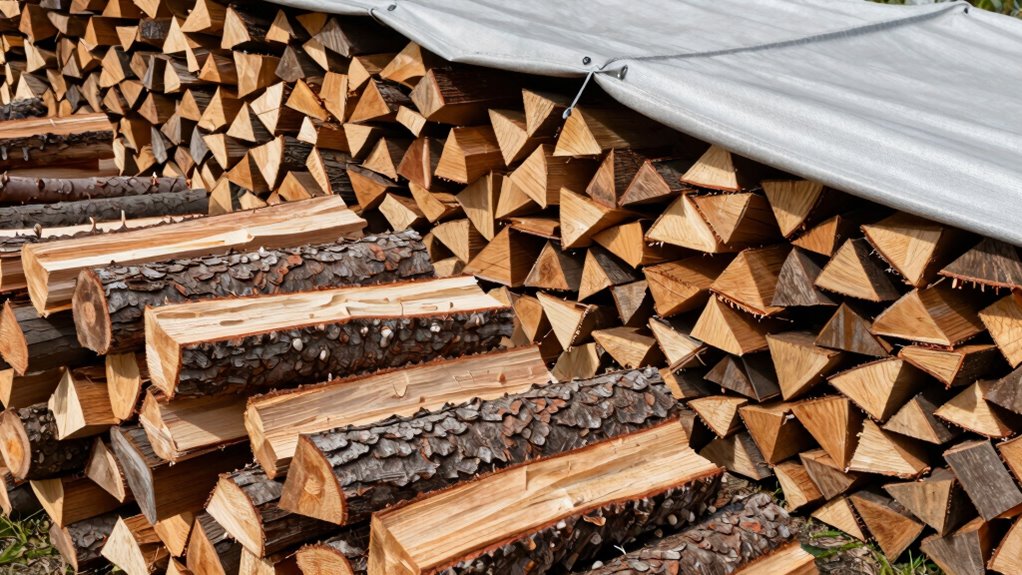
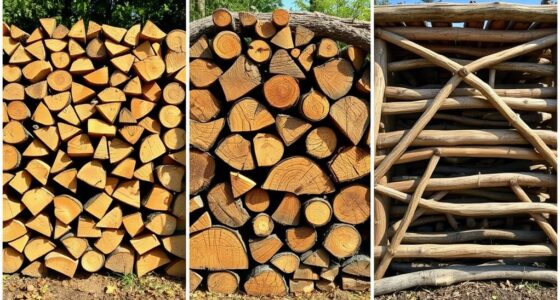
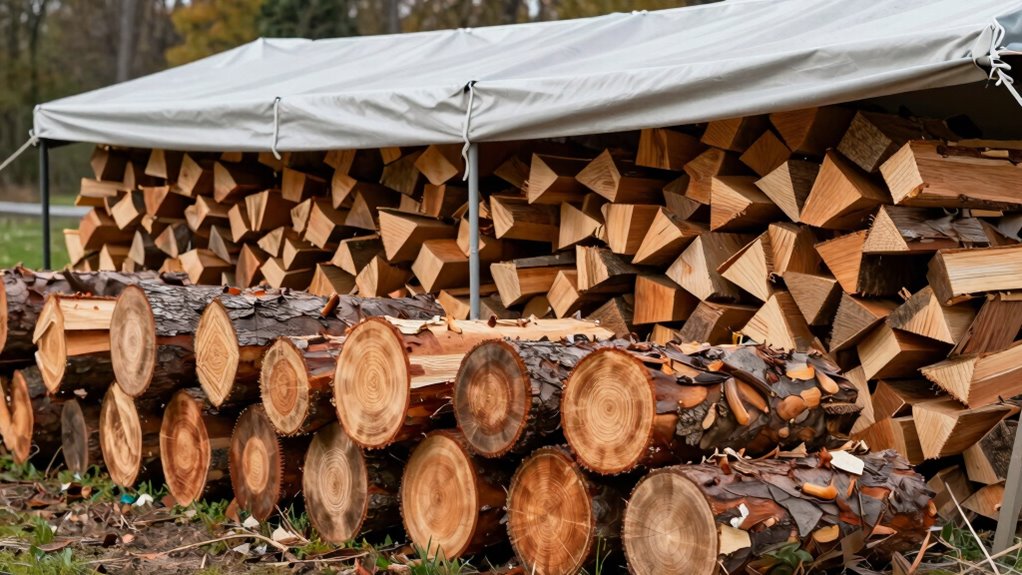
When preparing firewood, following the right order for cutting, splitting, stacking, and covering can make the process more efficient and guarantee your wood dries properly. Starting with cutting, you want to focus on selecting the right logs, ensuring they are free of rot or pests. Using sharp, well-maintained equipment is essential for safe and effective cutting. Dull blades increase the risk of accidents and can cause uneven cuts, which hampers the drying process. Regular equipment maintenance isn’t just about keeping tools sharp; it’s also about fire safety. Properly maintained tools reduce the chance of accidents and injuries, especially when working with heavy logs or power tools. Once the logs are cut to manageable lengths, splitting comes next. Splitting the wood into smaller pieces accelerates drying because it exposes more surface area to air. Make sure you have the right tools—like a good axe or a hydraulic splitter—and that they’re in good condition. Proper technique is key: always aim to split along the grain to minimize effort and prevent accidents. After splitting, stacking the wood correctly is crucial. You want to create a stable, loose pile that allows air to circulate freely around each piece. Avoid stacking the wood directly on the ground; use pallets or a raised platform to prevent moisture absorption from the soil. Horizontal stacking with some gaps between pieces promotes airflow, speeding up the drying process. Proper stacking techniques can further improve airflow and drying efficiency. Additionally, understanding air circulation principles helps optimize the drying process and prevent mold growth. Ensuring the correct stack orientation can make a significant difference in how quickly your firewood dries. Incorporating proper stacking practices can help maximize airflow and enhance the overall drying process. Covering the stack is the last step, but it’s equally important to do it right. You should cover the top of the stack with a waterproof tarp or a metal roof, leaving the sides exposed to allow air to circulate. Avoid completely sealing the stack, as trapped moisture can lead to mold or decay. Proper covering protects the firewood from rain and snow while still enabling moisture to escape, ensuring your wood dries thoroughly. Remember, good fire safety practices come into play throughout this entire process: keep your workspace clear of debris, handle tools carefully, and store equipment safely when not in use. Regular maintenance of your tools not only prolongs their lifespan but also keeps your work safe and efficient. Additionally, understanding proper stacking techniques can further enhance the drying process. When you follow this sequence, you’ll find that your firewood dries faster, burns cleaner, and is safer to handle. This organized approach saves you time and effort while ensuring your firewood is of top quality, ready whenever you need it, and safe to use in your fireplace or stove.
Frequently Asked Questions
What Tools Are Best for Cutting Firewood Efficiently?
To cut firewood efficiently, a good chain saw is your best tool, offering quick, smooth cuts through logs. Pair it with a splitting axe to split larger pieces into manageable sizes. Use the chain saw for initial cuts and the splitting axe for finer splitting or shaping. This combo saves time and effort, ensuring you get seasoned firewood ready for burning without unnecessary strain.
How Do Weather Conditions Affect Stacking and Covering?
Weather conditions can turn your firewood pile into a soggy mess or a dry haven. Seasonal changes influence moisture management, making it essential to adapt your stacking and covering practices. Rain and snow demand sturdy covers that shed water, while dry weather allows better airflow. By staying attentive to weather shifts, you guarantee your firewood stays dry, ready, and efficient, instead of turning to mold or decay. Think of weather as your silent partner in moisture management.
What Types of Wood Dry the Fastest?
You’ll find that softwoods like pine and spruce dry faster than hardwoods because of their lower moisture content and thinner grain. To accelerate wood seasoning, use proper drying methods such as stacking the wood with spacers for airflow and covering the top while leaving the sides open. Proper drying methods ensure quicker, more even drying, helping you get ready to burn or use your wood sooner.
How Often Should I Re-Cover My Stacked Wood?
Like a wise old oak, you should re-cover your stacked wood at least once a year, especially if it’s exposed to frequent rain or snow. This helps maintain low moisture content and prevents pests from seeking shelter. Check your cover regularly—if it’s torn or displaced, replace it promptly. Proper coverage keeps your firewood dry, ensuring better burning and longer-lasting protection against moisture and pest intrusion.
Are There Safety Tips for Beginners During Splitting?
Yes, there are safety tips for beginners during splitting. Always wear protective gear like gloves, safety glasses, and steel-toed boots to prevent injuries. Keep a safe distance from the splitting wedge and axe, and make certain your work area is clear of obstructions. Maintain focus to avoid accidents, and be mindful of fire safety—store tools properly and avoid sparks near wood piles. Stay alert and take your time.
Conclusion
By following this order, you turn a tangled mess of wood into a neat, glowing forest of warmth. Cutting, splitting, stacking, and covering become your dance steps, guiding the wood to its final, ready-to-burn stage. Think of each step as laying bricks in a cozy home—solid, secure, and perfectly in place. With this rhythm, your firewood saga ends with a crackling symphony of heat, ready to warm your home and your heart.
Fall yard work Picks
leaf blowers
As an affiliate, we earn on qualifying purchases.