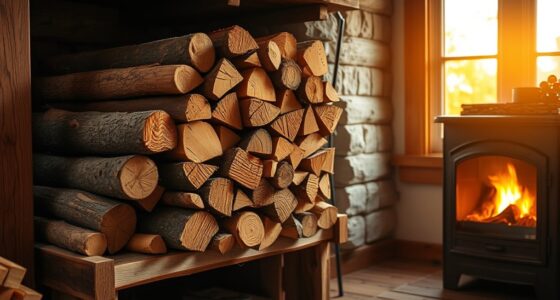
If your chimney isn’t drafting properly, look for signs like smoke spilling into your room or uneven fires. Common fixes include cleaning out soot and debris, fixing or replacing a damaged damper, and ensuring your chimney is tall enough, at least 3 feet above the roof. External weather and obstructions can also hinder airflow. Proper maintenance and adjustments usually solve draft issues, but understanding the causes in detail can help you prevent future problems.
Key Takeaways
- Identify signs like smoke spillage, uneven burning, or lingering odors to diagnose poor chimney draft problems.
- Check for obstructions such as bird nests, soot buildup, or debris blocking the flue.
- Ensure the damper opens fully and the flue liner is clean and undamaged for proper airflow.
- Improve draft by installing chimney caps, dampers, and maintaining proper chimney height and insulation.
- Seek professional inspection if issues persist despite maintenance, to address complex problems or damage.

Chimney Damper Kit 13"x13", Air Tight Chimney Damper for Wood-Fueled Masonry Fireplaces, Made of Cast Aluminum Material, Energy Efficient, Rust, Rain and Snow Resistant
【Sealed Energy Efficiency, Reduce Energy Costs】This chimney damper kit 13 “x13” utilizes advanced sealing technology to provide an…
As an affiliate, we earn on qualifying purchases.
As an affiliate, we earn on qualifying purchases.
Recognizing the Signs of Poor Chimney Draft

If your fireplace or stove isn’t drawing smoke properly, it’s a clear sign of poor chimney draft. You might notice smoke spilling into the room instead of rising up the chimney, which can be a safety hazard. Sometimes, the fire burns unevenly or goes out frequently because the airflow isn’t sufficient. Cold drafts near the fireplace or a strong smell of smoke lingering after use also point to draft issues. You might see soot buildup around the damper or on the fireplace walls, indicating poor airflow. If you hear whistling or other unusual noises when the fire is burning, it’s another sign that your chimney isn’t venting properly. Recognizing these signs early helps prevent more serious problems down the line. Proper chimney draft is essential for safe and efficient operation of your fireplace or stove, especially since air quality can be significantly affected by poor venting. Additionally, understanding suction effects can help you troubleshoot and improve chimney performance effectively, as proper airflow relies heavily on venting principles.

CLLOMAGY 6 Inch Chimney Cap,Cone Top Chimney Cap with Screen,Roof Rain Wood Stove Pipe Cover Guard,Fireplace Exhaust Cover for Outside 6 inch Stove Pipe-304 Stainless Steel,Better Airflow Ventilation
Chimney Protector & Better Ventilation: Chimney cap with screen prevent leaves, rain, snow and small animals from entering…
As an affiliate, we earn on qualifying purchases.
As an affiliate, we earn on qualifying purchases.
Common Causes of Draft Issues in Chimneys

Blockages and obstructions can block airflow, making it hard for your chimney to draft properly. Damaged or improperly functioning flues and dampers also disrupt the flow of smoke and gases. Identifying these issues is key to restoring your chimney’s performance. Additionally, best chimney maintenance practices can help prevent future draft problems and ensure safe operation. Regular inspections and chimney cleaning are essential to keep the system free of debris and improve draft efficiency. Understanding color accuracy in projectors and how it affects image quality can also aid in recognizing underlying issues affecting chimney performance, especially in older systems. Proper installation and venting are critical to maintaining optimal draft and preventing dangerous gases from accumulating.
Blockages and Obstructions
Blockages and obstructions are common culprits behind draft problems in chimneys, preventing proper airflow and ventilation. Debris like leaves, bird nests, or soot buildup can block the flue, reducing draft efficiency. These obstructions trap smoke and gases, making your fireplace less effective and potentially dangerous. Regular inspections help catch blockages early. Here’s a quick overview:
| Obstruction Type | Signs of Blockage | Prevention Tips |
|---|---|---|
| Bird Nests | Smoke backup, reduced draft | Install chimney caps, clean regularly |
| Soot Buildup | Poor airflow, odors | Schedule professional cleanings |
| Debris (leaves, twigs) | Smoke leaks, draft loss | Keep chimney clear, use covers |
Understanding how draft efficiency can be impacted by external factors like weather conditions or airflow dynamics is essential for maintaining a safe and effective chimney system. Proper chimney maintenance not only helps prevent blockages but also extends the lifespan of your chimney system. Regularly inspecting and cleaning your chimney ensures optimal airflow and safety. Staying vigilant and performing routine maintenance can significantly improve draft performance and prevent potential hazards. Proper maintenance is essential for ensuring optimal airflow and safety in your chimney system.
Flue and Damper Issues
Problems with the flue and damper are common causes of draft issues in chimneys. If your damper doesn’t open fully or gets stuck, it can restrict airflow, causing smoke to back up into your home. A damaged or broken damper won’t seal properly, letting warm indoor air escape and cold air enter, which disrupts the draft. Similarly, if the flue liner is cracked, blocked, or dirty, it can hinder proper airflow, reducing the chimney’s ability to draw smoke up and out. You might notice difficulty starting fires or excessive smoke lingering inside. Regularly inspecting your damper for rust, damage, or obstructions, and keeping the flue clean and clear, helps maintain proper draft and prevents common issues that affect your chimney’s performance. Proper shower installation and maintenance can also prevent drafts and improve overall efficiency. Additionally, understanding the electricity production from bike generators can inspire sustainable energy solutions for home heating or other needs. Ensuring the damper mechanism operates smoothly is essential for optimal chimney function and safety. Maintaining good HEPA filtration in your home environment can further improve air quality and reduce indoor pollutants that may be drawn through drafts.
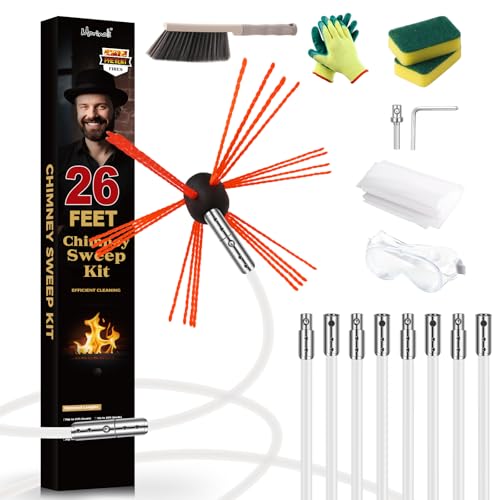
Morinoli 26 Feet Chimney Sweep Kit, Chrome Button Locking System, Chimney Cleaning Kit, Chimney Brush, Chimney Cleaning Tool, Chimney Cleaning System with 8 Flexible Chimney Rods
✔️【MOST VALUABLE DESIGN】No stuck,no loose design! Compared with ordinary kits, our chimney sweep kit has a sturdy, nice…
As an affiliate, we earn on qualifying purchases.
As an affiliate, we earn on qualifying purchases.
How Temperature Differences Affect Draft Performance

You’ll notice that warm air rises more easily than cold air, creating a stronger draft in your chimney. Flue gases also ascend faster when the temperature difference is greater, boosting airflow. Understanding how temperature gradients influence draft can help you troubleshoot and improve your chimney’s performance.
Warm vs. Cold Air
Warm air rises more readily than cold air, which considerably impacts chimney draft performance. When warm air inside your chimney is lighter, it creates a stronger upward draft, helping smoke and gases escape efficiently. Cold air, however, is denser and less willing to rise, weakening the draft and causing smoke to linger or back up. To optimize draft, make sure your chimney is well-insulated and protected from drafts that cool the air. Here’s a quick comparison:
| Aspect | Warm Air | Cold Air |
|---|---|---|
| Density | Less dense, rises easily | Denser, resists rising |
| Draft Strength | Stronger, improves flow | Weaker, hampers flow |
| Temperature Effect | Enhances draft performance | Reduces draft efficiency |
| Common Issue | Draft loss in cold weather | Smoke back-up |
Understanding these differences helps you manage your chimney’s performance effectively.
Flue Gases Rise Faster
When the temperature of the air inside your chimney changes, it directly influences how quickly flue gases rise. Warm air becomes less dense and lighter, causing gases to ascend faster. Conversely, cooler air is denser and slows the upward movement of smoke and gases. If your fire heats the chimney sufficiently, the increased temperature difference creates a stronger draft, pulling air and combustion byproducts upward more efficiently. This improved flow helps prevent smoke from spilling into your home and guarantees your heating system works at its best. However, if the flue isn’t hot enough, gases won’t rise quickly, leading to poor draft performance and possible smoke backup. Maintaining a high enough temperature inside your chimney is essential for consistent and effective draft, ensuring safe and efficient operation.
Temperature Gradient Effects
The temperature difference between the hot gases inside the chimney and the cooler outside air creates a crucial pressure difference that drives the draft. When the gases are hotter, they become less dense and rise more quickly, increasing airflow. Conversely, if the outside air is warm or the gases aren’t hot enough, the temperature gradient weakens, reducing draft strength. This effect means that colder outdoor temperatures typically improve draft performance, while warmer conditions can hinder it. Proper insulation helps maintain high internal temperatures, sustaining a strong draft. Additionally, drafts are more consistent when the temperature difference remains stable. Understanding this relationship allows you to optimize chimney design and operation, ensuring reliable and efficient venting regardless of seasonal or weather-related temperature changes.

Top Damper Hardware Kit
Complete kit
As an affiliate, we earn on qualifying purchases.
As an affiliate, we earn on qualifying purchases.
The Role of Chimney Height and Obstructions

Chimney height and obstructions directly influence the draft by affecting how quickly smoke and gases exit your fireplace or stove. A taller chimney creates a stronger draft because it increases the pressure difference between the indoor fire and the outside air. If your chimney is too short, the draft may be weak, causing smoke to spill into the room instead of venting properly. Obstructions like bird nests, leaves, or debris can block airflow, reducing the chimney’s efficiency and causing smoke to back up. Nearby structures, trees, or buildings can also disrupt airflow by creating wind turbulence or altering pressure zones. Ensuring your chimney is sufficiently tall and clear of obstructions helps maintain a steady, strong draft, promoting safe and efficient operation of your fireplace or stove.
Diagnosing Draft Problems With Simple Tests

To identify if your chimney’s draft is working properly, you can perform some simple, quick tests at home. First, hold a piece of tissue or a lightweight strip of paper near the chimney opening. If it’s drawn upward, the draft is likely strong. Next, light a match or a incense stick and observe the smoke. If it pulls into the chimney, the draft is functioning well.
Here are some other easy tests:
- Check for a steady, upward airflow with a damp cloth near the opening.
- Place a small piece of paper on the fireplace grate and see if it moves toward the chimney.
- Use an anemometer to measure airflow speed.
- Observe if the smoke from a candle flickers or is pulled into the chimney.
Repairing and Maintaining Your Chimney Flue

Regularly inspecting and maintaining your chimney flue is essential to guarantee safe and efficient operation. Start by checking for soot and creosote buildup, which can restrict airflow and increase fire risk. If you notice excessive deposits, schedule a professional chimney cleaning to remove these hazards. Look for cracks, rust, or damaged liners, as these compromise the flue’s integrity. Repair minor damage promptly using high-temperature sealants or replacement parts. Keep the damper functioning smoothly by lubricating hinges and fixing any leaks. Always ensure the chimney cap is intact and clear of debris to prevent obstructions. Regular maintenance not only improves draft performance but also extends the lifespan of your chimney system, reducing safety hazards and costly repairs down the road.
Enhancing Draft With Proper Chimney Design and Accessories

Proper chimney design and the right accessories can greatly improve draft performance and guarantee your fireplace or stove operates efficiently. A well-designed chimney ensures smooth airflow, reducing backdrafts and smoke issues. You can enhance draft by installing features like chimney caps to prevent downdrafts, dampers to control airflow, and insulated chimneys to maintain temperature. Proper height and shape also matter—aim for a chimney that extends at least 3 feet above the roof and 2 feet above nearby structures. Additionally, consider adding a chimney liner for better heat retention and safety. These adjustments, combined with suitable accessories, optimize airflow, increase efficiency, and minimize draft problems. Proper design and accessories create a safer, more effective heating environment.
When to Seek Professional Help for Chimney Draft Troubles
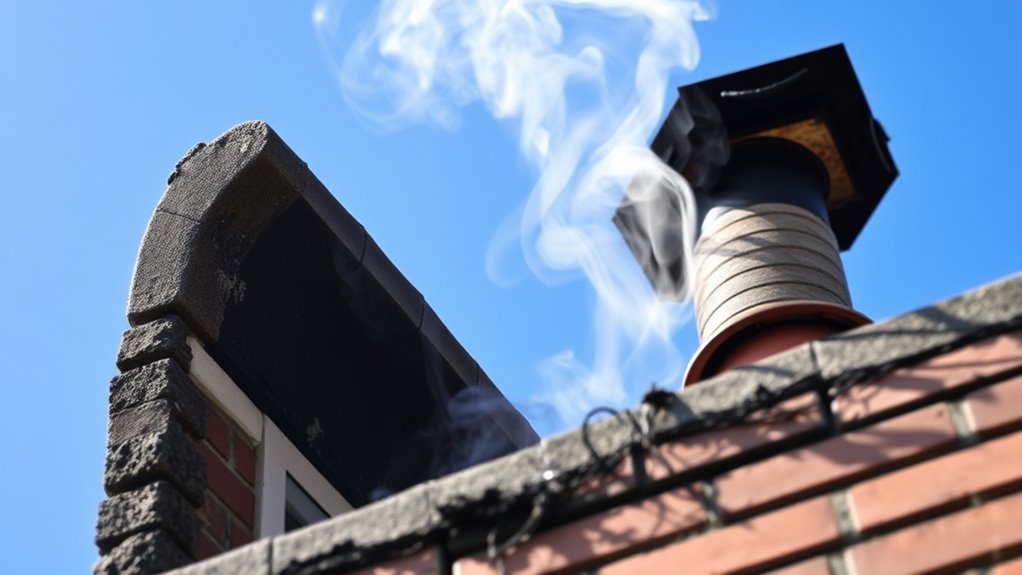
While installing the right chimney accessories and ensuring proper design can solve many draft issues, some problems require expert attention. If you notice persistent smoke backing up, strong odors, or difficulty starting a fire, it’s time to call a professional. Unusual smoke spillage or chimney leaks are signs that your system needs a thorough inspection. Don’t ignore signs of creosote buildup or soot deposits, which can pose safety risks. Addressing these issues early can prevent costly repairs and ensure safe operation.
| When to Seek Help | Why |
|---|---|
| Persistent smoke spillage | Indicates blocked or inefficient draft |
| Unusual odors or creosote buildup | Potential safety hazard |
| Difficulty starting or maintaining fire | Draft problems beyond DIY fix |
| Chimney leaks or cracks | Structural damage needs expert repair |
| Strong odors or soot in the home | Ventilation or sealing issues require professional help |
Frequently Asked Questions
Can Weather Conditions Impact Chimney Draft Performance?
Weather conditions definitely impact your chimney’s draft performance. Cold, windy, or humid weather can make it harder for smoke to rise and escape efficiently. For example, strong winds can push air back down, while rain and moisture can clog the chimney or reduce draft strength. On chilly days, the temperature difference helps create a stronger draft, but in extreme weather, you might notice more issues with smoke and airflow.
How Do Indoor Air Quality Issues Relate to Chimney Draft Problems?
When you’re facing indoor air quality issues, they often go hand in hand with chimney draft problems. Poor drafts can cause smoke, gases, and pollutants to linger inside your home, making the air feel stuffy or unsafe. You might think it’s just bad ventilation, but fixing the draft can clear the air and improve your indoor environment. Don’t ignore these signs; a well-functioning chimney keeps your air clean and healthy.
Are There Eco-Friendly Solutions to Improve Chimney Draft?
You can improve your chimney draft with eco-friendly solutions by installing a top-sealing damper, which enhances airflow efficiency without energy waste. Using sustainably sourced materials for chimney liners or incorporating draft-enhancing accessories made from recycled or natural materials also helps. Additionally, maintaining proper insulation and ensuring your chimney is clean can boost draft naturally, reducing the need for energy-intensive fixes and supporting environmentally friendly home improvements.
What Safety Precautions Should Be Taken During Chimney Repairs?
When doing chimney repairs, you should prioritize safety to prevent accidents. Always wear protective gear like gloves, goggles, and a dust mask. Make certain the area is well-ventilated, and use sturdy ladders or scaffolding. Turn off any appliances connected to the chimney to avoid hazards. If you’re unsure about handling certain repairs, it’s best to hire a professional. Staying cautious minimizes risks and keeps you safe during the process.
How Often Should Chimney Inspections Be Performed for Optimal Draft?
Think of your chimney like a garden hose; to keep water flowing smoothly, you need regular checks. You should have your chimney inspected at least once a year, especially before the heating season begins. This guarantees the draft stays strong and consistent. Regular inspections catch issues early, preventing blockages or leaks that could disrupt airflow. Stay proactive, and your chimney will work efficiently all year round.
Conclusion
When you understand the signs and causes of chimney draft problems, you can take steps to fix them before a Sunday morning spent battling smoke becomes a regular scene. Regular maintenance and mindful upgrades, like installing a damper or ensuring proper height, can make your chimney perform like a well-oiled machine. Remember, even Sherlock would tell you to call in a professional if the mystery of a stubborn draft persists—don’t let your fireplace become a modern-day Tower of Babel!