
Deciding between a portable sawmill or firewood processing depends on your long-term goals and how much effort you’re willing to invest. A sawmill offers versatility for producing lumber regularly but requires upfront costs and ongoing maintenance. Firewood handling is simpler, less costly, and suits smaller needs or personal use. Consider your space, budget, and end goals—if you keep exploring, you’ll uncover how to make the best choice for your situation.
Key Takeaways
- Assess long-term goals: investing in a sawmill for consistent lumber or firewood for personal use and small sales.
- Consider cost, maintenance, and labor: sawmills require ongoing upkeep; firewood processing is generally less costly and labor-intensive.
- Evaluate drying and storage needs: proper stacking and airflow are crucial for quality firewood, while sawmills focus on efficiency and precision.
- Analyze equipment investment: sawmills demand higher initial costs but offer versatility; firewood tools are simpler and more affordable.
- Match decision to usage frequency: regular lumber production favors a sawmill; occasional firewood needs suit manual processing.
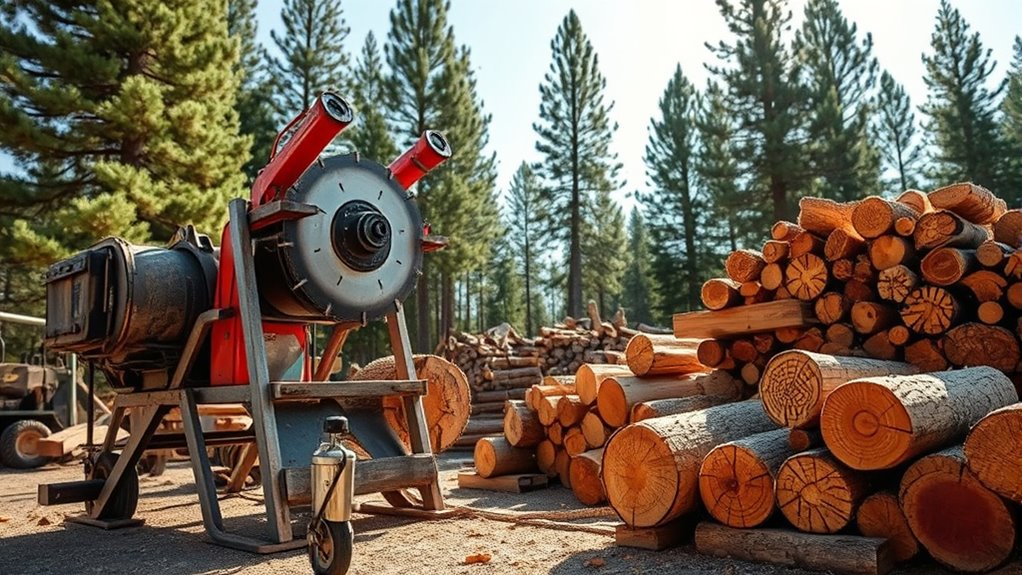
When deciding between a portable sawmill and firewood, you need to contemplate how much wood you’ll process and your long-term goals. If you’re planning to produce large quantities of lumber regularly, investing in a portable sawmill makes sense. It gives you control over the entire process, from cutting logs to shaping timber. However, keep in mind that a portable sawmill requires consistent maintenance. Sawmill maintenance involves regular checks on blades, belts, and engine parts to ensure smooth operation and safety. Neglecting maintenance can lead to costly repairs and downtime, which can interrupt your workflow. On the other hand, if your primary goal is to handle firewood for personal use or small-scale sales, focusing on firewood might be more practical. In this case, your main concern is efficient firewood drying, which involves proper stacking and storage techniques to reduce moisture content. Well-dried firewood burns cleaner, produces less smoke, and generates more heat. You might not need a sawmill at all if you’re just splitting logs into firewood, but a good splitter or axe can be invaluable for quick, effective firewood preparation. Processing firewood is generally less labor-intensive and less costly than maintaining a sawmill, but it still benefits from proper drying methods. You should consider the climate and storage space you have, as these factors greatly influence firewood drying. Wood that’s not dried properly can lead to inefficient burning and increased creosote buildup in chimneys, posing fire hazards. Additionally, understanding cost variances can help you optimize your firewood or lumber processing expenses. If you opt for a sawmill, you’ll need to be prepared to handle sawmill maintenance regularly, which includes sharpening blades, lubricating moving parts, and inspecting belts. Proper maintenance prolongs your equipment’s lifespan and ensures safety during operation. Conversely, drying firewood involves stacking logs off the ground, protecting them from rain, and allowing ample airflow. This process can take several months but is essential for creating high-quality firewood that burns efficiently. Ultimately, your decision hinges on how much wood you want to process and your long-term intentions. If you’re aiming for a consistent supply of lumber, a portable sawmill offers versatility and control, but it demands ongoing upkeep. If your focus is primarily on firewood, then fine-tuning your drying process and investing in efficient splitting tools might be enough. Both options require some level of effort and planning, but understanding your goals helps you choose the best path.
Frequently Asked Questions
What Is the Cost Difference Between Portable Sawmills and Firewood Processing?
The cost difference between portable sawmills and firewood processing varies, but generally, portable sawmills require a higher initial investment, often ranging from $2,000 to $10,000 or more, depending on features. Firewood processing tools like splitters and conveyors are usually less expensive, typically under $5,000. Conduct an investment analysis to weigh upfront costs against long-term savings and productivity, helping you decide which option offers better value for your needs.
How Much Space Is Required for Portable Sawmill Setup?
Think of your setup area as the stage for your woodworking performance. You’ll need about 200 to 400 square feet of clear, flat storage space to comfortably host your portable sawmill. This setup area guarantees smooth operation, allowing you to move freely and work efficiently. Keep enough room for safety and future expansion, turning your space into a well-organized workshop where your sawmill can shine without restrictions.
Are There Environmental Benefits to Using a Portable Sawmill?
Yes, using a portable sawmill offers environmental benefits. It promotes sustainable forestry by allowing you to selectively harvest trees and utilize wood efficiently, reducing waste. Plus, it helps lower your carbon footprint since you process wood on-site, minimizing transportation emissions. This eco-friendly approach supports responsible forest management, ensuring resources are conserved for future generations while giving you quality lumber from locally sourced trees.
What Safety Precautions Are Essential When Operating a Portable Sawmill?
You’re stepping into a lumber jungle, so gear up like a safety warrior. Always wear protective gear—helmet, goggles, ear protection, gloves—to shield yourself from flying debris. Keep emergency procedures at your fingertips, like knowing how to stop the saw quickly or call for help. Stay alert, avoid loose clothing, and never work alone. These precautions turn your sawmill adventure into a safe, rewarding journey through the woods.
How Long Does It Take to Produce Firewood Versus Milling Lumber?
It usually takes about 30 minutes to an hour to produce a cord of firewood, depending on your equipment and experience. Milling lumber takes longer, often several hours for a small batch, but it depends on the wood type and size. You should factor in seasonal wood drying and regular equipment maintenance, which influence how efficiently you can produce firewood or lumber. Staying organized helps optimize your time for both tasks.
Conclusion
Ultimately, whether you choose a portable sawmill or firewood depends on your needs—sometimes, the best decision comes unexpectedly, like stumbling upon that perfect log just when you needed firewood most. Both options offer unique benefits, and the coincidence of your situation might reveal the right choice. Trust your instincts, and remember, sometimes the simplest solution aligns with your circumstances just when you least expect it, turning a coincidence into a smart decision.