
To choose wildlife-friendly firewood practices, source locally harvested wood from sustainable suppliers and only collect dead, fallen wood to avoid disturbing live trees and habitats. Be vigilant to prevent spreading invasive pests by avoiding infested species and storing firewood properly off the ground in dry, ventilated areas. Stay mindful of wildlife signs and avoid gathering near nests or active habitats. Following these steps helps protect forests and support healthy ecosystems—continue exploring for more tips on making responsible choices.

Get business pricing on tools and workshop supplies
- Business-only prices and quantity discounts
- Tax-exempt purchasing
- Multiple users, one account, clear invoices
Key Takeaways
- Source firewood locally from sustainable suppliers to prevent invasive species and support healthy ecosystems.
- Collect only dead, fallen wood away from live trees and active wildlife nests.
- Avoid wood from infested or invasive tree species to prevent pest spread.
- Store firewood off the ground in dry, ventilated areas and use it promptly.
- Respect wildlife habitats by avoiding collection near nests, tracks, or sensitive areas.

When gathering firewood, being mindful of wildlife can make a significant difference in preserving local ecosystems. Your choices impact habitat preservation and help prevent the spread of invasive species. By selecting your firewood thoughtfully, you contribute to healthier forests and wildlife populations. First, focus on sourcing firewood locally from sustainable sources. This prevents the accidental transport of invasive species that can threaten native plants and animals. Invasive insects and fungi often hitch rides on firewood from distant areas, so buying from nearby suppliers reduces this risk. Avoid bringing in wood from unknown sources or areas with infested forests, as this can introduce harmful pests that disrupt local habitats.
Choose locally sourced firewood to protect ecosystems and prevent invasive pests spread.
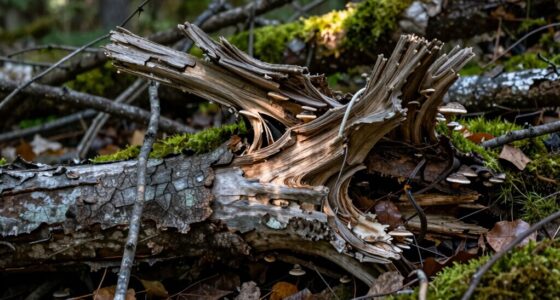
When collecting firewood yourself, stick to dead and fallen wood rather than cutting live trees. Deadwood is vital for many species, providing shelter and nesting sites. Removing fallen branches and logs from the forest floor supports habitat preservation without damaging living trees. Be cautious not to disturb active nests or burrows—if you see signs of wildlife, such as nests or tracks, avoid collecting nearby wood. This practice minimizes habitat disruption and guarantees wildlife can thrive during critical breeding seasons.
Another important consideration is to steer clear of wood that might contain invasive species. Some invasive insects, like the emerald ash borer or Asian longhorned beetle, infest specific tree species. Knowing which trees are at risk in your region helps you avoid collecting firewood that could harbor these pests. For example, if you know ash trees are infested, avoid collecting ash wood altogether. Instead, select wood from species that are native and well-established in your area, supporting the health of local ecosystems and reducing the chance of invasive species spreading.
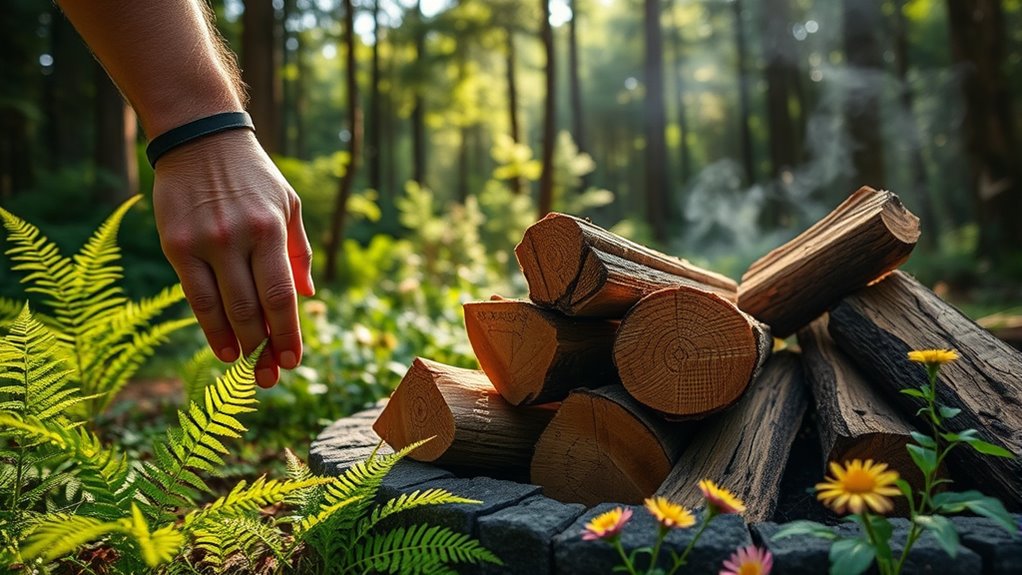
Properly storing your firewood also plays a role in wildlife-friendly practices. Keep your firewood stacked off the ground and away from living trees to prevent pest transfer and habitat disruption. Store it in a dry, well-ventilated area to discourage insect infestation and decay. When burning, use the wood promptly to prevent pests from lingering or spreading to new areas.
As an affiliate, we earn on qualifying purchases.
Frequently Asked Questions
How Can I Identify Wildlife Habitats in My Firewood Area?
You can identify wildlife habitats in your firewood area by observing signs of forest ecosystem awareness, such as bird nests, burrows, or animal tracks. Look for dense shrubs, fallen logs, or tree cavities that provide shelter. Pay attention to areas with undisturbed foliage or standing dead trees, as these are essential for many species. Recognizing these features helps you avoid disturbing important wildlife habitats during firewood collection.
Are There Specific Types of Wood That Attract Fewer Pests?
You should choose pest-resistant species like oak, hickory, or maple, which tend to attract fewer pests. Avoid pest-attracting woods such as pine, cedar, or sweetgum, as these can lure insects and pests into your area. Opting for hardwoods not only reduces pest issues but also helps protect wildlife habitats nearby. Always store firewood properly away from your home to prevent pest infestation and wildlife disturbance.
What Tools Help Minimize Habitat Disturbance During Firewood Collection?
Think of yourself as a forest explorer, guiding a delicate dance with nature. Use wildlife tracking tools like motion-activated cameras and habitat mapping apps to observe animals’ paths and nesting sites. These tools help you collect precise data, allowing you to minimize habitat disturbance while gathering firewood. By respecting wildlife corridors and sensitive areas, you guarantee your collection is sustainable, preserving the forest’s harmony and protecting its inhabitants.
How Often Should I Check Stored Firewood for Wildlife Signs?
You should check your firewood storage for wildlife signs at least once a week, especially during the breeding season or when animals are most active. Look for nests, burrows, or tracks, and gently move firewood if needed to prevent disturbing wildlife. Regular inspections help you spot and protect any signs of wildlife, ensuring your firewood storage remains safe and respectful of local habitats.
Can I Use Firewood to Support Local Wildlife Conservation Efforts?
A stitch in time saves nine—you can support local wildlife conservation efforts with firewood. By choosing sustainable firewood harvesting methods and focusing on wildlife habitat preservation, you help protect ecosystems. Using firewood responsibly reduces habitat loss and keeps wildlife safe. Your mindful choices can make a difference, ensuring that firewood benefits both your needs and the environment, fostering a healthier, more sustainable future for local wildlife.
Conclusion
By choosing wildlife-friendly firewood practices, you become a guardian of nature’s delicate balance. Think of your firewood choices as a gentle hand guiding the forest’s song, ensuring creatures find safety amidst the crackling flames. Every mindful selection plants seeds of harmony, allowing ecosystems to thrive quietly behind your fireside glow. Embrace these practices, and let your actions be the quiet whisper that keeps wildlife safe, turning your home into a haven where nature’s melody lives on.
Fall yard work Picks
leaf blowers
As an affiliate, we earn on qualifying purchases.