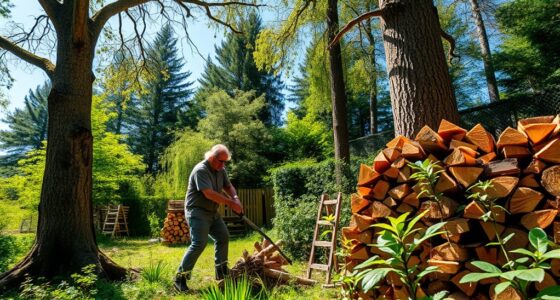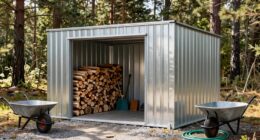
To improve indoor air quality when burning firewood, use well-seasoned, dry wood and avoid green or wet types. Guarantee good ventilation by opening windows or using exhaust fans during and after burning. Regularly clean your stove and chimney to reduce harmful buildup. Consider installing HEPA air filters to remove airborne particles. Making these simple changes can greatly reduce health risks; keep exploring for more tips to keep your home safer.
Key Takeaways
- Use seasoned, dry firewood to burn cleaner and reduce harmful emissions.
- Ensure good ventilation by opening windows or using exhaust fans during and after burning.
- Regularly clean chimneys and stoves to prevent creosote buildup and improve combustion efficiency.
- Install air filtration systems with HEPA filters to reduce airborne particles indoors.
- Consider alternative heating options like electric heaters or modern, low-emission wood stoves.
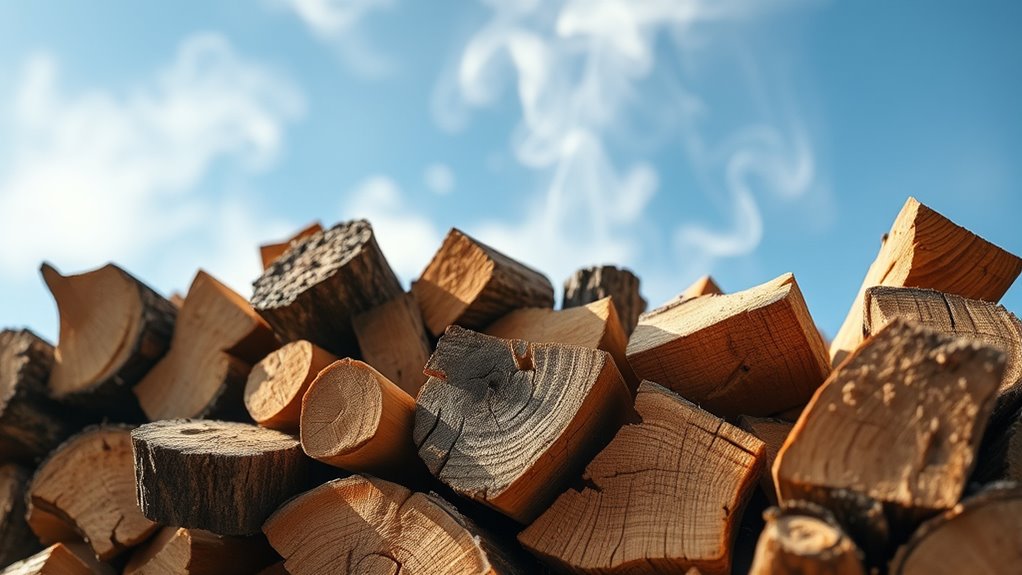
Using firewood for heating can warm your home and create a cozy atmosphere, but it also impacts the air quality you breathe. When you burn firewood indoors, it releases tiny particles and chemicals into the air, contributing to indoor air pollution. These pollutants can irritate your lungs, worsen respiratory conditions, and even increase the risk of long-term health issues. Understanding how your indoor heating choices influence air quality helps you take steps to reduce exposure and stay healthier.
Firewood combustion produces a range of pollutants, including particulate matter, carbon monoxide, volatile organic compounds (VOCs), and polycyclic aromatic hydrocarbons (PAHs). When these substances accumulate indoors, they can create a hazardous environment, especially in poorly ventilated spaces. You might notice a smoky smell or see soot buildup, which signals that your indoor air quality is compromised. This pollution doesn’t just stay inside; it can also escape outside, adding to overall air pollution in your community. For this reason, your choice to heat with firewood has both local and personal health implications.
Burning firewood releases pollutants that harm indoor air quality and contribute to community pollution.
To improve indoor heating with firewood, you should prioritize proper wood-burning practices. Use seasoned, dry wood, which burns more efficiently and produces fewer pollutants. Wet or green wood creates more smoke and releases more harmful emissions. Always burn the right size and type of wood for your stove or fireplace, and avoid overloading it, which can cause incomplete combustion and higher emissions. Regular maintenance of your heating appliance is essential—cleaning chimneys and stoves prevents creosote buildup and ensures efficient burning, reducing the amount of pollutants released into your indoor environment.
Ventilation is another key factor. Keep your living space well-ventilated while burning firewood to allow fresh air to dilute indoor pollutants. Use exhaust fans or open windows when possible, especially if you notice smoke or fumes. Installing air filtration systems with HEPA filters can also help remove airborne particles, providing cleaner indoor air. If you’re concerned about indoor air quality, consider using alternative heating methods like electric heaters or modern wood stoves that meet stricter emission standards. Indoor air quality is a crucial aspect of health, especially when using combustion-based heating methods.
Ultimately, reducing the impact of firewood on indoor air quality requires awareness and proactive measures. By choosing the right wood, maintaining your stove properly, and ensuring good ventilation, you can enjoy the warmth and ambiance of a fire without compromising your health. Remember, your indoor environment directly affects your well-being, and small adjustments can profoundly improve the air quality you breathe every day.

Purivortex Air Purifiers for Bedroom, Covers Up to 880 Sq Ft, PX500 Black
- Covers Large Areas: Covers up to 880 sq ft
- Fast Air Purification: Purifies a 215 sq ft room in 15 min
- High-Efficiency Filtration: Filters 99.97% of pollutants
As an affiliate, we earn on qualifying purchases.
As an affiliate, we earn on qualifying purchases.
Frequently Asked Questions
How Does Firewood Moisture Content Affect Air Pollution?
You should know that higher moisture content in firewood increases air pollution because it produces more smoke and particulate matter when burned. Proper firewood seasoning reduces moisture, making it easier to burn efficiently and cleanly. By ensuring moisture reduction before burning, you help lower emissions, improve air quality, and make your stove or fireplace more effective. Always choose well-seasoned firewood for cleaner combustion and healthier air around you.
Are There Health Risks From Long-Term Indoor Wood Burning?
Long-term indoor wood burning can be a ticking time bomb for your health. You risk indoor air hazards that may lead to respiratory issues, heart disease, and other chronic conditions. Chronic exposure to smoke and pollutants from wood stoves is like slowly poisoning yourself over time. To protect yourself, make sure proper ventilation and use well-seasoned wood. Ignoring these risks can turn your home into a silent threat to your well-being.
What Are the Best Air Quality Monitors for Homes With Fireplaces?
You should choose air quality sensors that specifically monitor indoor pollution from fireplaces. Look for monitors with real-time data, reliable sensors for particulate matter (PM2.5 and PM10), and easy integration with your smart home system. Brands like Awair, PurpleAir, and Foobot offer highly rated options. These monitors will alert you to indoor pollution levels, helping you reduce health risks associated with long-term indoor wood burning and improve your home’s air quality.
Can Certain Types of Firewood Produce Fewer Pollutants?
Choosing the right firewood can subtly enhance your home’s air quality. Opt for seasoned hardwoods like oak, maple, or hickory, which tend to burn cleaner and produce fewer pollutants. Proper firewood selection helps with pollutant reduction, making your fireplace both cozy and environmentally friendlier. By selecting quality wood and ensuring it’s well-dried, you naturally minimize smoke and emissions, creating a healthier space for you and your loved ones.
How Effective Are Air Purifiers in Reducing Smoke From Wood Stoves?
Air purifiers can be quite effective in reducing smoke from wood stoves if they have high filtration efficiency, like HEPA filters, which capture fine particles. To maximize smoke reduction, combine using an air purifier with proper ventilation and burning seasoned, low-emission firewood. Regularly maintain your purifier, and make certain it’s appropriately sized for your space. These smoke reduction techniques help improve indoor air quality and minimize health risks from wood stove emissions.
Conclusion
By taking simple steps like choosing seasoned wood, proper burning techniques, and ensuring good ventilation, you can make a real difference in your home’s air quality. Don’t let the smoke get in your eyes—stay proactive and avoid unnecessary pollution. Remember, a little effort now can keep the air cleaner for you and your loved ones. It’s better to be safe than sorry, so take action today and breathe easier tomorrow.