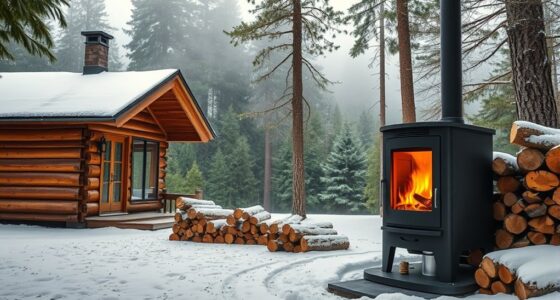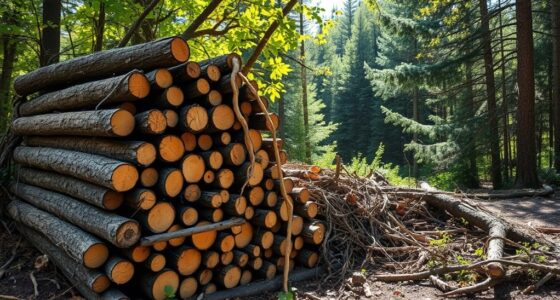

Choosing local firewood helps cut emissions by reducing the distance it travels, which lowers fuel use and transportation emissions. It also encourages responsible forest management practices that sustain tree growth and prevent overharvesting. Supporting local sources means you’re more likely to verify how the wood was harvested, ensuring eco-friendly methods are used. By making this choice, you contribute to healthier forests and a greener future. Keep exploring to discover more ways to maximize environmental benefits with your firewood choices.

Get business pricing on tools and workshop supplies
- Business-only prices and quantity discounts
- Tax-exempt purchasing
- Multiple users, one account, clear invoices
Key Takeaways
- Local firewood reduces transportation emissions by minimizing fuel use and travel distance.
- Sourcing locally ensures responsible harvesting practices that support forest health and biodiversity.
- Shorter supply chains decrease fossil fuel consumption, lowering the overall carbon footprint.
- Verifying local sources promotes sustainable management and discourages illegal logging.
- Supporting local harvesting encourages forest regeneration, benefiting future generations.

When it comes to warming your home with firewood, choosing local sources offers clear advantages. Not only does this help you enjoy a reliable supply, but it also markedly reduces the environmental footprint associated with your heating. One of the key benefits is that local firewood often comes from sustainable harvesting practices, which prioritize responsible management of forests. When you select firewood from nearby sources, you’re more likely to know that the wood was harvested in a way that maintains forest health and biodiversity, ensuring that future generations can also benefit from healthy woodlands. This sustainable approach minimizes overharvesting and helps prevent deforestation, which is vital for maintaining carbon sequestration and reducing greenhouse gases.
In addition to supporting sustainable harvesting, choosing local firewood directly impacts transportation emissions. Firewood that travels shorter distances requires less fuel, produces fewer emissions, and generates a smaller carbon footprint overall. Long-distance transportation involves heavy trucks or freight, which burn significant amounts of fossil fuels, releasing greenhouse gases into the atmosphere. When you buy firewood locally, you cut down on these transportation impacts, making your heating choices more environmentally friendly. This not only benefits the planet but can also translate into lower costs for you, as less money is spent on transportation logistics.
Furthermore, sourcing firewood locally often means you can verify its origin and the practices involved in its harvesting. You’re more likely to interact directly with the supplier or landowner, gaining confidence that the wood was harvested responsibly. This transparency encourages better forest management and discourages illegal or unsustainable logging practices. It also allows you to choose firewood from sources that prioritize eco-friendly methods, such as selective cutting or thinning, which promote forest regeneration.
sustainable firewood for heating
As an affiliate, we earn on qualifying purchases.
As an affiliate, we earn on qualifying purchases.
Frequently Asked Questions
How Do I Identify Sustainably Harvested Local Firewood?
To identify sustainably harvested local firewood, look for certification standards like FSC or PEFC, which guarantee responsible harvesting practices. Ask your supplier about their harvesting methods—preferably, they should cut only mature trees, avoid clear-cutting, and practice selective logging. Well-managed forests maintain biodiversity and reduce environmental impact. By choosing firewood with credible certification and transparent practices, you help support sustainable forestry and lower your carbon footprint.
What Are the Cost Differences Between Local and Imported Firewood?
You might be surprised, but local firewood often costs more upfront than imported options due to supply and seasonal availability. The cost comparison varies, with local firewood sometimes being pricier because of transportation savings and higher quality. Price variability depends on your region and firewood types, so don’t assume imported is always cheaper. In the end, investing locally supports sustainability and can save you money in the long run.
Are There Specific Local Regulations for Firewood Collection?
You’ll need to check local regulations for firewood collection, as rules vary by area. Many places require firewood permits, which you must obtain before collecting. Be aware of designated collection zones where gathering is allowed and avoid protected areas. Always follow permit conditions and local guidelines to guarantee responsible collection, prevent fines, and support sustainable forest management. Staying informed helps you collect firewood legally and ethically.
How Does Firewood Moisture Content Affect Emissions?
When firewood has high moisture levels, it produces more emissions because it burns less efficiently, releasing more smoke and pollutants. For example, a homeowner burning wet wood might notice increased smoke and higher emissions compared to dry wood. To achieve emission reduction, always dry your firewood thoroughly, ideally below 20% moisture content, which ensures cleaner burning and helps cut emissions considerably.
Can Using Local Firewood Improve Indoor Air Quality?
Using local firewood can improve indoor air quality because it often has better firewood quality, meaning it’s drier and releases fewer pollutants when burned. When you select high-quality, locally sourced firewood, you reduce smoke and harmful emissions inside your home. This helps maintain healthier indoor air, minimizes indoor air pollution, and creates a safer, more comfortable environment. Plus, local firewood supports sustainable practices and guarantees fresher, higher-quality fuel.
Conclusion
By choosing local firewood, you’re not only reducing transportation emissions but also supporting your community. Imagine Sarah, who switched to local wood and saw her home’s carbon footprint shrink while helping her neighbors thrive. Every log you select from nearby forests makes a difference—less pollution, more sustainability, and a healthier planet. So next time you gather firewood, think about the impact you’re making and choose local. Your small change can spark big environmental benefits.
Fall yard work Picks
leaf blowers
As an affiliate, we earn on qualifying purchases.