
To manage beetle-killed wood effectively, act quickly by identifying signs of infestation and removing dead or dying trees near populated areas. Use proper equipment to safely fell and dispose of infested wood through chipping or burning, reducing larvae survival. Apply targeted insecticides and biological controls to limit beetle populations. Monitoring and strategic removal prevent future outbreaks, helping keep your forest healthy. Continue exploring best practices to protect your ecosystem from further damage.

Get business pricing on tools and workshop supplies
- Business-only prices and quantity discounts
- Tax-exempt purchasing
- Multiple users, one account, clear invoices
Key Takeaways
- Promptly identify and assess beetle-infested trees through visual signs and damage levels.
- Remove dead or dying wood using specialized equipment and dispose of it via chipping or burning to prevent reinfestation.
- Apply targeted treatments like insecticides or pheromone traps to control and reduce beetle populations.
- Enhance forest resilience by increasing biodiversity and conducting regular monitoring for early detection.
- Maintain ongoing surveillance, swiftly respond to new infestations, and use visualization tools for effective management planning.
Dealing with beetle-killed wood can seem overwhelming, but understanding how to manage it effectively is essential for forest health and safety. When a beetle infestation occurs, it signals a significant disturbance in the ecosystem, often resulting in large numbers of dead or dying trees. These weakened trees pose risks, both to the environment and to anyone nearby, so taking swift, strategic action is crucial. Recognizing the signs of beetle infestation early helps you prevent further spread and mitigates potential hazards. Beetle outbreaks often follow droughts or other stressors that weaken trees, making it easier for beetles to establish and multiply. Once a beetle attack begins, the affected trees become less resilient, and their decline can quickly impact overall forest health if left unmanaged.
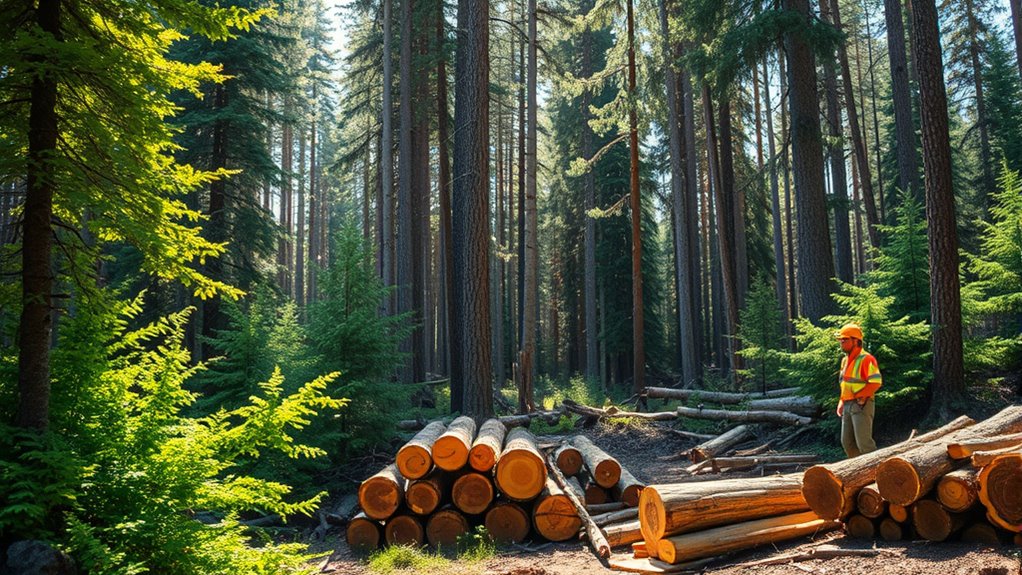
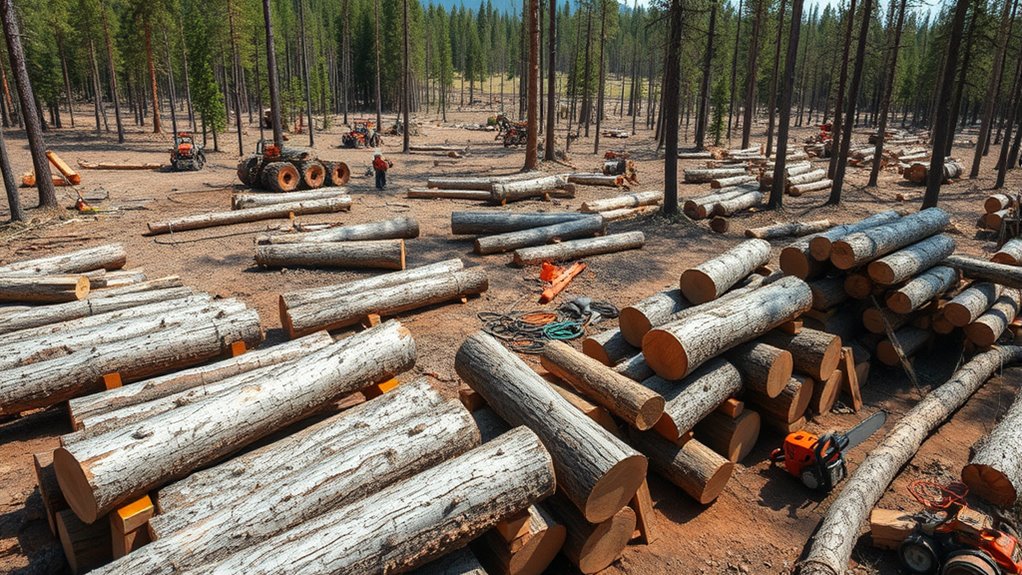
Controlling beetle-infested wood starts with proper assessment. You need to identify the extent of the infestation and determine whether removal or treatment is necessary. Dead or dying trees should be promptly removed, especially near high-traffic areas or residential zones, to prevent beetles from spreading to healthy trees. Using specialized equipment, you can safely fell and process these trees, minimizing the chance of beetles escaping into the surrounding forest. Proper disposal is equally important; chipping or burning infested wood reduces the likelihood of beetle larvae surviving and reinfesting the area. In some cases, applying insecticides to residual stumps or nearby trees can help reduce beetle populations, but this approach should be used judiciously to avoid environmental harm.
Assess infestation, remove affected trees promptly, and dispose of infested wood safely to prevent beetle spread.
Managing beetle-killed wood isn’t just about removal—it’s also about restoring forest resilience. After removing infested trees, consider treatments such as applying pheromone traps or biological controls that target beetles specifically. These methods can help suppress future outbreaks and protect remaining healthy trees. Promoting forest diversity and avoiding monocultures also enhances overall forest health, making it less susceptible to widespread beetle damage. Regular monitoring is essential; walk through your forest periodically to spot early signs of new infestations, giving you the opportunity to act before the problem escalates. Additionally, understanding how high-quality projectors contribute to visualization can aid in planning proper forest management strategies.
Ultimately, managing beetle-infested wood requires a combination of swift action, strategic removal, and ongoing monitoring. By doing so, you help preserve forest health, prevent the spread of beetles, and reduce safety risks associated with falling or dead trees. Remember, proactive management not only safeguards your forest but also supports broader ecosystem stability. Staying informed about beetle activity in your region and implementing best practices ensures you’re prepared to handle infestations effectively, maintaining a healthy, resilient forest for years to come.
As an affiliate, we earn on qualifying purchases.
Frequently Asked Questions
How Can Beetle Infestation Be Prevented in Healthy Trees?
To prevent beetle infestation in healthy trees, you should maintain good tree health by watering, mulching, and fertilizing properly. Regular pest monitoring helps you catch early signs of beetles before they cause damage. Remove and dispose of any infested or weakened trees promptly. Protect trees with appropriate treatments if necessary, and keep the area free of debris to reduce beetle habitat, ensuring your trees stay strong and resistant.
What Are the Environmental Impacts of Beetle-Killed Wood Disposal?
Disposing of beetle-killed wood can cause ecosystem disruption if not handled properly, affecting wildlife and plant life. It may also lead to disease transmission, spreading pests to healthy trees and nearby ecosystems. To minimize these impacts, you should consider methods like chipping or burning infected wood, avoiding open burning in sensitive areas, and following local regulations. Proper disposal helps protect the environment and prevents further beetle infestation spread.
Are There Any Safety Precautions When Handling Beetle-Killed Wood?
Handling beetle-killed wood is like walking a tightrope—you need to stay alert. Always wear personal protective equipment like gloves, masks, and eye protection to guard against potential hazards such as fungi or insects. Be aware of the risk of splinters, mold, or decay that can pose health threats. Staying vigilant and following proper safety precautions guarantees you safeguard yourself while managing this wood responsibly.
How Long Does Beetle-Killed Wood Remain Structurally Sound?
Beetle-killed wood typically remains structurally sound for several years, but decay durability varies depending on exposure and treatment. You can expect its structural integrity to last around 5 to 10 years if kept dry and protected from the elements. However, once the wood starts decaying, its durability diminishes rapidly, compromising safety. Regular inspections help you monitor decay and make certain the wood’s continued structural soundness.
Can Beetle-Killed Wood Be Repurposed for Furniture or Craft Projects?
Did you know that over 60% of beetle-killed wood can be repurposed for craft projects? You can definitely transform it into furniture or art, but focus on wood preservation to prevent decay. Beetle-killed wood’s unique patterns add character to your creations. Just guarantee it’s properly dried and treated, enhancing its craft potential while maintaining structural integrity. With care, this wood becomes a beautiful, sustainable material for your projects.
Conclusion
By following these best practices, you’ll turn a beetle-infested forest into a manageable landscape, much like guiding a ship through turbulent waters to calmer seas. Handling beetle-killed wood carefully not only preserves your land’s health but also prevents future disasters. Remember, your proactive efforts are the gentle hands steering your forest away from chaos. With patience and proper management, you’ll transform a potential nightmare into a thriving, resilient landscape, ready to weather any storm.
Fall Picks
fall essentials
As an affiliate, we earn on qualifying purchases.