EPA wood heater rules require you to understand new emission standards for residential wood-burning appliances. If you own an older stove, it may no longer meet regulations, and upgrading to an EPA-certified model can help you stay compliant while reducing smoke and pollutants. These newer units are more efficient and environmentally friendly, saving you money and effort. To keep your home and air clean, it’s important to stay informed—more details await as you continue.
Key Takeaways
- New EPA standards require wood stoves and fireplaces to meet stricter emission limits for cleaner burning.
- Older, non-certified units may need replacement or upgrades to comply with current regulations.
- EPA-certified models emit fewer pollutants, improving indoor and outdoor air quality.
- Alternatives like electric heat pumps and pellet stoves offer cleaner, more efficient heating options.
- Staying informed about EPA standards helps owners ensure compliance and optimize heating efficiency.
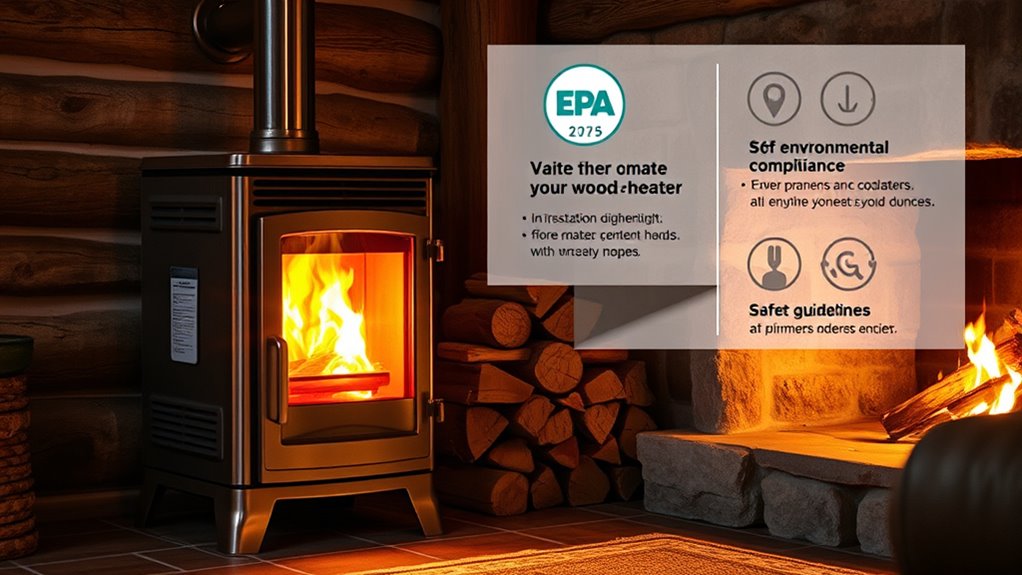
The EPA Wood Heater Rules aim to reduce air pollution from residential wood-burning appliances by setting stricter emission standards. As a homeowner, you should be aware of how these regulations impact your heating options and daily routines. With pollution regulations tightening, many traditional wood stoves and fireplaces are now required to meet new standards that considerably cut emissions of particulate matter and other pollutants. This means older heating units might no longer be compliant, prompting you to contemplate alternative heating methods that are cleaner and more efficient.
Understanding these rules helps you make informed choices about your heating system. If you’re looking to replace or upgrade your current wood heater, you’ll find that EPA-certified models emit fewer pollutants, helping you stay within legal limits and contribute to better air quality. These newer appliances often incorporate advanced technologies designed to burn wood more completely, reducing smoke and emissions. By choosing EPA-certified units, you’re not only complying with pollution regulations but also improving indoor air quality and reducing your environmental footprint.
EPA-certified wood heaters emit fewer pollutants, helping you comply with regulations and improve air quality.
The new standards have also sparked interest in alternative heating options. Electric heat pumps, natural gas systems, and pellet stoves are gaining popularity because they produce fewer emissions and often qualify as cleaner, more sustainable choices. This shift towards alternative heating isn’t just about compliance; it’s about adopting more environmentally friendly solutions that can save you money on fuel costs in the long run. Many of these options also tend to be more convenient, requiring less maintenance and providing more consistent heat compared to traditional wood-burning appliances.
For those who prefer wood as a primary heat source, the regulations mean you need to stay updated on which models meet the EPA standards. Installing an EPA-certified stove can help you avoid fines or penalties associated with non-compliance. Plus, you’ll benefit from better combustion efficiency, which means more heat with less wood and less pollution. This can make your home warmer and your heating process more cost-effective.
Additionally, performance kits are available for some models to optimize their efficiency and emissions, which can be an excellent way to upgrade your existing unit without replacing it entirely.

Comfort Glow Cast Iron Wood Stove – Indoor EPA Certified Heater, Fits 22" Logs, Heats 900 Sq. Ft., Cooking Surface, Compact Design, 6" Flue Collar, 1-year Warranty
- Heating Area: Heats up to 900 sq. ft.
- Log Size Compatibility: Fits 22-inch logs
- Material: Heavy-duty cast iron
As an affiliate, we earn on qualifying purchases.
As an affiliate, we earn on qualifying purchases.
Frequently Asked Questions
How Do I Verify if My Wood Heater Meets EPA Standards?
You can verify if your wood heater meets EPA standards by checking for an EPA certification label, usually attached to the unit. This label confirms it complies with emission standards, meaning it produces fewer pollutants. You can also review the manufacturer’s documentation or visit the EPA’s website for a list of certified models. Ensuring your heater is EPA-certified helps you stay compliant and reduces environmental impact.
Are There Exemptions for Certain Types of Wood Heaters?
Yes, there are exemptions for certain types of wood heaters. Exemption criteria vary based on heater categorization, such as portable or masonry heaters. If your heater falls into specific categories like pellet stoves or outdoor units, it might be exempt from some regulations. You should check the EPA’s guidelines to see if your heater’s classification qualifies for an exemption, ensuring you stay compliant while understanding any specific requirements.
What Are the Penalties for Non-Compliance With EPA Rules?
If you don’t comply with EPA wood heater rules, you could face penalty fines, which can be substantial, and increased compliance costs. The EPA enforces strict regulations, and violations may lead to hefty financial penalties and the need to upgrade or replace your heater. Staying compliant helps you avoid these penalties, saving you money and ensuring you meet federal environmental standards. Always stay informed and adhere to the regulations to prevent costly consequences.
How Often Do I Need to Replace or Upgrade My Wood Heater?
You should replace or upgrade your wood heater when it no longer meets EPA standards or shows signs of excessive wear. Follow a regular maintenance schedule, typically every year, to keep it running efficiently. Replacement timing varies—most heaters last about 15-20 years, but if your unit becomes inefficient or costly to maintain, it’s time for an upgrade. Staying proactive ensures better performance and compliance.
Can I Retrofit My Existing Wood Heater to Meet New Regulations?
You can breathe new life into your old wood heater by exploring retrofitting options to meet new regulations. While retrofitting might feel like giving your heater a fresh coat of paint, it’s more about upgrading its heart. Check if your heater qualifies for certification upgrades, ensuring it complies with emissions standards. Consulting professionals can help you navigate the process, turning your aging heater into a cleaner, more efficient source of warmth.
Conclusion
Staying informed about the EPA wood heater rules is like having a compass in a confusing forest—you’ll navigate with confidence. By understanding these regulations, you’re not just complying; you’re helping breathe easier for everyone. Ignoring these rules is like ignoring a warning sign on a winding road—dangerous and avoidable. So, stay updated, make eco-friendly choices, and be part of the solution that clears the air for future generations.