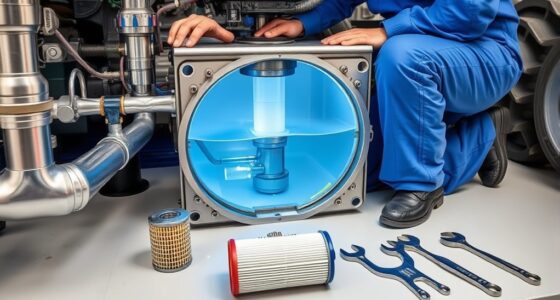
To safely transport splitters in trucks and trailers, you should follow safety regulations and guarantee proper load securement. Distribute weight evenly, secure the splitters with high-quality straps or chains, and choose the right trailer for your equipment. Consider weather conditions and use coverings or anti-slip mats as needed. Planning your route and inspecting securing devices during transit help prevent accidents. Stay informed on safety standards, and you’ll find more essential tips below to ensure a smooth and compliant load.
Key Takeaways
- Select a trailer suited for splitter size and weight, ensuring sufficient space and secure attachment points.
- Properly position and secure splitters with high-quality straps or chains to prevent movement during transit.
- Distribute load evenly across trailer axles to maintain stability and prevent overloading.
- Use coverings or anti-slip mats in adverse weather conditions to protect and stabilize the load.
- Verify compliance with safety regulations and conduct routine checks of securing devices throughout transport.
Transporting splitters in trucks and trailers requires careful planning to guarantee safety and efficiency. You need to understand and follow all relevant safety regulations to prevent accidents and ensure compliance with legal standards. Properly adhering to these regulations isn’t just about avoiding fines; it’s about protecting everyone involved — from your crew to other road users. Safety regulations typically specify load limits, securing methods, and vehicle specifications, so reviewing these before loading is essential. Ignoring them can lead to serious consequences, including equipment damage or injury. As you prepare for transport, familiarize yourself with the specific safety standards applicable in your region or industry to make sure your operation stays compliant.
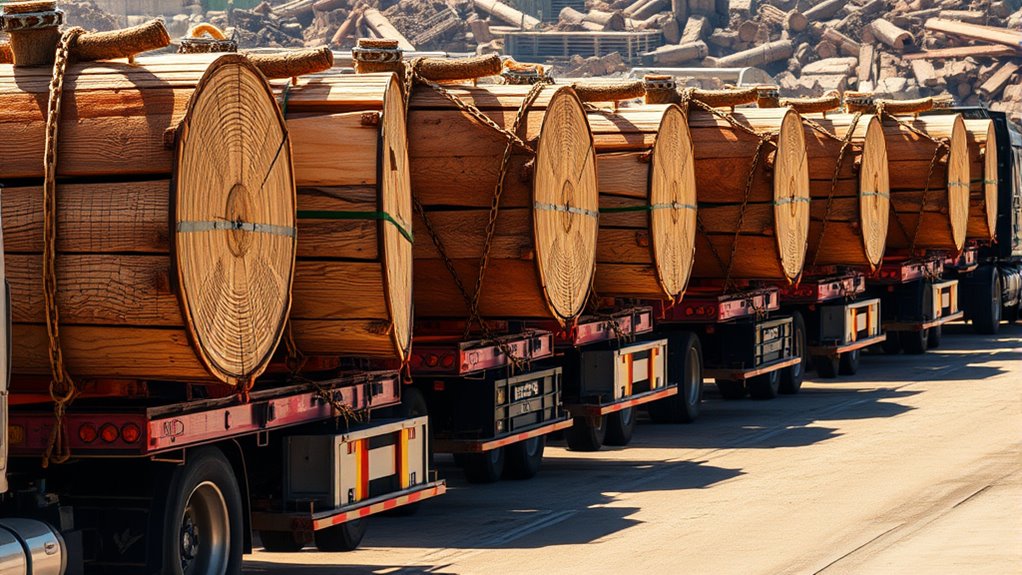
Equally important are effective loading techniques. You want to ensure the splitters are positioned securely within the trailer to prevent shifting during transit. Start by evenly distributing the weight across the trailer’s axles to maintain stability and avoid overloading any one section. When loading, use proper lifting equipment and techniques to minimize damage to the splitters and reduce personal injury risk. Secure each splitter with high-quality straps, chains, or tie-downs, making sure they’re tight and properly anchored to designated points on the trailer. Double-check all fastenings before starting your journey. This prevents any movement that could compromise safety or cause the splitters to fall and cause damage or injury.
Another key aspect of safe transportation is selecting the right trailer and securing devices suited for splitters. Heavy-duty flatbeds or specialized equipment trailers often work best, providing ample space and secure attachment points. Use blocking and bracing techniques to prevent lateral movement, especially for longer or bulkier splitters. Keep in mind that the load should be secure enough to withstand sudden stops, turns, or rough roads. Regularly inspect your securing devices throughout the trip, tightening or adjusting as needed, because a loose load can be dangerous. You should also consider weather conditions; for example, in rain or snow, additional coverings or anti-slip mats can help maintain stability. Additionally, understanding and applying risk assessment principles can help identify potential hazards before they occur, ensuring safer transport.

ATV Log Skidding Arch,Accommodates Logs up to 24in in Diameter,1600lbs Capacity,Heavy-Duty Log Holder for Farm, Commercial Wood Transport (Log Skidding Arch) (Arch)
【Robust and Durable, Fearless in Harsh Environments】 Crafted from high-quality steel and subjected to meticulous processing and stringent...
As an affiliate, we earn on qualifying purchases.
Frequently Asked Questions
What Permits Are Needed for Transporting Large Splitters?
You’ll need specific permits overview to guarantee legal compliance when transporting large splitters. Typically, you require oversize or overweight permits from your state’s transportation authority, depending on the splitter’s dimensions and weight. These permits help you comply with legal requirements, avoid fines, and ensure safe transport. Always check local regulations beforehand, and coordinate with authorities to obtain the necessary permits, ensuring a smooth and compliant delivery process.
How Do Weather Conditions Affect Splitter Transportation Safety?
A stitch in time saves nine, so always consider weather hazards before transporting splitters. Poor weather conditions like rain, snow, or high winds can compromise your safety and the stability of your load. Seasonal planning helps you avoid dangerous weather, minimizing risks on the road. Stay updated on weather forecasts, adjust your schedule accordingly, and make sure your equipment is prepared for any conditions to keep transportation safe.
What Is the Best Way to Load Delicate Splitter Components?
You should use protective packaging like foam or bubble wrap to cushion delicate splitter components. Secure them with strong securing methods such as straps or braces to prevent movement during transit. make certain each piece is tightly packed and stabilized within the container or trailer, reducing the risk of damage. Regularly check the securing methods during transportation to maintain safety and protect your splitter components from shocks and vibrations.
Are There Specific Regulations for Transporting Splitters Internationally?
Yes, there are specific regulations for international shipping of splitters. You need to comply with customs procedures, ensuring proper documentation and classification. Check import/export restrictions for each country, and use appropriate packaging to prevent damage during transit. Familiarize yourself with international shipping standards and safety guidelines. Staying compliant helps avoid delays, fines, or confiscation, ensuring smooth transportation of your splitters across borders.
How Can Damage During Transit Be Minimized for Splitters?
To minimize damage during transit, you should use protective packaging like foam padding or bubble wrap to cushion splitters. Secure them firmly with appropriate securing techniques such as straps or braces to prevent shifting. Make sure the load is evenly distributed and check that all securing devices are tight before departure. Regularly inspect the packaging and securing methods during transit to verify everything remains intact and safe.

gardhom 2PCS 7.5' Heavy Duty Ramps 3000lbs Capacity Aluminum Folding Loading Ramps with Handle Truck Ramp for ATV UTV Pickup Motorcycle Dirt Bike Lawn Mower Snow Blower
HEAVY DUTY TRAILER RAMPS: Each trailer loading ramps has a maximum load capacity of 1500 lbs(Pair of 3000...
As an affiliate, we earn on qualifying purchases.
Conclusion
Transporting splitters securely in trucks and trailers might seem simple, but it’s a delicate balance between safety and risk. While a well-secured splitter prevents accidents, a careless move can cause devastating damage or injury. Your attention to detail makes the difference—protecting your load and everyone on the road. Remember, precision and care may take extra time, but they safeguard lives and preserve your reputation. In this quiet act of diligence, you choose safety over chaos.

ALMULOO 60" x 15" Aluminum Trailer Ramps 6800 LBS Motorcycle ATV Loading Ramps Truck Heavy Duty Hook End & Knife Foot
Wide Vehicle Compatibility: The trailer ramp works with motorcycles, tractors, trucks, bicycles, cars, and lawn mowers, supports both...
As an affiliate, we earn on qualifying purchases.

VEVOR Aluminum Ramps, 6000 lbs, Heavy-Duty Ramps with Top Hook Attaching End, Universal Loading Ramp for Motorcycle, Tractor, ATV/UTV, Trucks, Lawn Mower, 60" L x 12" W, 2Pcs
Lightweight but Durable: The VEVOR ramps are the perfect combination of quality and strength. Made from premium aluminum...
As an affiliate, we earn on qualifying purchases.