
When choosing between an axe and a maul, consider the task and wood size. Use an axe for precise cuts, shaping, and splitting smaller logs, as its sharp blade allows for control and accuracy. Opt for a maul when tackling larger logs, as its heavier head and wedge shape make splitting tough wood easier with less effort. Understanding these differences helps you pick the right tool for the job—keep exploring to learn more about each tool’s best uses.
Key Takeaways
- Use an axe for detailed cuts, shaping wood, and splitting smaller logs requiring precision.
- Choose a maul for splitting large, tough logs with less effort due to its wedge-shaped head.
- Opt for an axe when control and accuracy are critical in lighter woodworking tasks.
- Use a maul for heavy-duty splitting to reduce the force needed on large or knotty logs.
- Consider log size and task complexity to determine whether an axe or maul is most effective.
When choosing between an axe and a maul, understanding their differences can help you make the right tool for your needs. Both are essential for splitting and chopping wood, but they serve different purposes and excel in different situations. Your decision should consider factors like tool durability and safety considerations to guarantee you select the best option for your task.
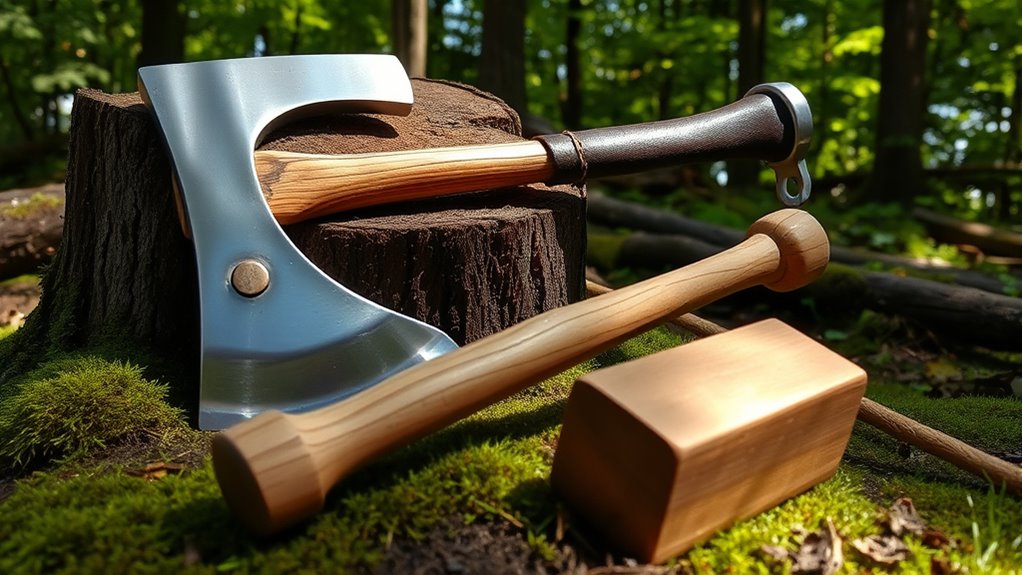
An axe is a versatile tool with a sharp, thin blade designed primarily for chopping wood. Its design allows for precise strikes, making it ideal for cutting through small to medium-sized logs or shaping wood. When evaluating tool durability, axes built with high-quality steel tend to last longer and withstand frequent use without losing their edge. Proper maintenance, like regular sharpening and careful handling, extends the tool’s lifespan. Safety considerations with axes include ensuring a secure grip and maintaining control during use. Because axes have a thinner blade, they can sometimes glance off the wood, so it’s vital to strike accurately and wear protective gear such as gloves and eye protection.
Axe blades are sharp, thin, and designed for precise chopping and shaping wood.
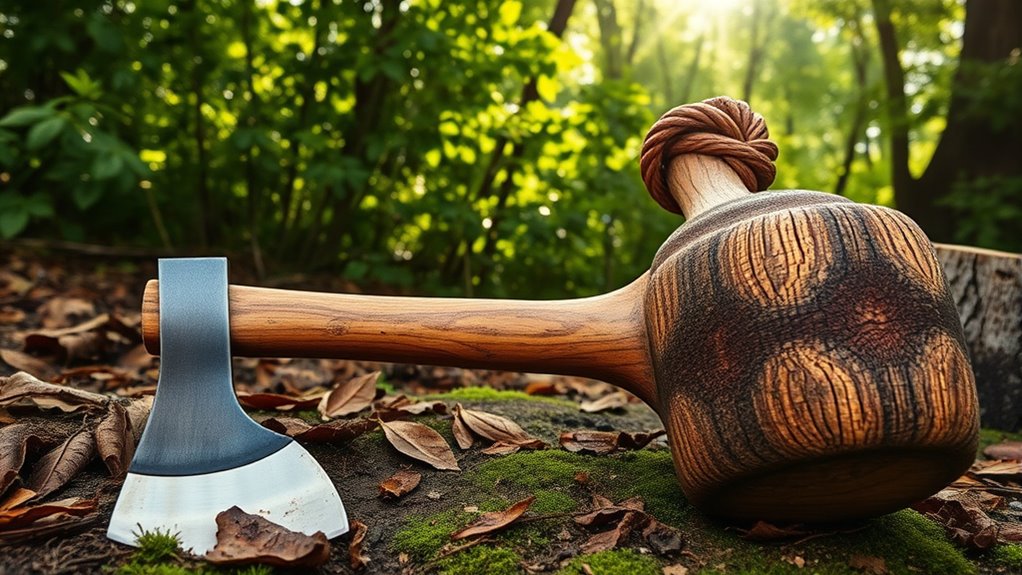
In contrast, a maul features a heavier, broader head with a wedge-shaped blade, making it perfect for splitting large logs. Its weight delivers greater force with each swing, reducing the effort needed to split tough wood. When considering tool durability, mauls made from durable steel and reinforced handles tend to endure the repeated impacts of splitting. Look for models with sturdy, shock-absorbing handles—often fiberglass or hickory—that can withstand the force without breaking. Safety considerations are especially important when using a maul because its weight and momentum can lead to unintentional strikes if not controlled properly. Always guarantee your footing is solid, keep your hands away from the swing path, and use proper technique to prevent accidents.
Ultimately, choosing between an axe and a maul hinges on your specific needs. If you’re cutting smaller logs or doing detailed work, a sharp axe offers precision and ease of handling. For splitting larger logs, a maul’s heft and wedge shape make the job much easier, provided you stay attentive to safety. Both tools require proper care to maximize tool durability and minimize safety risks. Regular inspection for cracks or chips, correct storage, and maintenance will extend their lifespan and keep you safe during use. Remember, the right tool, used correctly, makes the task safer and more efficient, so take the time to understand their differences and choose wisely.
Frequently Asked Questions
What Safety Gear Should I Wear When Using an Axe or Maul?
When using an axe or maul, you should wear protective gloves to prevent blisters and hand injuries. Always wear eye protection, like safety glasses, to shield your eyes from flying wood chips and debris. Additionally, consider wearing sturdy boots and long sleeves for extra safety. These precautions help keep you safe while working with these tools, ensuring you can focus on your task without unnecessary risks.
How Do I Maintain and Sharpen Each Tool Effectively?
Think of your axe or maul as a trusted sword in a knight’s arsenal. To keep it sharp and ready, regularly perform blade maintenance by honing the edge with a file or sharpening stone, ensuring smooth cuts. Handle care is essential—oil wooden handles to prevent cracking and inspect for splinters. By maintaining blade sharpness and handle integrity, your tool remains powerful, safe, and long-lasting in every battle with the wood.
Can I Use a Maul for Splitting Large Logs?
Yes, you can use a maul for log splitting, especially large logs. Mauls are designed for heavy-duty log splitting, providing greater force and durability. They’re effective at splitting thick, tough wood because of their weight and wedge shape. Just make certain you maintain the tool properly; sharpening the edge and checking for damage will keep it effective and extend its durability during heavy log splitting tasks.
What Are the Best Storage Options for Axes and Mauls?
You should store your axes and mauls in a safe, dry place using storage containers that safeguard the blades from damage and rust. Keep them in a tool rack or wall-mounted holder to prevent accidents. Always wear protective clothing when handling and storing tools, and ensure blades are clean and dry to avoid corrosion. Proper storage extends their lifespan and keeps your workspace safe.
Are There Specific Techniques for Safe Swinging?
To swing safely, you should focus on maintaining a proper grip and stance. Grip the axe or maul firmly but comfortably, avoiding too much tension, and keep your hands a little apart for control. Use a stable swinging stance with your feet shoulder-width apart, shifting your weight smoothly from back to front. Always aim accurately, keep your eyes on the target, and swing in a controlled, fluid motion to prevent accidents.
Conclusion
Now that you know when to choose an axe or a maul, you’ll make better decisions in your next chopping task. Remember, each tool has its unique purpose—using the right one saves effort and keeps you safe. So, next time you’re faced with firewood or splitting logs, ask yourself: are you ready to handle the challenge with confidence? After all, isn’t it worth using the right tool to get the job done right?