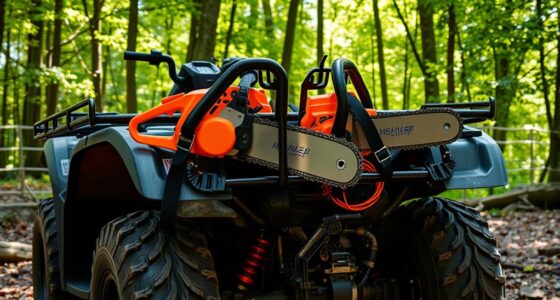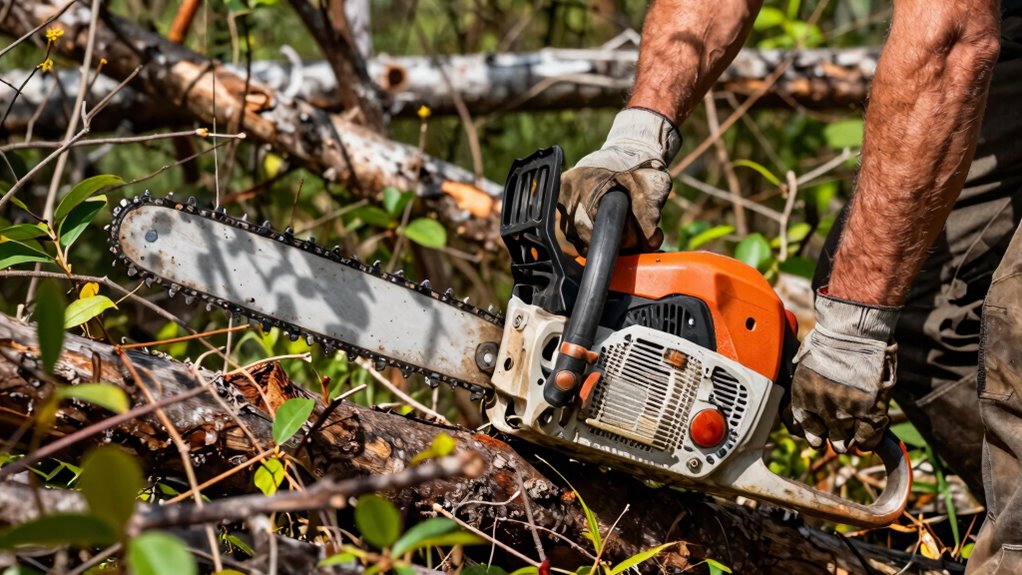

To carry a saw safely through brush and deadfall, hold the handle firmly but not too tight, keeping your hand close to the end for better control and leverage. Keep the saw close to your body with the blade pointing downward to prevent snagging. Stay aware of your surroundings, watching for unstable limbs or debris, and move at a controlled pace with steady footing. Proper grip and awareness help prevent accidents—continue to explore effective tips for safe handling.
Listen free for 30 days with Audible
Thousands of audiobooks and originals — cancel anytime.
As an affiliate, we earn on qualifying purchases.
Key Takeaways
- Keep the saw close to your body with the blade pointed downward to prevent snagging or injury.
- Use proper grip and maintain control, avoiding gripping too tightly to reduce fatigue.
- Wear protective gear such as gloves, goggles, and sturdy boots for safety.
- Lift and carry the saw using your legs and maintain good posture to avoid strain.
- Navigate obstacles slowly and deliberately, keeping awareness of surrounding hazards.
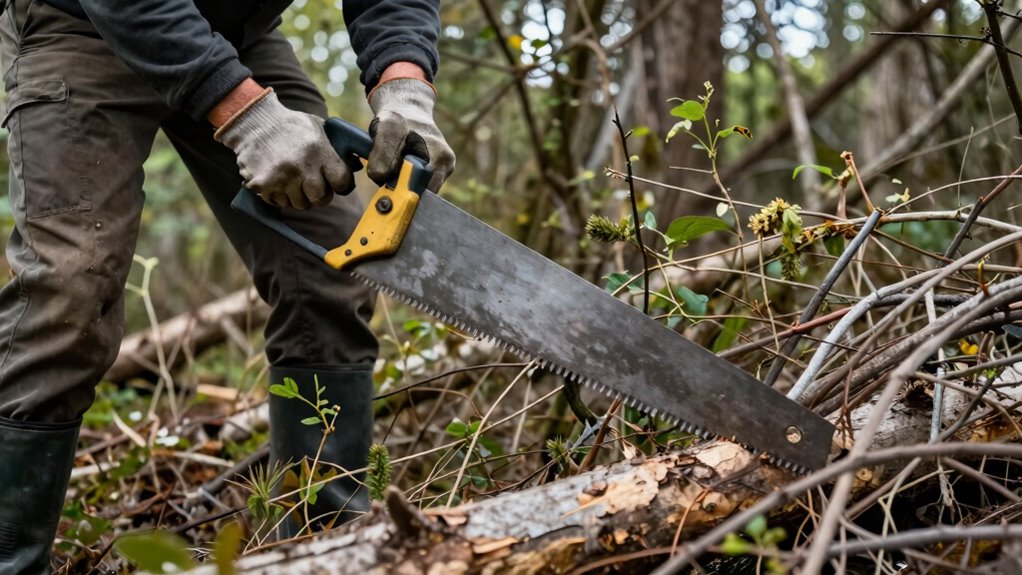
Carrying a saw safely is essential to prevent injuries and guarantee your own safety as well as others around you. When navigating through dense brush and deadfall, your focus should be on maintaining control and awareness. The first step is to ensure you have a proper grip on your saw. Grip the handle firmly but not too tightly, allowing for precise control without causing fatigue. Your hand should stay close to the handle’s end, giving you leverage and balance while moving through challenging terrain. Avoid gripping the saw too loosely, which can lead to slipping, or too tightly, which can cause hand fatigue and reduce your ability to maneuver smoothly.
Maintain a firm but relaxed grip on your saw for control and comfort while navigating challenging terrain.
Equally important is wearing the right protective gear. Always equip yourself with sturdy gloves to protect your hands from splinters, thorns, or accidental cuts. Safety glasses or goggles are a must to shield your eyes from flying debris or sawdust, especially when cutting or clearing around dead branches. A helmet or hard hat can protect your head from falling limbs or unexpected debris, and steel-toed boots provide extra stability and protect your feet if you accidentally drop the saw or step on sharp objects. Wearing long sleeves and durable pants helps prevent scratches and punctures from thorny plants or rough bark. Additionally, understanding proper handling techniques can significantly reduce the risk of accidents while working with a saw. Being aware of safety precautions and how to respond in emergencies can also improve your overall safety during such tasks. Incorporating proper techniques for lifting and carrying the saw can further help prevent muscle strain and accidents. Staying aware of your physical limits is also crucial to avoid fatigue and maintain control during extended periods of work.
When you’re moving through brush and deadfall, keep the saw close to your body, ideally with the blade pointing downward or slightly away from you. This reduces the risk of accidental contact or injury if you stumble or lose your footing. Maintain a controlled, deliberate pace, ensuring your footing is secure before shifting the saw. Keep your arms slightly bent and your core engaged to help absorb shocks and maintain balance. When lifting or carrying the saw over obstacles, use your legs rather than your back to avoid strain.
Always be mindful of your surroundings. Watch for unstable branches or loose debris that could shift unexpectedly. When passing through narrow or dense areas, consider lowering the saw so that it doesn’t swing or catch on nearby branches. Communicate with others around you if you’re working in a team, making sure everyone knows your movements. To ensure safety, it’s crucial to be aware of potential hazards like falling limbs or hidden obstacles, especially in rugged terrain. By combining a proper grip, wearing the right protective gear, and staying alert, you’ll minimize the risk of accidents and keep your journey through brush and deadfall safe and efficient.
As an affiliate, we earn on qualifying purchases.
Frequently Asked Questions
What Type of Saw Is Safest for Brush and Deadfall?
A folding saw is the safest choice for brush and deadfall. Its compact design keeps the saw blade safety covered, reducing the risk of injuries. When carrying it, use proper carrying technique by holding the handle firmly and keeping the blade folded and protected. This minimizes accidental cuts or damage to the blade, ensuring your safety and maintaining saw blade safety during transport. Always stay alert and cautious in rough terrain.
How Do I Maintain Balance When Carrying a Saw?
A chain is only as strong as its weakest link, so focus on your balance. To maintain it, keep the saw close to your body with proper grip techniques, like wrapping your fingers securely around the handle. Distribute the weight evenly by adjusting your stance, standing with feet shoulder-width apart, and slightly bending your knees. This helps stabilize you, prevents fatigue, and guarantees safe, efficient movement through brush and deadfall.
Should I Wear Gloves When Carrying a Saw?
Yes, you should wear gloves when carrying a saw. Gloves provide essential hand protection, reducing the risk of cuts and splinters. They also improve your grip, especially when using proper grip techniques, helping prevent slips. Opt for gloves made of durable material that offer flexibility. Wearing gloves guarantees you maintain better control and safety, especially when maneuvering through brush and deadfall, keeping your hands protected from potential hazards.
What’s the Best Way to Avoid Obstacles While Carrying?
To avoid obstacles while carrying a saw, focus on obstacle navigation and carrying techniques. Keep your vision ahead and stay alert for branches, rocks, or uneven ground. Use a firm, balanced grip, holding the saw close to your body for better control. Move slowly and deliberately, adjusting your path as needed. This approach minimizes the risk of tripping or hitting obstacles, ensuring safe and efficient transport through challenging terrain.
How Do I Quickly Dismount With a Saw in Hand?
When you need a quick dismount with a saw in hand, stay alert and maintain control. As you approach the obstacle, shift your grip to prepare for a smooth release. Keep your eyes on your footing, and, with a confident motion, release the saw from your hand or slide it into a secure position. This saw handling technique guarantees safety and efficiency, letting you dismount swiftly without risking injury or damage.
Conclusion
As you navigate through tangled brush and fallen logs, remember to keep your saw close and secure, like a trusted companion ready for action. Feel the sturdy grip in your hands, the weight steady and reassuring. With each careful step, you carve a clear path through the chaos, the rustling leaves whispering your careful movements. Stay alert, stay safe, and let your mindful handling turn a challenging task into a confident stride through nature’s obstacle course.
Fall Picks
fall essentials
As an affiliate, we earn on qualifying purchases.