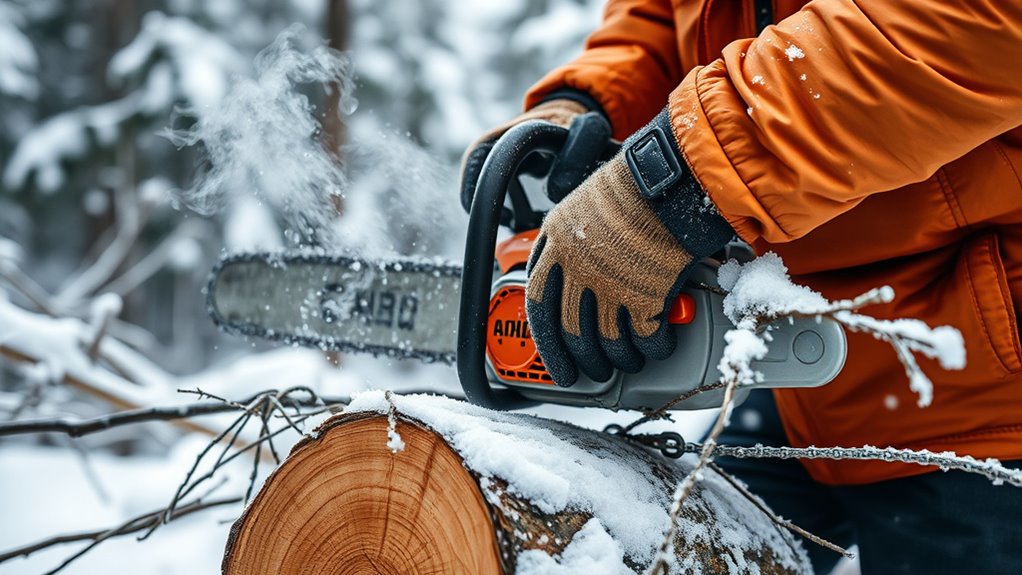

When chainsawing in cold weather, you should wear insulated safety gear, including gloves and eye protection, to stay warm and alert. Store fuel in a warm, dry place and use winter additives to prevent gelling. Warm up your engine with a choke before starting, keep the chain sharp, and check its condition often. Wear boots with good traction to prevent slipping and stay aware of icy surfaces. For more helpful tips, keep exploring these essential cold weather chainsawing practices.

Get business pricing on tools and workshop supplies
- Business-only prices and quantity discounts
- Tax-exempt purchasing
- Multiple users, one account, clear invoices
Key Takeaways
- Wear insulated, high-visibility clothing and sturdy gloves to stay warm, safe, and maintain grip during cold weather chainsawing.
- Store fuel in a warm, dry place, use winter additives, and check for condensation to ensure reliable engine performance.
- Warm up the engine with choke engaged, keep the chain sharp, and ensure the spark plug is clean for easier starting.
- Use boots with good traction, be cautious on icy surfaces, and maintain a firm grip to prevent slips and accidents.
- Take regular breaks, dress in layers, and stay aware of cold wind to prevent muscle strain and maintain focus.
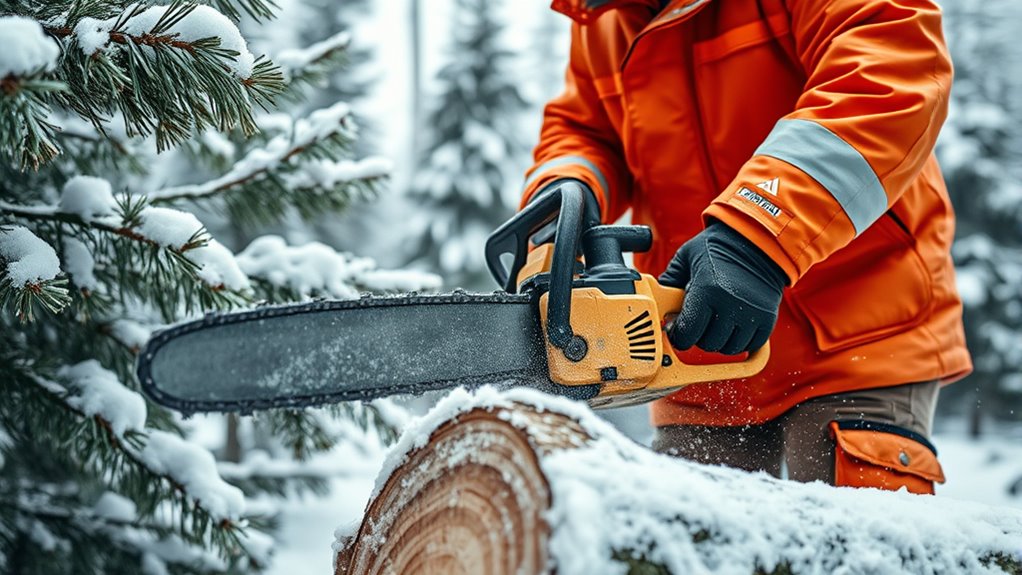
Cold weather can make chainsawing more challenging, but with the right precautions, you can stay safe and get the job done efficiently. When working in low temperatures, your safety gear becomes even more essential. Guarantee you wear insulated, high-visibility clothing, sturdy gloves, and eye protection to shield yourself from flying debris and cold wind. Proper safety gear not only keeps you safe but also helps maintain focus and comfort during prolonged cutting sessions. Remember, cold muscles are more prone to injury, so dress in layers that allow freedom of movement while insulating against the chill.
Fuel storage is another vital aspect during cold weather. Gasoline can thicken in low temperatures, making it harder to start your chainsaw and potentially causing engine problems. To prevent this, store fuel in a warm, dry place away from direct sunlight and extreme cold. Consider using a fuel additive designed for winter conditions, which can improve flow and prevent gelling. Before heading out, always check your chainsaw’s fuel level and ensure the mixture is fresh. Cold weather can also cause condensation in your fuel tank, leading to water contamination, so it’s wise to avoid leaving fuel in your saw for extended periods when temperatures drop substantially.
When preparing to start your chainsaw in winter, take extra steps. Warm up the engine gently by engaging the choke and holding it for a few seconds before trying to start it. Cold engines need more cranking, so ensure your spark plug is clean and in good condition to facilitate easier starting. Keep your chainsaw’s chain sharp; cold weather tends to make the chain more brittle, increasing the risk of breakage. A well-maintained chain cuts more efficiently, saving you effort and reducing the risk of kickback. Additionally, proper fuel storage should be a priority, as it can significantly impact your chainsaw’s performance in cold conditions.
Handling your chainsaw in winter also requires awareness of the environment. Snow and ice can create slippery surfaces, so wear boots with good traction and be cautious when moving around your work area. Keep a firm grip on the saw and avoid overreaching, as icy ground can cause slips. Additionally, be mindful of the cold wind, which can cause you to lose focus or get distracted, increasing the chances of accidents. Having a plan for quick breaks to warm up your hands and muscles can help maintain your stamina and precision.
Products Worth Considering

Dyson V8 Cyclone Cordless Vacuum

TCL 85-Inch QM6K Series QLED Mini LED 4K HDR Smart Google TV

Dyson V8 Cordless Vacuum
As an affiliate, we earn on qualifying purchases.
Frequently Asked Questions
How Do I Prevent My Chainsaw From Freezing Up?
To prevent your chainsaw from freezing up, you should perform regular chainsaw maintenance, ensuring the chain is sharp and well-lubricated. Keep the bar and chain free of debris and check the fuel mixture for proper ratio. Warm up the chainsaw before use, and store it in a dry, insulated area when not in use. Always prioritize cold weather safety by wearing appropriate gear and staying alert to avoid accidents.
What Clothing Is Best for Cold Weather Chainsawing?
Did you know that proper clothing can increase your safety and comfort by over 50% during cold weather chainsawing? To stay warm and protected, wear layered clothing, which traps heat and provides flexibility. Don’t forget insulated boots—they keep your feet dry and warm, preventing numbness that can lead to accidents. Combining these with a warm hat and gloves guarantees you stay comfortable and focused while working in freezing temperatures.
How Often Should I Check My Chainsaw’s Oil in Winter?
You should check your chainsaw’s oil levels before each use in winter. Cold temperatures cause oil to thicken, so maintaining proper oil levels is vital to prevent engine damage. Incorporate oil level checks into your regular maintenance schedule, especially during cold weather, to guarantee smooth operation. Always top off the oil as needed, and consider using winter-grade oil for better flow and lubrication in low temperatures.
Are Special Chains Required for Cold Weather Cutting?
Think of cold weather chains as specialized winter chain types designed for icy conditions. You don’t always need a completely different chain, but cold weather chain maintenance is essential. I once tried cutting frozen wood with a regular chain, which struggled and slipped. Using a winter chain type ensures better grip and safety. In cold conditions, switch to these chains to keep your saw running smoothly and prevent accidents.
How Do I Store My Chainsaw After Winter Use?
After winter use, you should perform proper chainsaw maintenance and winter storage to keep it in good shape. First, clean the chainsaw thoroughly, removing any debris and old oil. Then, drain the fuel or add a fuel stabilizer. Store it in a dry, sheltered place, preferably in a case or cover to prevent rust and corrosion. Regularly check and lubricate moving parts to guarantee peak performance when you need it next.
Conclusion
Now that you’ve sharpened your skills for cold weather chainsawing, remember—every cut counts when conditions are tough. Stay alert, keep your equipment in top shape, and never underestimate the unpredictable nature of winter work. As you tackle those icy logs, a hidden challenge could be just around the corner. Are you prepared for what’s coming next? Stay vigilant, because in cold weather, safety and precision are your best allies—until the next unexpected twist.