
You might think your chosen log splitter is perfect, but real firewood often includes knots, irregular shapes, and dampness that can challenge even powerful machines. Smaller or less sturdy splitters may struggle with dense or wet logs, leading to frustration and safety risks. Matching the splitter size to your firewood’s characteristics guarantees better performance and safer use. Keep these factors in mind, and you’ll discover tips to make your firewood process more efficient and smoother.

Get business pricing on tools and workshop supplies
- Business-only prices and quantity discounts
- Tax-exempt purchasing
- Multiple users, one account, clear invoices
Key Takeaways
- Real firewood often has knots, irregular shapes, and moisture, which can challenge a splitter that seems suitable for uniform logs.
- Moisture content and density variations in wood can reduce the effectiveness of a splitter that appears perfect for dry, seasoned logs.
- A splitter that handles small, dry logs well may struggle with damp or green wood, leading to inefficiency or equipment strain.
- Larger or more powerful splitters aren’t always necessary and can be unsafe or cumbersome for typical firewood.
- Matching splitter size to actual firewood characteristics ensures safer, more effective, and efficient splitting results.

Choosing the right log splitter size is vital for efficiently producing firewood that meets your needs. When you’re shopping for a splitter, it’s tempting to focus on the power or the size that looks perfect in the store. But before you invest, think about what kind of firewood you’ll actually be splitting. If you’re someone who loves camping essentials, like cozy campfires or backyard gatherings, then your splitter should match the type of wood you plan to use. Many beginners assume a larger, more powerful machine will do everything, but that’s not always the case. The ideal size depends on the typical logs you encounter, and that’s where understanding real firewood becomes indispensable.
A common misconception is that a bigger splitter always equals better performance. While bigger models handle larger logs, they can be overkill for smaller or medium-sized wood. Plus, bigger machines tend to be heavier, less portable, and often require more safety precautions. When you meet real firewood—logs that are often knotted, irregularly shaped, or damp—the performance of your splitter can differ from what the specs suggest. Smaller, more manageable splitters might struggle with tough knots or dense wood, but they’re easier to control and safer to operate. This is especially important if you’re new to splitting or if you’re splitting wood in areas where safety precautions are a priority. Choosing the right equipment can make a significant difference in overall safety and efficiency. Additionally, understanding the types of firewood you plan to split can help you select a machine that handles your specific needs more effectively. Understanding firewood characteristics, such as moisture content and grain structure, can also influence your choice. Recognizing the differences in wood density can help you determine whether a more powerful machine is necessary or if a smaller unit will suffice. Moreover, being aware of the impact of moisture levels on splitting can guide you in selecting equipment that handles damp or green wood better, ensuring smoother operation and longer equipment lifespan.
Safety should always be your top concern. Larger splitters, while more powerful, can pose significant safety risks if not used carefully. You need to wear appropriate protective gear, keep your hands clear of moving parts, and ensure your workspace is stable. The wrong size or a poorly suited machine can increase the chance of accidents, especially when dealing with unpredictable or heavy logs. Remember, a machine that’s too big or too powerful for your typical logs can make splitting more dangerous and less efficient. It’s better to choose a splitter that matches the size and density of your firewood, making the process safer and more effective.
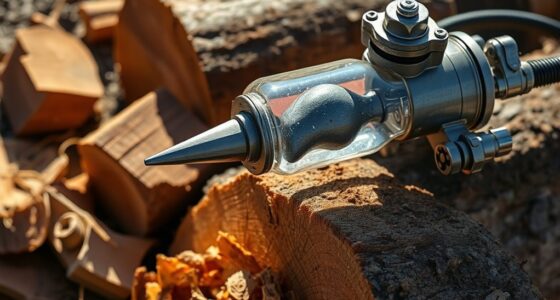
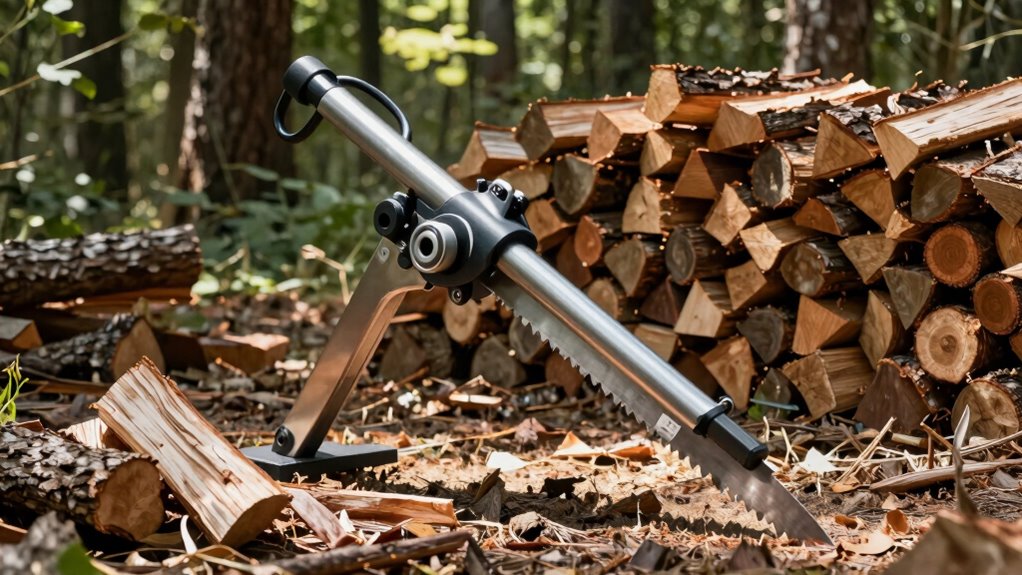
firewood log splitter for knots and wet wood
As an affiliate, we earn on qualifying purchases.
As an affiliate, we earn on qualifying purchases.
Frequently Asked Questions
Can a Larger Splitter Handle Smaller Logs Efficiently?
A larger splitter can handle smaller logs efficiently, but it’s like fitting a whale into a teacup—sometimes overkill. Your splitter’s capacity and log length compatibility are key. If the machine’s capacity exceeds the log size, it’ll work smoothly without damage. Just guarantee the splitter’s maximum capacity matches the firewood’s size; otherwise, you risk inefficient splitting or machine strain. Choose a splitter that matches your firewood’s dimensions for peak performance.
What Safety Features Should I Look for in a Log Splitter?
You should look for safety features like emergency stop buttons and safety shields to prevent accidents. Always follow safety precautions by keeping your hands clear of the splitting wedge and using tools like push sticks if necessary. Wearing protective gear such as safety glasses, gloves, and steel-toed boots is essential. These measures help guarantee your safety while operating the log splitter, reducing the risk of injuries during use.
How Does Wood Moisture Affect Splitting Performance?
Think of splitting wood like breaking a stubborn clay pot. If the wood’s moisture levels are high, it’s like trying to crack damp clay; it’s tougher and requires more force. Proper wood drying reduces moisture, making splitting easier and cleaner. When moisture remains in the wood, it resists your efforts, possibly damaging your splitter. So, make sure your firewood is well-dried for smoother, safer splitting performance.
Are Electric Splitters Suitable for Heavy-Duty Firewood?
Electric splitters aren’t ideal for heavy-duty firewood because electric compatibility limits their power, especially with dense, tough wood. You can handle lighter, softer logs easily, but when firewood density increases, the splitter may struggle or stall. For consistent performance on heavy-duty firewood, gas-powered splitters offer the muscle needed. Choose an electric model only if you mostly deal with less dense, softer wood, and your splitting needs are lighter.
How Often Should I Maintain My Log Splitter?
You should maintain your log splitter regularly, ideally after every few uses or once a month during heavy use. Follow a proper maintenance schedule that includes lubrication tips like oiling the ram and moving parts to prevent rust and guarantee smooth operation. Check hydraulic fluid levels and inspect for wear or damage. Consistent maintenance keeps your splitter running efficiently and prolongs its lifespan, saving you time and money in the long run.
Conclusion
So, don’t judge a log splitter by its size alone—you might find it’s all bark and no bite for real firewood. Always consider the type and size of wood you’ll be tackling and choose equipment that matches your needs. Remember, a tool that looks perfect on paper might not cut it in practice. Sometimes, the smallest gear can surprise you, so stay flexible and keep your expectations realistic.
Fall yard work Picks
leaf blowers
As an affiliate, we earn on qualifying purchases.