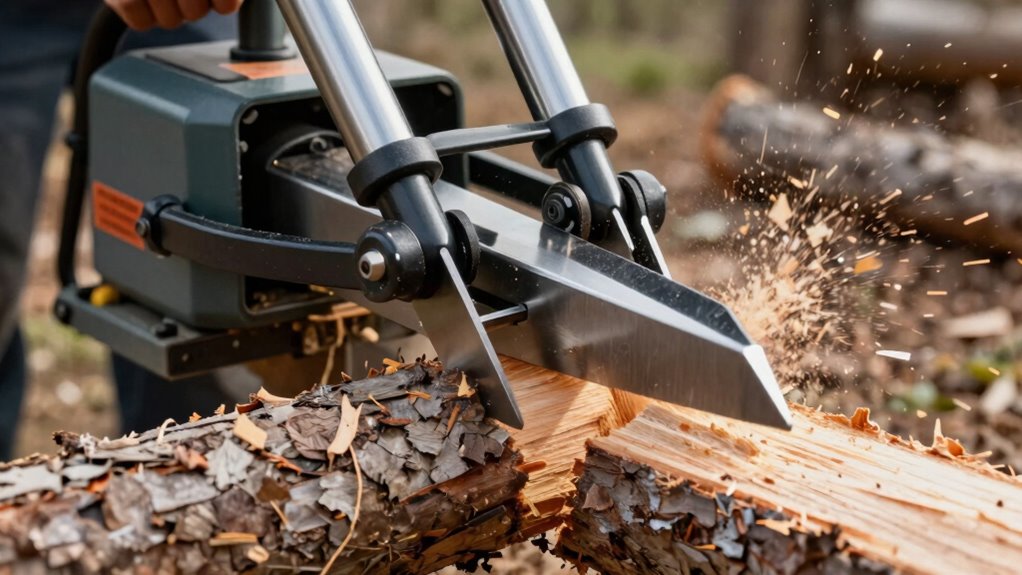

If your log splitter works strongly then suddenly weak, it’s often caused by hydraulic pressure fluctuations. Low fluid levels, overfilled systems, or dirty filters can reduce pressure and power. Leaks in hoses or damaged fittings also cause sudden drops in performance. Regularly checking and maintaining fluid levels, inspecting for leaks, and cleaning or replacing filters can help stabilize pressure. Keep these tips in mind, and you’ll discover more ways to keep your splitter running smoothly.

Get business pricing on tools and workshop supplies
- Business-only prices and quantity discounts
- Tax-exempt purchasing
- Multiple users, one account, clear invoices
Key Takeaways
- Inconsistent hydraulic fluid levels can cause pressure fluctuations, leading to sudden power drops.
- Debris buildup or dirty filters restrict fluid flow, impairing splitter performance.
- Leaks or damaged fittings reduce system pressure, resulting in weak operation.
- Overfilled or low hydraulic fluid levels disrupt proper pressure regulation.
- Lack of routine maintenance causes component wear, affecting overall hydraulic power.

If your log splitter suddenly feels powerful and then suddenly weak, it can be frustrating and confusing. You might notice it struggles to push through a tough piece of wood one moment, then seems to handle the same task with ease another. This inconsistency can leave you puzzled about what’s causing the problem. Often, the issue isn’t with the machine’s power source but with maintenance oversights or safety precautions that haven’t been followed. To troubleshoot effectively, you need to understand the common causes and how to address them properly.
Start by inspecting the hydraulic system, which is usually at the core of your log splitter’s performance. Low hydraulic fluid levels can cause fluctuations in power. If the fluid is below the recommended level, your splitter won’t generate enough force, making it seem weak. Conversely, overfilled systems can lead to pressure problems. Check the fluid level regularly and top it off if necessary, using the manufacturer’s recommended hydraulic oil. When doing so, follow safety precautions—wear gloves, avoid spills, and ensure the machine is turned off and cooled down. Remember, hydraulic fluid can be under high pressure, so handling it carefully prevents accidents. Additionally, hydraulic system maintenance is crucial for consistent performance and can help prevent sudden drops in power. Proper filter replacement can also improve fluid flow and prevent blockages that affect pressure and performance. Regularly inspecting hoses and fittings for leaks or damage is essential for maintaining consistent hydraulic pressure. Ensuring all components are clean and free from debris also helps maintain optimal system efficiency.
hydraulic log splitter fluid level gauge
As an affiliate, we earn on qualifying purchases.
As an affiliate, we earn on qualifying purchases.
Frequently Asked Questions
Can Temperature Affect My Log Splitter’s Performance?
Yes, temperature can affect your log splitter’s performance. Cold weather thickens hydraulic fluid, reducing flow and hydraulic wear, which makes your splitter feel weaker. Conversely, warmer temperatures improve fuel efficiency and hydraulic function, helping it operate smoothly. You might notice performance fluctuations with temperature swings, so keeping the splitter in a stable environment or using appropriate fluids can prevent sudden drops in power and extend its lifespan.
Is It Normal for the Splitter to Fluctuate in Power?
Yes, it’s normal for your log splitter to fluctuate in power. This often happens because hydraulic fluid can change viscosity with temperature, affecting the engine’s performance and hydraulic system operation. When the hydraulic fluid gets too thick or thin, it causes inconsistent pressure, leading to power fluctuations. Regularly checking and maintaining proper hydraulic fluid levels and quality helps guarantee steady performance and prevents sudden drops in power.
How Often Should I Perform Maintenance on My Splitter?
Did you know that regular maintenance can extend your log splitter’s lifespan by up to 30%? You should perform a maintenance schedule every 50-100 hours of use, depending on how often you split wood. Lubrication tips include checking hydraulic fluid levels and applying oil to moving parts. Consistent upkeep guarantees your splitter runs smoothly and prevents unexpected power fluctuations, keeping it in top shape for all your splitting needs.
What’s the Impact of Different Wood Types on Splitting Power?
Different wood types impact your splitter’s power due to variations in wood density and moisture content. Hardwoods like oak and hickory have higher density, requiring more force to split, which can weaken your splitter’s performance. Wet or freshly cut wood has higher moisture content, making it tougher to split and potentially reducing power. To maintain efficiency, consider drying wood and understanding the specific density of each type.
Could Operator Technique Influence the Splitter’s Strength?
Imagine wielding a mighty hammer with precision—that’s what good operator technique feels like. Your ergonomics and splitting techniques directly influence your splitter’s strength. When you use proper stance, smooth motions, and controlled pressure, you maximize power and prevent strain. Conversely, poor technique can cause the splitter to feel weaker unexpectedly. Focus on your grip, angles, and rhythm, and you’ll harness the full strength of your log splitter every time.
Conclusion
Think of your log splitter as a steadfast friend, strong and reliable, yet vulnerable to unseen troubles. When it suddenly weakens, it’s like a silent cry for help—an unnoticed crack in its armor. Regular maintenance, like tending to a trusted companion, keeps it resilient. By nurturing your splitter, you guarantee it remains a dependable force, ready to conquer each log. Remember, a well-cared-for tool is the steady heartbeat of your cozy, warm home.
Fall Picks
fall essentials
As an affiliate, we earn on qualifying purchases.