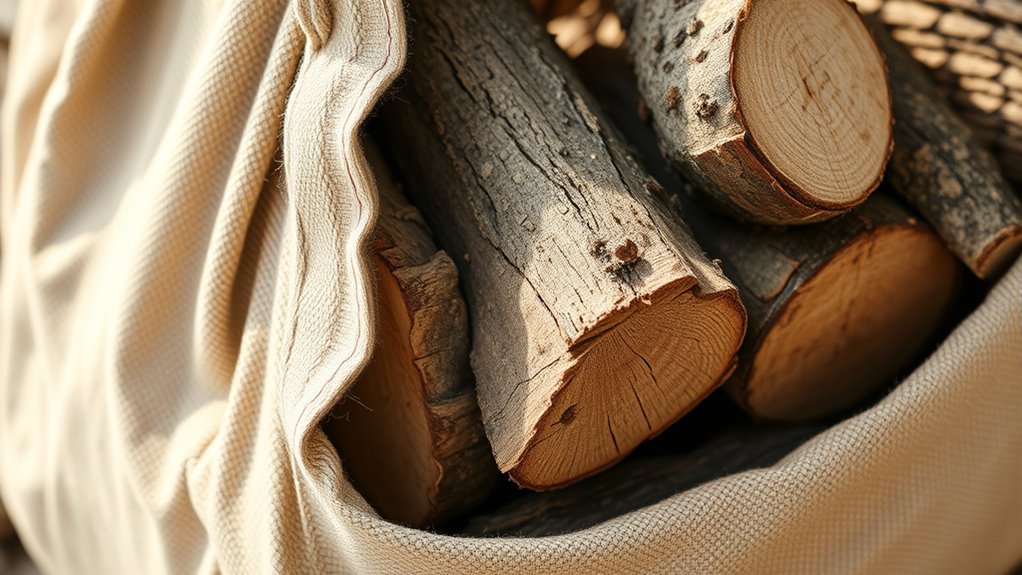

To make a firewood sling from canvas, choose durable, tightly woven fabric like 10-12 oz canvas for strength. Cut it into a rectangular piece about 2-3 feet long and 1-1.5 feet wide, then hem the edges to prevent fraying. Reinforce the seams with double stitching and securely attach sturdy handles made from webbing or strong rope. Proper construction guarantees safe lifting and long-lasting use, and tips for testing and maintenance can help you keep your sling in top condition.

Get business pricing on tools and workshop supplies
- Business-only prices and quantity discounts
- Tax-exempt purchasing
- Multiple users, one account, clear invoices
Key Takeaways
- Select durable, tightly woven canvas fabric (10-12 oz) for strength and longevity.
- Cut the fabric into a 2-3 foot long, 1-1.5 foot wide rectangle, and hem edges to prevent fraying.
- Reinforce seams with double stitching and securely sew handles made from strong webbing or rope.
- Attach handles firmly to each side, ensuring they are reinforced for safe lifting and carrying.
- Test the sling with various log weights, inspect for stress points, and perform regular maintenance for safety.

A firewood sling made from durable canvas is a simple yet effective tool to help you carry logs with ease. When you’re gathering firewood, safety should always be your top priority. Using a well-made sling not only makes transportation easier but also promotes fire safety by reducing the risk of dropping logs or injuring yourself. Canvas durability is key here; a high-quality fabric ensures the sling can withstand the weight of heavy logs repeatedly without tearing or fraying. This means you won’t have to worry about sudden failures that could lead to accidents or delays in your firewood collection.
Creating a firewood sling from canvas is straightforward, but paying attention to the material quality is essential. You want a sturdy, tightly woven fabric that resists wear and tear. Thicker canvas, such as 10-12 oz weight, offers better durability and can handle larger logs comfortably. Before you start, gather your materials: strong canvas fabric, scissors, a sewing machine or heavy-duty needle, and sturdy rope or webbing for handles. Cutting the canvas into a rectangular shape, about 2-3 feet long and 1-1.5 feet wide, gives you enough surface area to support logs securely.
When sewing the edges, reinforce the seams with double stitches to prevent ripping under load. Hem the edges to prevent fraying and add extra strength. Next, attach handles made from strong rope or webbing to each side of the sling, ensuring they’re sewn securely into the fabric. Proper attachment is vital for fire safety and durability—loose handles could cause accidents or logs to fall. Test the sling by loading it with logs of varying weight, checking for any weak points or signs of stress in the fabric and seams.
Using your canvas firewood sling properly helps minimize fire safety hazards. Carrying logs with a sling reduces the chances of logs rolling or slipping, which could create sparks or debris near your fire area. The durability of canvas means your sling will last through many seasons of firewood hauling without degrading. Regularly inspect your sling for signs of wear, especially around the handles and seams, so you can repair or replace it before it becomes unsafe. Maintaining fire safety standards ensures your firewood gathering remains both efficient and secure, keeping accidents at bay and prolonging the useful life of your sling. This proactive approach keeps your firewood gathering efficient and safe, ensuring the sling remains a reliable tool season after season.
As an affiliate, we earn on qualifying purchases.
Frequently Asked Questions
Can I Use Waterproof Canvas for the Sling?
Yes, you can use waterproof canvas for the sling. Its waterproof durability guarantees your firewood stays dry and protected from the elements. Waterproof canvas is strong and resistant to tearing, making it ideal for carrying heavy loads like firewood. Plus, it’s easy to clean and maintain. Using waterproof canvas gives your sling added longevity and reliability, especially if you often transport wood in wet or damp conditions.
What Tools Are Needed to Cut and Sew the Canvas?
You’ll need a sharp utility knife or heavy-duty scissors for canvas cutting, ensuring clean, precise edges that could cut through steel. For sewing, grab a strong needle and durable sewing tools like a heavy-duty sewing machine or hand-sewing kit with heavy-duty thread. These tools are essential for penetrating thick canvas and creating a sturdy sling. Without them, your project would be lost in a sea of frayed edges and unraveling stitches.
How Much Weight Can a Canvas Firewood Sling Hold?
A canvas firewood sling can typically hold around 50 to 100 pounds, depending on its design and fabric thickness. Its firewood capacity varies based on the sling’s size and stitching strength, but overall, it offers excellent sling durability. To guarantee safety, don’t overload it beyond its recommended weight limit. Properly reinforced seams and high-quality canvas material help maximize its firewood capacity and longevity.
Is It Safe to Carry Wet or Damp Firewood?
Carrying wet or damp firewood isn’t safe because it can increase fire safety risks and cause mold growth. Damp firewood weighs about 30% more than dry wood, making it harder to carry and potentially damaging your sling. Always guarantee proper firewood storage in a dry, ventilated area before transport. This reduces the risk of accidents and keeps your fire-starting process clean and efficient.
How Do I Clean and Maintain the Canvas Sling?
To clean your canvas sling, use mild soap and cold water, gently scrubbing any dirt or stains. Avoid harsh chemicals that can damage the fabric. After cleaning, let it air dry completely before storing. For maintenance, inspect regularly for tears or fraying, and repair promptly. Store your sling in a cool, dry place away from direct sunlight to prevent fading and deterioration, ensuring it stays durable for future use.
Conclusion
Once you’ve finished your firewood sling from canvas, you’ll realize how handy it is—just like that day you found an old tarp in your shed, thinking you’d toss it out. Turns out, that forgotten piece was perfect for this project. Sometimes, the best tools come from coincidence, reminding you that a little resourcefulness can turn unexpected finds into useful creations. Now, you’re all set to carry firewood easily, thanks to a simple idea and a bit of luck.
Fall Picks
fall essentials
As an affiliate, we earn on qualifying purchases.