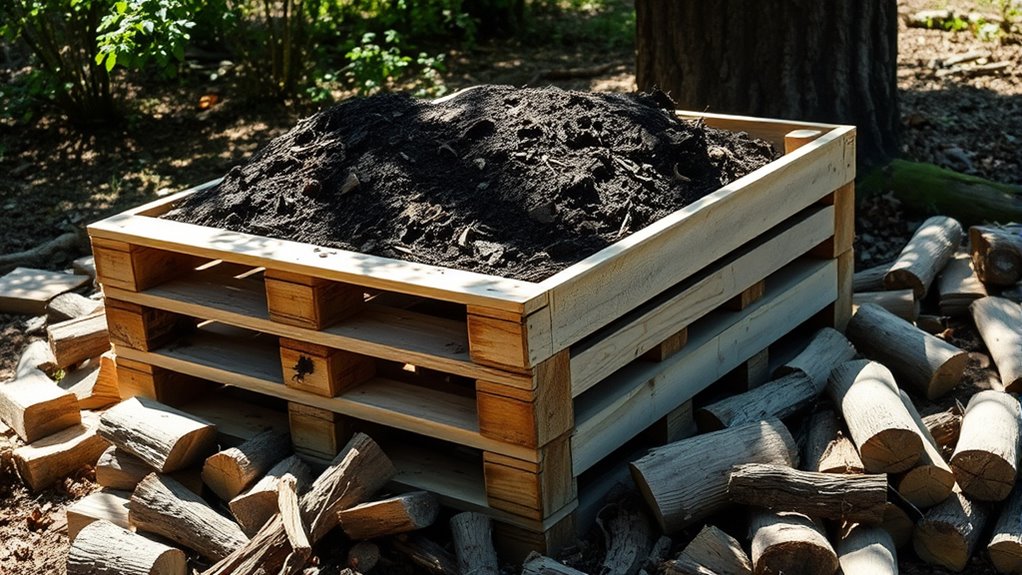

To create a pallet compost bin using firewood scraps, start by assembling four pallets into a square or rectangle, leaving one side open for access. Add broken-down firewood scraps to provide carbon, balancing green waste like kitchen scraps or grass clippings. Turn the pile regularly, keep it moist, and support airflow with small wood pieces. Using this method recycles waste sustainably while producing nutrient-rich soil—discover more ways to optimize your composting process below.
Key Takeaways
- Build a sturdy compost bin with four pallets forming a square, leaving one side open for access and turning.
- Incorporate small firewood scraps to add carbon and improve aeration, speeding up decomposition.
- Regularly turn the compost and maintain proper moisture for optimal microbial activity and efficient composting.
- Cover the bin with a lid or cover to retain moisture, heat, and prevent pests, enhancing compost quality.
- Recycle firewood scraps and pallets sustainably, reducing waste and creating nutrient-rich soil for gardening.

Creating a compost bin from pallets and firewood scraps is an easy, eco-friendly way to recycle waste and produce nutrient-rich soil for your garden. By using these readily available materials, you not only reduce landfill waste but also harness the composting benefits that come with turning organic waste into valuable fertilizer. Composting benefits include improving soil structure, increasing nutrient content, and promoting healthier plant growth. When you incorporate firewood recycling into your composting routine, you add a natural source of carbon, helping to balance nitrogen-rich green materials like vegetable scraps and grass clippings. This balance accelerates the decomposition process, making your compost quicker and more effective.
Constructing the bin is straightforward. Pallets are sturdy and often free or inexpensive, and they provide an excellent framework for your compost. Simply arrange four pallets into a square or rectangular shape, secure them if necessary, and leave one side open for easy access. Firewood scraps, especially smaller pieces, can be added directly into the bin along with kitchen waste, yard trimmings, and other compostable materials. The wood scraps serve as a carbon source, helping to aerate the compost and prevent it from becoming compacted or smelly. This process supports firewood recycling, turning what might otherwise be discarded into a valuable component of your garden ecosystem. Additionally, maintaining proper moisture levels and aeration is essential for effective composting.
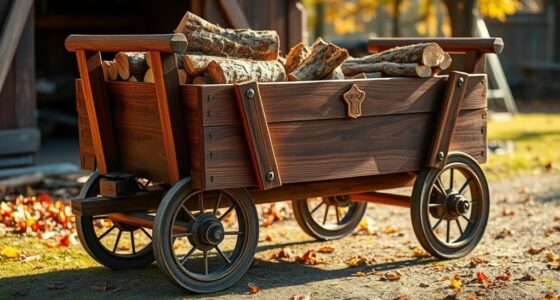
Build a simple compost bin with pallets, adding firewood scraps to boost aeration and recycling efforts.
As you fill your pallet compost bin, you’ll notice that the combination of organic waste and firewood scraps creates a balanced environment for decomposition. Regularly turning the compost aerates the pile, speeding up the breakdown of materials and maintaining proper moisture levels. The firewood scraps slowly break down over time, contributing to the formation of rich, dark compost. This not only reduces waste but also keeps your garden healthy and productive.
Using a pallet-based compost bin is also highly customizable. You can add a lid or cover to retain moisture and heat, which further enhances composting benefits. Plus, the open design ensures good airflow, which is essential for aerobic decomposition. By recycling firewood, you’re making a conscious effort to reuse materials that might otherwise go to waste, exemplifying sustainable firewood recycling practices. With minimal effort, you turn everyday waste into a powerful resource for your garden, saving money on soil amendments and reducing your environmental footprint. Proper air circulation is crucial for maintaining aerobic conditions and speeding up composting.
In short, building a pallet compost bin with firewood scraps is an accessible, sustainable way to harness composting benefits. It’s a practical project that promotes firewood recycling, enriches your soil, and supports eco-friendly gardening practices.
As an affiliate, we earn on qualifying purchases.
Frequently Asked Questions
How Long Does It Take for Compost to Be Ready?
It typically takes about 3 to 6 months for compost to reach maturity, but this depends on factors like temperature monitoring and material balance. You should regularly check the temperature of your compost bin; it should stay between 130-160°F for active decomposition. Turning and aerating the pile helps speed up the process. With consistent care, you’ll have nutrient-rich compost ready for your garden in a reasonable timeframe.
Can I Use Treated Firewood Scraps in the Bin?
You shouldn’t use treated firewood scraps in your compost bin. Imagine vibrant, healthy plants thriving, but chemicals from treated firewood can leach into the soil, contaminating your compost. These chemicals may not break down fully, risking chemical leaching that harms your garden. Stick to natural, untreated firewood scraps to keep your compost safe, healthy, and full of rich nutrients for your plants to flourish.
How Should I Maintain the Compost Bin for Best Results?
To maintain your compost bin for the best results, you should regularly check moisture levels and keep it damp but not soaked. Use aeration techniques like turning the compost with a pitchfork or stirring it to promote airflow. This prevents odor and speeds up decomposition. Also, add green and brown materials in balance, and guarantee proper drainage. Consistent maintenance helps produce rich, healthy compost efficiently.
Is This Compost Bin Suitable for All Types of Waste?
Your compost bin isn’t suitable for all waste types due to waste compatibility and material limitations. You should avoid adding non-biodegradable items, plastics, or metals, as they don’t decompose and can contaminate your compost. Stick to organic waste like kitchen scraps, yard waste, and firewood scraps. This ensures efficient composting and prevents damage to the pallet bin. Always check what’s compatible before tossing in new waste materials.
What Are Common Problems Faced With Firewood Scrap Compost Bins?
If you’ve noticed pests in your firewood scrap compost bin, pest issues are common and often due to unsealed wood and food waste. For example, a homeowner found ants and beetles after stacking damp firewood, highlighting moisture control problems. To avoid this, regularly check moisture levels, keep the bin dry, and seal the wood properly. Addressing moisture and pests early guarantees your compost stays healthy and pest-free.
Conclusion
By repurposing firewood scraps into a pallet compost bin, you turn waste into a thriving garden’s heartbeat. It’s like planting hope in the soil, where scraps transform into rich life, nourishing future blooms. This simple act not only reduces clutter but also nurtures growth, reminding you that even discarded pieces hold the potential to create something beautiful. Embrace this eco-friendly journey, and watch your garden flourish like a well-tended dream.