
Burning construction offcuts without proper safety measures and approval can lead to serious environmental and fire hazards. It releases toxic pollutants, harms air quality, and increases respiratory risks for nearby people. Many regulations prohibit open burning unless you have the right permits and safety setups in place. Proper waste disposal, like recycling and using licensed facilities, is safer and more sustainable. Keep in mind that following these rules helps prevent accidents and environmental damage as you explore safer options.
Key Takeaways
- Burning construction offcuts releases toxic pollutants and greenhouse gases, harming air quality and ecosystems.
- Many jurisdictions prohibit open burning without proper approval and safety measures, risking fines and legal action.
- Safer waste disposal involves segregating recyclables, using designated facilities, and avoiding burning to prevent fire hazards.
- Proper waste management reduces long-term environmental damage and minimizes fire risks on-site.
- Organized waste practices improve site safety, compliance, and reduce cleanup costs while supporting sustainability goals.
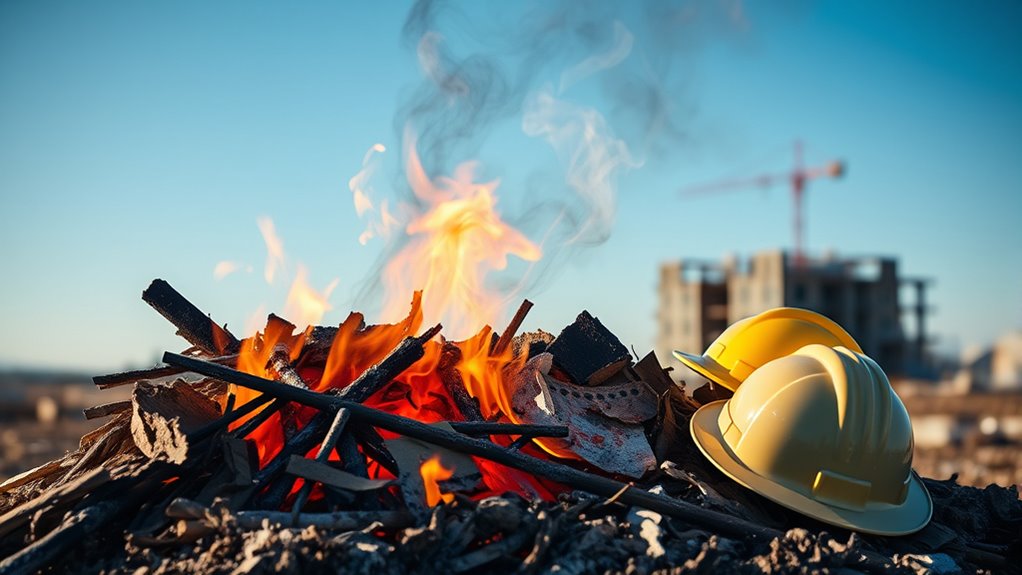
Many construction sites opt to burn offcuts and scraps instead of disposing of them properly, but this practice poses serious environmental and safety risks. When you burn construction debris, you’re not just creating a quick way to clear the site—you’re also releasing pollutants into the air that can harm local ecosystems and human health. The smoke often contains toxic chemicals, such as volatile organic compounds and particulate matter, which degrade air quality and contribute to respiratory problems. Furthermore, burning waste materials can release greenhouse gases, exacerbating climate change. These environmental impacts highlight why proper waste management is essential, especially given the increasing emphasis on sustainability in construction projects.
Burning construction scraps releases pollutants harming health and environment, emphasizing the need for proper waste management.
You need to be aware of fire safety regulations that govern the handling and disposal of construction debris. These regulations are designed to prevent fires from starting or spreading, especially in dry or highly combustible areas. Many jurisdictions strictly prohibit open burning of construction waste without prior approval and specific safety measures. If you ignore these rules, you risk hefty fines, project delays, or even legal action. Fire safety regulations also mandate that you keep burning areas supervised, have firefighting equipment on hand, and ensure that the site is free of other fire hazards. Failing to follow these guidelines can lead to uncontrolled fires, endangering workers and nearby communities.
Understanding the environmental impact of burning offcuts should motivate you to adopt safer, compliant waste disposal methods. Instead of burning, you can separate recyclable materials like wood, metal, and concrete for proper recycling. Composting organic scraps or using designated waste disposal facilities helps reduce pollution and promotes environmental stewardship. Many construction companies are now adopting sustainable practices, recognizing that responsible waste management not only complies with fire safety regulations but also benefits their reputation and community relations.
You also need to consider the long-term effects of your waste disposal choices. Burning construction scraps may seem like a quick fix, but it can have lasting negative impacts on air quality and local ecosystems. Conversely, adhering to fire safety regulations and implementing proper waste management procedures minimizes fire risks and ensures that your project remains compliant. Proper disposal methods, such as using approved waste containers and working with licensed disposal contractors, are safer and more environmentally responsible.
In short, burning construction offcuts is a risky shortcut that can cause environmental damage and violate fire safety regulations. You’re better off planning your waste management strategies carefully, prioritizing safety and sustainability. This approach not only keeps everyone safe but also helps your project meet legal standards and reduce its ecological footprint. By making informed decisions, you contribute to safer construction sites and a healthier environment.
Implementing proper waste segregation and disposal practices can also improve site efficiency and reduce cleanup costs, contributing to the overall success of your project.
Frequently Asked Questions
Are There Specific Permits Required for Burning Construction Offcuts?
Yes, you typically need permits for burning construction offcuts, as permit requirements vary by location. You should check with local authorities to verify you’re complying with environmental regulations and obtain any necessary approvals before burning. Failing to secure the proper permits can lead to fines or legal issues. Always prioritize safety and follow rules to prevent accidents and minimize environmental impact when burning offcuts on your construction site.
How Do Weather Conditions Affect Offcut Burning Safety?
Weather conditions greatly impact offcut burning safety. High temperatures can cause the fire to spread quickly, increasing risk, while wind can carry sparks and embers, leading to uncontrolled fires. Weather hazards like rain or humidity can dampen the fire, making it harder to control, but also reducing smoke. Always check the forecast, avoid burning during extreme heat or windy days, and make sure conditions are safe to prevent accidents.
What Types of Offcuts Are Safe to Burn On-Site?
You might be surprised to learn that only certain wood types, like untreated softwoods, are safe to burn on-site. These offcuts typically have predictable burn durations and produce less smoke. Avoid treated, painted, or composite materials, which can release toxic fumes. Always verify proper ventilation and follow safety rules, as even safe wood types can pose hazards if burned improperly. Keep a close eye on burn duration to prevent accidents.
How Can I Prevent Smoke From Affecting Nearby Residents?
To prevent smoke from affecting nearby residents, you should implement effective air quality management by choosing ideal burn times and using proper equipment. Always notify the community beforehand through clear communication channels, so they’re aware of the burning schedule. Maintain a safe distance and guarantee fires are controlled to minimize smoke production. Regularly monitor wind conditions and adjust burning activities accordingly to protect residents’ health and reduce air pollution.
What Are the Penalties for Improper Offcut Disposal?
If you improperly dispose of offcuts, you risk facing severe legal penalties and hefty environmental fines that could crush your finances like an asteroid. Authorities take waste violations seriously, and you could be fined thousands or even lose your license. It’s essential to follow proper disposal rules, ensuring you’re not only avoiding these costly penalties but also protecting the environment from harm. Play it safe and dispose of offcuts correctly!
Conclusion
As you watch the evening sky turn orange from the distant glow of a controlled burn, it’s clear that safety and rules go hand in hand. When you handle construction offcuts responsibly, you prevent accidents and protect the environment. Just like that sunset, your careful actions create a safer, cleaner space for everyone. Remember, following proper procedures isn’t just about rules—it’s about making sure your work ends on a bright, responsible note.