You can use wood ash to help raise soil pH, but it’s not a reliable or controlled replacement for garden lime. Ash contains minerals like potassium, calcium, and magnesium, which can benefit plants, but its composition varies. Too much ash can make your soil too alkaline or cause salt buildup. It’s best as a supplemental amendment rather than a primary pH adjuster. Keep exploring to discover how to use it effectively and safely.
Key Takeaways
- Wood ash can raise soil pH but varies in composition, making it less predictable than garden lime.
- Proper soil testing is essential before using ash to prevent over-alkalization.
- Ash provides nutrients but lacks the controlled formulation of traditional lime.
- Excess ash can cause soil salinity and negatively affect plant health.
- It’s better suited as a supplemental amendment rather than a complete lime substitute.
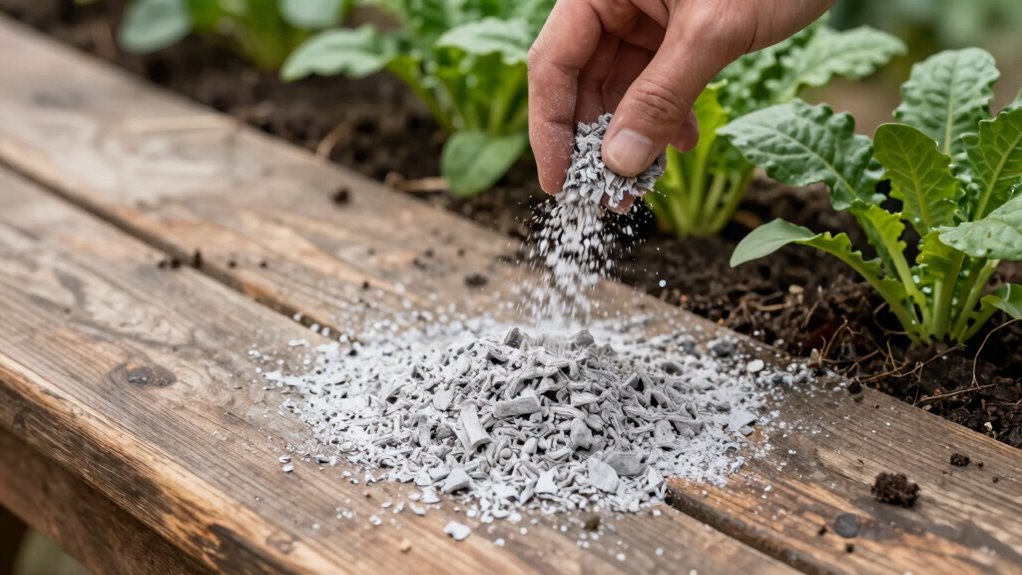
If you’re looking for an eco-friendly way to adjust your garden’s soil pH, wood ash can be a practical option. Many gardeners consider it a natural soil amendment because of its ability to raise soil pH levels. However, whether it can truly replace garden lime depends on several factors. Wood ash contains potassium, calcium, magnesium, and trace minerals, which are beneficial for plant growth. Its high calcium carbonate content makes it effective for pH adjustment, especially in acidic soils. Still, it’s important to understand that wood ash doesn’t work exactly like traditional garden lime, which is specifically formulated for soil pH regulation.
When it comes to pH adjustment, you need to be precise. Garden lime, usually composed of calcium carbonate, offers a predictable and controlled way to neutralize soil acidity. Wood ash, on the other hand, varies significantly in composition depending on the type of wood burned, the combustion process, and the amount of residual minerals. This variability can make it harder to control the pH adjustment process accurately. For this reason, many gardeners use lime as a reliable soil amendment when they need to raise soil pH, especially in large or sensitive planting areas. Additionally, understanding the composition of wood ash can help you better manage its application and effects on your garden soil. Knowing the impact of soil salinity is also important, as excess soluble salts from ash can adversely affect plant health. It’s also crucial to consider how the nutrient content of ash can influence overall soil fertility and plant growth. Proper application techniques, such as even spreading and thorough mixing, can help mitigate some of these risks.
That said, wood ash can serve as a supplemental soil amendment, providing nutrients that benefit plant health. It’s particularly useful in small-scale gardening or when your soil has only a slight acidity that needs minor correction. You should always test your soil’s pH before applying ash to determine how much is necessary. Too much ash can overshoot the pH adjustment, making your soil too alkaline, which can harm plants. For most garden applications, a light, even spread of wood ash followed by thorough mixing is sufficient. Keep in mind that ash also contains soluble salts, which, in excess, can lead to soil salinity issues. Use it sparingly and always incorporate it into the soil rather than leaving it on the surface. Furthermore, understanding the potential risks of excess ash can help prevent negative impacts on your garden. Regular soil testing can help you maintain the right balance and prevent issues associated with over-application.
As an affiliate, we earn on qualifying purchases.
Frequently Asked Questions
How Does Wood Ash Affect Soil pH Long-Term?
Wood ash can temporarily raise your soil’s pH, aiding in pH stabilization, but over time, its long-term effect varies. As it dissolves, it releases minerals that support soil mineralization, improving overall fertility. However, repeated application may lead to overly alkaline soil, so it’s essential to monitor pH levels regularly. Used carefully, wood ash can contribute positively to soil health, but excessive use can disrupt long-term balance.
Can Wood Ash Be Used on All Types of Plants?
Think of wood ash as a double-edged sword—beneficial yet potentially harmful. You can’t use it on all plants because it’s highly alkaline and may harm those preferring acidic soil. While it can enhance mulch and aid in pest control by deterring insects, some plants, like blueberries or azaleas, dislike the high pH. Always test soil and know your plants’ needs before applying wood ash, or you risk unintended damage.
What Are the Safety Precautions When Handling Wood Ash?
When handling wood ash, you should wear personal protective equipment like gloves and a dust mask to prevent skin irritation and inhalation of fine particles. Always use proper ash disposal methods, such as storing it in a metal container away from flammable materials. Avoid creating dust clouds, and wash your hands thoroughly afterward. These precautions guarantee safe handling, minimizing health risks and environmental impact.
How Much Wood Ash Should Be Applied per Square Foot?
You should apply about 1 to 2 tablespoons of wood ash per square foot. Mix it into your garden compost or soil amendments, but avoid overdoing it, as too much can raise soil pH excessively. Spread evenly and water thoroughly to help nutrients absorb. Remember, wood ash supplies potassium and calcium, so use it alongside other amendments for balanced soil health and ideal plant growth.
Does Wood Ash Provide Any Nutrients Besides pH Adjustment?
Like Pandora’s box, wood ash holds surprises beyond mere pH adjustment. It offers some nutrients—potassium, calcium, and trace minerals—that benefit your garden. However, its nutrient content isn’t all-encompassing, so it shouldn’t replace balanced fertilization. While it helps with pH balance, rely on other amendments for essential nutrients. Use wood ash carefully, considering its potential to elevate soil pH and supply key minerals, but don’t expect it to be a complete fertilizer.
Conclusion
So, next time you’re pondering what to add to your garden, consider wood ash — it’s almost like nature’s own lime, and who knew that a simple fire’s leftover could do so much? It’s a coincidence, really, how something so overlooked can be a perfect substitute. Just remember to use it wisely, and you might find yourself with a healthier, happier garden — all thanks to a surprising, everyday byproduct.