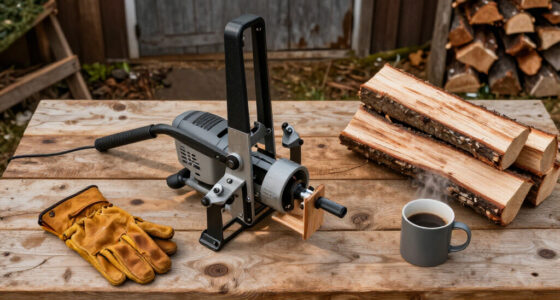
Choosing an electric log splitter is less about finding a universally stronger design and more about how you handle firewood. Horizontal electric log splitters hold logs at a raised working height and are typically compact, straightforward machines for routine batches of manageable rounds. Vertical models let you work with logs positioned on the ground, which can make oversized or heavy rounds easier to handle.

Get business pricing on tools and workshop supplies
- Business-only prices and quantity discounts
- Tax-exempt purchasing
- Multiple users, one account, clear invoices

Jocisland 8-Ton Electric Log Splitter, 110 V 15 A Hydraulic Wood Splitter
- ✔ Splitting force: 8 tons
- ✔ Voltage and current: 110 V, 15 A
- ✔ Maximum log capacity: 20 in long x 16 in diameter

7 Ton Electric Wood Splitter, 15 Amp Hydraulic Log Splitter, Portable Compact Horizontal Wood Splitter for Backyard, Garage, Cabi…
- ✔ Hydraulic force: 7 tons
- ✔ Power: 1500 W / 15 A
- ✔ Maximum log capacity: 21.2 in long x 12 in diameter

BILT HARD Log Splitter 6.5 Ton Wood Splitter Electric Powered 15 Amp with Hydraulic Ram Horizontal
- ✔ Splitting pressure: 6.5 tons
- ✔ Motor: 15 A
- ✔ Maximum log capacity: 20.5 in long x 9.8 in diameter
The key tradeoff is convenience versus heavy-log handling. If your wood is mostly cut into rounds you can lift onto a splitter, a horizontal model is often the more practical buy. If you regularly split large rounds that are awkward to raise, a vertical model can save effort at the point where the work gets hardest. Capacity, motor power, cycle time, and price vary by model, so the orientation alone does not tell you how much force a machine delivers.
At a Glance
| Criteria | Horizontal electric log splitters | Vertical electric log splitters | Winner |
|---|---|---|---|
| Handling heavy rounds | Logs must be raised onto the horizontal bed; manageable rounds are easiest. | Logs can be split on the ground, reducing the need to lift heavy rounds onto a bed. | B |
| Work height and posture | Splitting takes place on a raised bed, reducing ground-level work but requiring repeated loading. | Less lifting onto the machine, though positioning and retrieving pieces still require bending. | Depends |
| Typical log capacity | Often suited to small and medium rounds; check each model’s stated diameter and length limits. | Often designed to accommodate larger or heavier rounds, subject to model specifications. | B |
| Storage and footprint | Usually compact and easy to store; some models fold or stand vertically for storage. | Can take more floor space during use; storage needs depend on the frame and design. | A |
| Splitting workflow | Simple, direct setup for batches of similarly sized rounds. | Useful when rounds vary in size or are too heavy to load comfortably. | Depends |
| Power and performance | Performance depends on motor, rated force, wedge, and cycle time rather than orientation alone. | Performance still depends on the machine’s force, motor, cycle time, and log limits. | Depends |
| Value | Often the lower-cost choice for household firewood and occasional use. | Higher cost can pay off when frequent large-log handling would otherwise demand extra labor. | A |
Jocisland 8-Ton Electric Log Splitter, 110 V 15 A Hydraulic Wood Splitter
The Jocisland leads this comparison on stated splitting force, with an 8-ton rating against 7 tons for the PPOLB and 6.5 tons for BILT HARD. Its listed capacity reaches 20 inches long and 16 inches in diameter, giving it the largest stated diameter in this group. That extra headroom may appeal to buyers processing varied rounds, but the numbers describe maximum dimensions, not a promise that every large, knotted hardwood log will split cleanly.At 88.2 pounds, it is the lightest of the three, though still heavy enough that moving it means rolling it on the built-in wheels rather than casually lifting it. The two-hand control is a practical safety feature during operation. Compared with the PPOLB, Jocisland trades away 1.2 inches of maximum log length; compared with BILT HARD, it offers more stated force and diameter capacity but no supplied cycle-time figure.One ownership detail deserves attention before the first session: the required 2.8 liters of hydraulic oil are not included. Buyers should account for that setup step and check the manual for the specified oil type and filling procedure. Jocisland is the strongest fit here for buyers who prioritize force and diameter capacity, while those cutting longer rounds or wanting a documented cycle time may prefer one of the alternatives.
Pros:
- Highest stated force in this lineup at 8 tons.
- Largest listed log diameter capacity at 16 inches.
- Lowest listed weight of the three at 88.2 pounds, with transport wheels.
- Two-hand safety control and 110-volt electric operation.
Cons:
- Hydraulic oil is required but not included.
- Maximum log length is 20 inches, shorter than the PPOLB listing.
- No cycle-time specification is provided in the supplied details.
Best for: Buyers who want the highest stated force and largest listed log diameter in this comparison, and can arrange the specified hydraulic oil.
Not ideal for: Anyone who needs a splitter ready to run straight out of the box, regularly cuts logs longer than 20 inches, or expects a stated cycle time before choosing.
Bottom line: We rank Jocisland first for its combination of the lineup’s highest stated force, broad diameter capacity, and lowest listed weight, provided buyers plan for the oil purchase.
“We rank Jocisland first for its combination of the lineup’s highest stated force, broad diameter capacity, and lowest listed weight, provided buyers plan for the oil purchase.”
7 Ton Electric Wood Splitter, 15 Amp Hydraulic Log Splitter, Portable Compact Horizontal Wood Splitter for Backyard, Garage, Cabi…
The PPOLB’s clearest advantage is its 21.2-inch maximum log length, the longest listed in this roundup. That extra length over the 20-inch Jocisland and 20.5-inch BILT HARD may save some bucking time for buyers whose firewood rounds often run long. Its stated 7-ton force sits between those two models, making it a middle-ground pick on paper rather than the highest-force choice.The splitter is listed at 108 pounds, the heaviest of the three. Transport wheels help with repositioning around a yard or garage, but they do not solve the harder task of lifting the unit into a vehicle or carrying it up steps. Compared with the Jocisland, the PPOLB gives up force and diameter capacity while accepting longer logs; compared with BILT HARD, it offers 0.5 inches more log length and a half-ton more stated force, but the supplied information does not give a cycle time.Its 1500-watt, 15-amp motor and two-hand control make the intended setup straightforward to understand: plug-in electric operation and controlled activation. The listed maximum diameter is 12 inches, below the 16 inches claimed for the Jocisland, so buyers handling larger rounds should weigh that difference carefully. Choose PPOLB for length, not as a catch-all for the largest wood; its weight and missing cycle-time detail matter for frequent, high-volume work.
Pros:
- Longest stated log capacity here at 21.2 inches.
- 7 tons of stated hydraulic force, above the BILT HARD rating.
- Electric 1500-watt, 15-amp motor avoids gasoline and exhaust.
- Transport wheels and two-hand safety controls are specified.
Cons:
- Heaviest model in the group at 108 pounds.
- Listed maximum diameter of 12 inches is below Jocisland’s 16 inches.
- No cycle-time figure is provided in the supplied details.
Best for: Firewood buyers whose rounds often approach 21 inches long and who can roll the splitter between work areas rather than lift it often.
Not ideal for: Buyers focused on the highest stated force, the largest listed diameter, or easy loading into a vehicle by one person.
Bottom line: We recommend the PPOLB when longer rounds are the deciding factor, while its higher weight makes it less appealing for frequent lifting or vehicle transport.
“We recommend the PPOLB when longer rounds are the deciding factor, while its higher weight makes it less appealing for frequent lifting or vehicle transport.”
BILT HARD Log Splitter 6.5 Ton Wood Splitter Electric Powered 15 Amp with Hydraulic Ram Horizontal
BILT HARD ranks third for buyers prioritizing force and log size: its 6.5-ton rating is the lowest here, and the stated maximum is 20.5 inches long by 9.8 inches in diameter. The other two splitters list more force and larger diameters. Where BILT HARD stands out is its stated 18-second cycle time, a useful point of comparison for people planning repeated splitting sessions. It still does not tell us how a particular species or difficult log will behave in practice.At 98 pounds, this model falls between the 88.2-pound Jocisland and 108-pound PPOLB. Its transport wheels support moving it over varied terrain, though the weight remains relevant when lifting or loading. The listing also gives unusually specific electrical guidance: it recommends a cord length up to 15 meters and a 40-amp circuit breaker. Verify these requirements in the manual and against your electrical installation before buying or connecting the machine; a 15-amp motor rating and a recommended breaker value should not be reconciled by guesswork.Compared with the PPOLB, BILT HARD offers a documented cycle time but gives up log length and stated force. Compared with Jocisland, its diameter capacity is much smaller, though it avoids the listed separate oil purchase concern because the supplied details do not identify oil as an extra. This is a more specialized choice for buyers who value a stated repeat-cycle figure and whose logs fit within its narrower dimensions.
Pros:
- Only model here with a stated cycle time: 18 seconds.
- 15-amp electric operation avoids gasoline and exhaust.
- Transport wheels are specified for moving the unit around a work area.
- 98-pound listed weight is between the lighter Jocisland and heavier PPOLB.
Cons:
- Lowest stated splitting force at 6.5 tons.
- Smallest listed maximum diameter at 9.8 inches.
- Electrical guidance calls for a 40-amp breaker; confirm requirements before use.
Best for: Buyers who want a listed 18-second cycle time and whose regular logs fit within the 20.5-by-9.8-inch capacity.
Not ideal for: People processing larger-diameter rounds, seeking the highest force in this comparison, or unable to confirm the stated electrical requirements for their setup.
Bottom line: BILT HARD is the focused pick for buyers who value its stated cycle time and handle relatively small rounds, but its lower force and capacity place it behind the other two for versatility.
“BILT HARD is the focused pick for buyers who value its stated cycle time and handle relatively small rounds, but its lower force and capacity place it behind the other two for versatility.”
As an Amazon Associate we earn from qualifying purchases.
Key Differences
The clearest practical difference is where the log sits while it is split. A horizontal splitter requires the operator to lift each round onto its bed. That is usually manageable for short, moderate-size pieces, and the raised surface can make repeated splitting comfortable for users who prefer not to work entirely at ground level. With a vertical design, the round can stay on the ground while the wedge works downward. That can be a meaningful advantage when rounds are heavy, irregular, or difficult to raise.
Neither orientation guarantees more splitting force. A compact horizontal machine with a modest rating may struggle with knotty wood, while a more capable model in either format may handle it better. Compare the manufacturer’s rated force, maximum log length and diameter, motor details, and cycle time. These specifications, along with wood species and seasoning, determine whether the splitter suits your actual pile.
For most occasional household users processing ordinary rounds, horizontal models offer a simpler footprint and often better value. Vertical models make more sense when heavy-round handling is a recurring part of the job. Paying extra for vertical operation is worthwhile if it removes a regular lifting burden; it is poor value if your logs are already easy to load and the model’s other specifications do not match your needs.
Detailed Comparison
Handling heavy rounds (Vertical electric log splitters wins — major)
Vertical operation wins by a major margin when rounds are too heavy or awkward to lift onto a raised bed: the log can remain on the ground for splitting. Horizontal operation requires loading every round, which adds repeated effort. For light and medium rounds that are easy to raise, the practical gap is much smaller.
Work height and posture (moderate difference)
This is a matter of which movements are easier for the operator. Horizontal models raise the work surface, which can reduce crouching while handling split pieces, but each round must be lifted up. Vertical models avoid that loading lift, though they involve working closer to ground level and bending to position or retrieve wood. Neither is a universal posture winner.
Typical log capacity (Vertical electric log splitters wins — moderate)
Vertical models often cater to larger, heavier rounds, giving them the advantage for oversized wood. That difference is meaningful only when the model’s listed limits actually exceed those of the horizontal alternative. Buyers should compare maximum length and diameter directly; orientation does not establish capacity on its own.
Storage and footprint (Horizontal electric log splitters wins — moderate)
Horizontal models generally win on compact storage and ease of fitting into a garage or shed. Some fold or stand upright when not in use, but designs vary. Vertical machines may need more space in their working configuration, so check folded dimensions and storage position if room is limited.
Splitting workflow (moderate difference)
Horizontal machines suit orderly batches of similarly sized rounds that can be loaded without strain. Vertical models are more accommodating when sizes vary or a round is too heavy to lift. The advantage depends on the woodpile: a steady supply of manageable pieces favors A, while mixed heavy rounds favor B.
Power and performance (major difference)
There is no orientation winner. Splitting force, motor, cycle time, wedge design, and the wood itself matter more than whether the machine works horizontally or vertically. Compare models using their stated specifications and the log limits they support. A vertical frame alone does not mean the splitter will handle every hard or knotty round.
Value (Horizontal electric log splitters wins — moderate)
Horizontal models usually offer better value for routine household use because their compact design and lower purchase cost can cover manageable logs well. Vertical operation can justify a higher price for users who regularly face heavy rounds and would otherwise need to lift or reposition them repeatedly. The premium buys easier handling, not automatically more power.
Horizontal electric log splitters: Pros and Cons
Pros:
- Often compact and easier to store in a small shed or garage.
- Raised work surface can suit users who prefer not to split entirely at ground level.
- Often costs less, making it a sensible choice for occasional household batches.
- Straightforward workflow for rounds that are easy to lift.
Cons:
- Every round must be lifted onto the bed.
- Large or awkward pieces can make loading tiring.
- Capacity varies; compact size does not guarantee suitability for a demanding woodpile.
Vertical electric log splitters: Pros and Cons
Pros:
- Lets heavy rounds stay on the ground during splitting.
- Often accommodates larger rounds, depending on the model.
- Works well with irregular batches containing awkward pieces.
- Can reduce the repeated lifting required by horizontal loading.
Cons:
- May cost more than a comparable horizontal model.
- Can take up more room while in use.
- Ground-level positioning and retrieving pieces still involve bending.
- Vertical orientation does not guarantee higher force or faster splitting.
Who Should Choose What
Choose Horizontal electric log splitters if:
- Most rounds are small or medium-sized and comfortable for you to lift.
- You split firewood occasionally and want a compact machine with a lower purchase cost.
- Storage space is limited and the model’s stated capacity covers your logs.
Choose Vertical electric log splitters if:
- You regularly process large, heavy, or awkward rounds.
- Loading logs onto a raised bed is the tiring part of your current workflow.
- The model’s capacity and splitting force match your wood, and you have enough room to use it.
Skip both if: Skip both electric formats if your routine work exceeds the chosen model’s stated log limits or requires sustained heavy-duty output; compare more capable equipment suited to that workload.
Value for Money
Horizontal electric splitters are usually the better value for occasional home use when your rounds are manageable. Paying more for vertical operation makes sense when avoiding repeated lifts is a real benefit, especially across a large pile of heavy rounds. It does not make sense to pay a premium based on orientation alone: confirm that the vertical model also meets your log size and performance needs. If both designs have similar specifications and your rounds are easy to load, the more compact or less expensive horizontal option is generally the stronger buy.
Final Verdict
For most homeowners splitting ordinary firewood in occasional batches, choose a horizontal electric log splitter. It is usually easier to store, often less expensive, and well suited to logs that can be lifted onto the bed without difficulty.
Choose a vertical model if heavy, oversized rounds are a regular part of your workload and loading them onto a horizontal bed would be the main source of strain. The deciding factor is the effort needed to position your logs, not a presumed difference in power. Check each model’s log limits, splitting force, and cycle time before buying. If your rounds fit a horizontal machine comfortably, keep the money; if they do not, vertical operation can earn its higher price through easier handling.
Frequently Asked Questions
Does a vertical electric log splitter have more power than a horizontal one?
Not necessarily. Power and splitting force depend on the machine’s specifications, not its working orientation. Compare the rated force, motor, cycle time, and log limits for the specific models.
Which orientation is easier for heavy logs?
Vertical operation is generally easier when a round is too heavy to lift onto a horizontal bed, because you can split it on the ground. The operator still needs to position the round and handle the resulting pieces.
Are horizontal electric splitters suitable for home firewood?
Often, yes, when the wood is cut into rounds within the model’s size limits and those rounds are comfortable to lift. Check the stated capacity and performance against your actual wood.
Is a vertical splitter worth paying more for?
It can be worth the extra cost if you regularly split heavy or oversized rounds and want to avoid loading them onto a raised bed. If your rounds are manageable and the horizontal model meets your needs, the premium may bring little practical benefit.