
To dry firewood safely indoors, guarantee good ventilation, keep moisture content around 20%, and avoid stacking directly against walls. Use racks or elevated platforms to promote airflow, and cover the top of the stack to protect from dust and rain but leave sides open. Maintain indoor humidity at 30-50% with a dehumidifier if needed. Regularly monitor moisture levels to prevent mold or over-drying—keep these tips in mind, and you’ll find a safer way to prepare your firewood.

Get business pricing on tools and workshop supplies
- Business-only prices and quantity discounts
- Tax-exempt purchasing
- Multiple users, one account, clear invoices
Key Takeaways
- Maintain indoor humidity between 30-50% to promote safe drying and prevent mold growth.
- Store firewood off the ground in well-ventilated areas, avoiding enclosed or moist spaces.
- Cover the top of the wood stack, keeping sides open to ensure proper airflow.
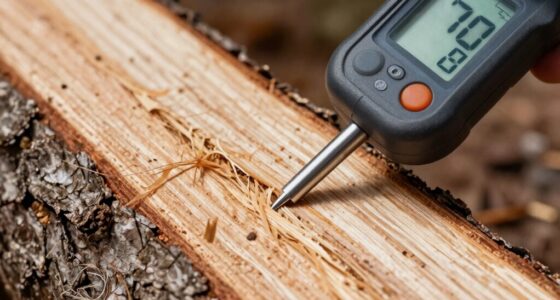
- Regularly check moisture levels with a moisture meter, aiming for around 20% before use.
- Split logs to increase surface area, speeding up drying while avoiding over-drying and cracking.

Drying firewood indoors can be a practical solution when outdoor conditions are unfavorable or space is limited. It allows you to prepare your wood in a controlled environment, guaranteeing it’s ready to burn when needed. However, managing moisture content and indoor humidity is vital to prevent problems like mold, rot, or even fire hazards. When you bring wood inside, it’s important to understand that the goal isn’t just to dry it quickly but to reduce its moisture content to a safe level—usually around 20%—so it burns efficiently and safely. If your indoor humidity is too high, it can slow down the drying process and create an environment conducive to mold growth, which can damage your home and compromise air quality.
To keep moisture content in check, you should store your firewood in a well-ventilated space, ideally off the ground and covered on top but open on the sides. This setup allows air to circulate around the wood, aiding in moisture evaporation. Avoid stacking wood directly against walls or in enclosed closets, as poor airflow can trap moisture and increase indoor humidity. A dehumidifier can help maintain ideal indoor humidity levels—generally between 30% and 50%—which promotes more effective drying and reduces the risk of mold. Additionally, choosing the right storage location can significantly impact drying efficiency.
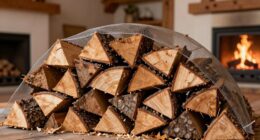
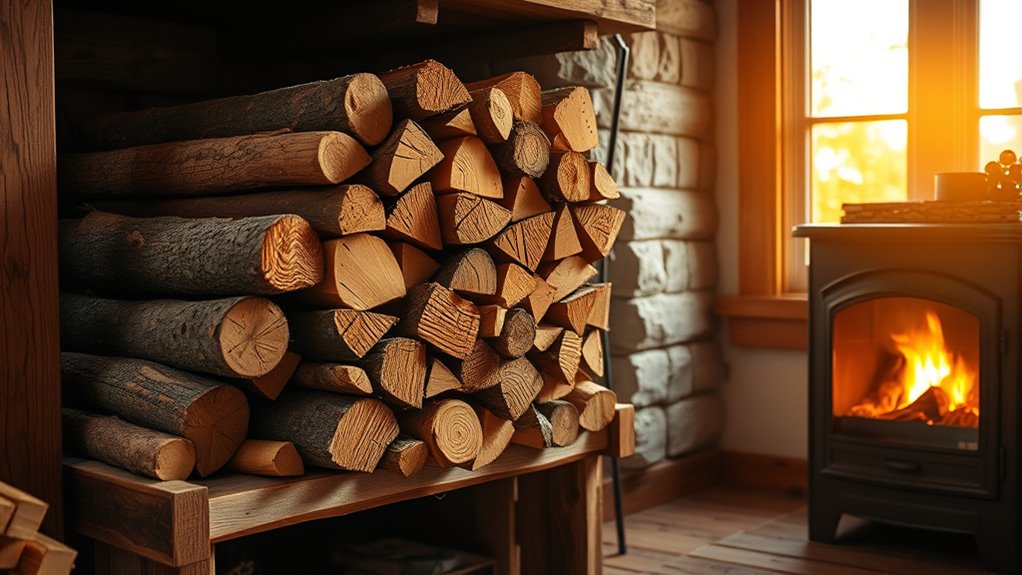
Store firewood off the ground in a well-ventilated space with top covering to promote drying and prevent moisture buildup.
You also need to pay attention to how you handle the wood. Split logs dry faster because of increased surface area, so consider splitting larger pieces before bringing them inside. Place the wood in a location with good air circulation, like an open basement corner or a dedicated drying rack near a window or vent. Keep the space dry and avoid areas prone to excess moisture, such as bathrooms or laundry rooms. If you notice the indoor humidity rising considerably after storing firewood, use a dehumidifier or ventilation to restore balance.
Monitoring moisture content regularly with a moisture meter helps you determine when the wood is ready to burn. The goal is to reach a stable, low moisture level without over-drying, which can cause the wood to crack or become brittle. Remember that drying firewood indoors takes time—usually several weeks to months—depending on the initial moisture content, wood type, and indoor conditions. Patience is key, and maintaining a proper balance of moisture content and indoor humidity will guarantee your firewood is safe, efficient, and ready when you need it.
As an affiliate, we earn on qualifying purchases.
Frequently Asked Questions
Can Drying Firewood Indoors Cause Mold Growth?
Drying firewood indoors can cause mold growth if you don’t practice proper moisture control. Excess moisture from damp wood creates a perfect environment for mold, which can spread quickly. To prevent this, make certain good ventilation, use a dehumidifier, and allow the wood to dry thoroughly before bringing it inside. Regularly check for signs of mold and maintain low humidity levels to keep your indoor space safe and mold-free.
How Does Indoor Firewood Drying Affect Indoor Air Quality?
Drying firewood indoors can negatively impact your indoor air quality by releasing airborne spores, which may cause respiratory issues. You might notice increased dust or musty odors. To keep the air safer, guarantee good ventilation and airflow, reducing the concentration of spores. Using exhaust fans or opening windows helps improve ventilation effectiveness, preventing spores from building up and keeping your indoor environment healthier while drying firewood.
Is It Safe to Dry Treated or Painted Firewood Indoors?
Sure, drying treated or painted firewood indoors might seem convenient, but it’s not safe. Wood treatment and indoor paint often contain chemicals that release harmful fumes when heated. When you dry this wood indoors, those toxins can become airborne, risking your health and indoor air quality. So, avoid using treated or painted wood inside your home, and stick to natural, untreated firewood for safe, cozy fires.
What Are the Best Indoor Locations for Drying Firewood?
You should choose a well-ventilated area like a garage or workshop for drying firewood indoors. Keep the space ventilated with open windows or fans to promote airflow, and use humidity control methods such as dehumidifiers to prevent excess moisture buildup. Avoid cramped or enclosed spaces, as poor ventilation can lead to mold and rot. Regularly checking moisture levels guarantees your firewood dries safely and efficiently.
How Long Does It Typically Take to Dry Firewood Indoors?
You might be surprised to find that drying firewood indoors typically takes about 4 to 6 months, depending on factors like moisture content and drying duration. As you monitor the wood, you’ll notice moisture content drops, making it safer and more efficient for burning. Proper indoor drying times vary based on wood type and environment, but patience guarantees your firewood is perfectly seasoned without risking mold or unsafe moisture levels.
Conclusion
Think of drying firewood indoors like nurturing a quiet flame within your home’s heart. When done safely, you’re tending a small, steady ember—warming your space without risking a wildfire. By following precautions, you keep the flame contained and your home safe, letting the wood’s future warmth symbolize comfort and security. Remember, a well-managed firewood stash is like a trusted friend—ready to ignite cozy moments, without ever threatening to burn out of control.
Halloween Picks
halloween
As an affiliate, we earn on qualifying purchases.