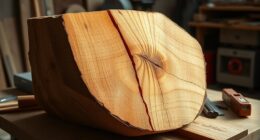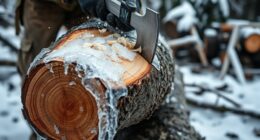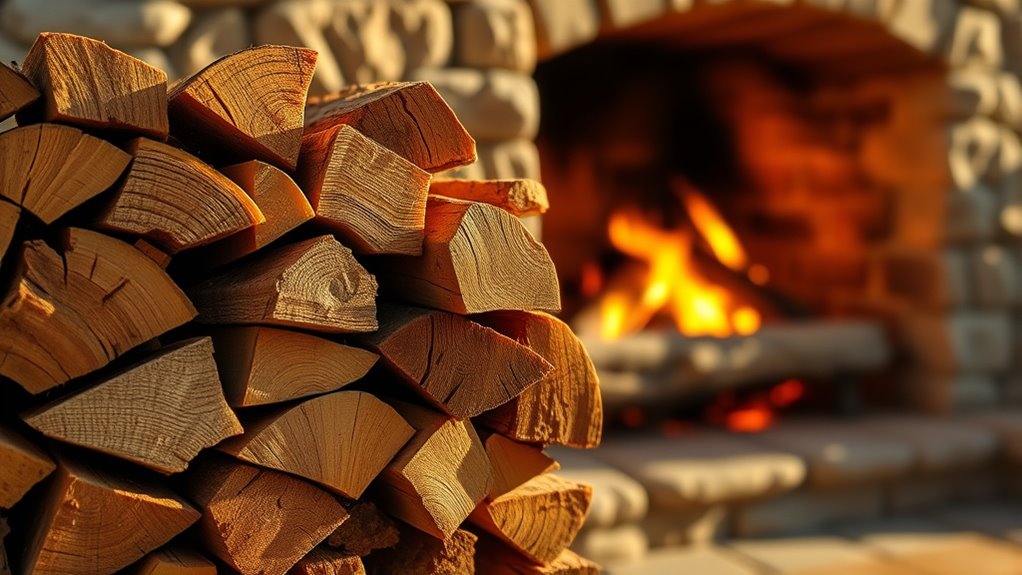

When splitting firewood for your stove, fireplace, or fire pit, it’s best to cut the wood into manageable, even-sized pieces that suit your heating method. Smaller chunks dry faster, burn more efficiently, and are easier to handle. Proper splitting along the grain ensures better airflow and reduces mold. If you want to maximize safety, efficiency, and ease of use, focusing on the right size is key—stick around to learn how to do it right.
Key Takeaways
- Split wood into manageable sizes suitable for your stove, fireplace, or fire pit to ensure proper burning and safety.
- Use appropriate tools like axes, mauls, or log splitters to achieve consistent, natural-grain splits tailored to each heating appliance.
- For stoves, split wood into smaller, uniform pieces for efficient ignition and steady heat output; larger chunks suit fire pits.
- Properly sized wood promotes faster drying, reduces smoke, and prevents damage or overloading of your heating device.
- Store split wood in well-ventilated, organized stacks to maintain quality and facilitate easy access for your specific heating needs.
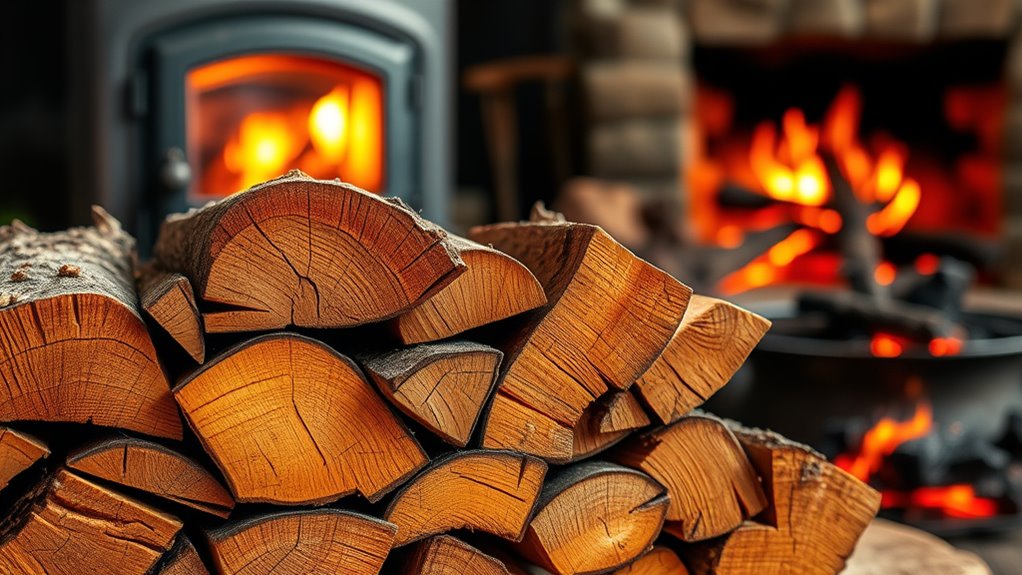
Have you ever wondered how industries efficiently manage large materials or products? It’s all about mastering splitting techniques that streamline production and guarantee quality. When it comes to firewood, these same principles play an essential role in preparing wood for your stove, fireplace, or fire pit. Properly split wood not only burns better but also dries faster, making it safer and more efficient to use. Wood drying is fundamentally because moisture content influences how well wood ignites and how long it burns. If your wood is too wet, it’ll produce more smoke, create creosote buildup, and burn unevenly. That’s why splitting techniques are key—they expose more surface area, allowing moisture to escape more quickly, speeding up the drying process. Additionally, mastering these techniques aligns with the broader principles of AI-driven industrial optimization, which emphasize efficiency and precision in material handling.
Proper splitting exposes more surface area, speeding drying and improving firewood quality.
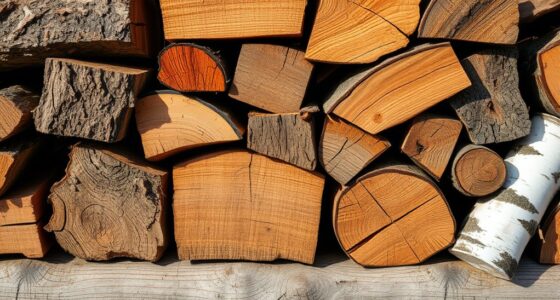
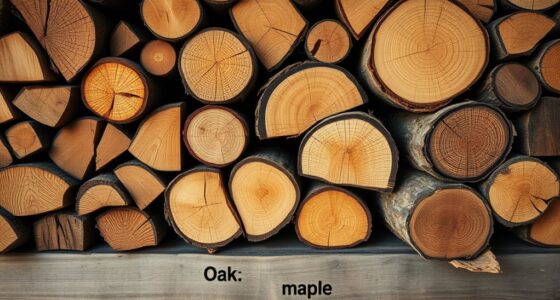
When you split wood, you’re in essence creating more airflow around each piece, which accelerates drying time and reduces the chance of mold or rot. The key is choosing the right splitting method for your needs. For small stoves or fire pits, you might prefer hand splitting using an axe or maul. These tools give you control and allow you to split wood into manageable chunks. For larger quantities or tougher wood, hydraulic or electric log splitters can save time and effort. These machines use hydraulic pressure to split logs evenly and efficiently, especially when dealing with knotty or dense wood types. Regardless of the method, the goal remains the same: create uniform pieces that dry evenly and are easy to handle.
Splitting techniques also impact the quality of your firewood. Proper splitting ensures the wood is broken along natural grain lines, which makes it easier to ignite and keeps the fire burning steadier. If you split wood against the grain, it can lead to uneven pieces that don’t dry properly or burn inconsistently. So, pay attention to the grain direction when you split. The right technique not only enhances drying but also prolongs the life of your tools and reduces safety risks.
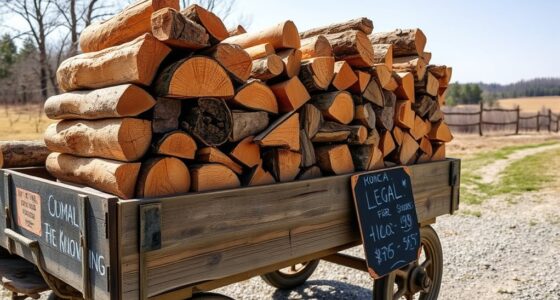
In addition to choosing the right tools, consider the environment where you store your split wood. Stacking it in a crisscross pattern allows air to circulate freely, further speeding up the drying process. Remember, well-dried, properly split wood makes a noticeable difference in heat output, safety, and overall enjoyment. Whether you’re building a cozy fire or lighting up a fire pit for a gathering, mastering splitting techniques for wood drying guarantees you’re always ready with quality, well-seasoned firewood.
Frequently Asked Questions
What Tools Are Safest for Splitting Wood?
You should use a sharp splitting axe or maul for safe wood splitting. Always wear safety gear like gloves, goggles, and steel-toed boots to protect yourself. Focus on proper splitting techniques—stand with your feet shoulder-width apart, aim carefully, and use controlled swings. Keep your hands clear of the blade’s path, and inspect your tools regularly. By following these safety tips, you reduce the risk of injury while splitting wood efficiently.
How Do I Prevent Wood From Splitting Unevenly?
Think of your wood as a stubborn puzzle waiting to be solved. To prevent uneven splitting, check its moisture content—drier wood splits more evenly, like a well-oiled machine. Use proper splitting techniques, such as striking at the right angles and avoiding forceful swings. By understanding the wood’s nature and applying gentle, deliberate strikes, you’ll guide it to split smoothly, transforming chaos into perfectly sized pieces for your fire.
What Is the Best Way to Store Split Firewood?
You should store split firewood in a well-ventilated area, ideally off the ground on pallets or a rack, to promote seasonal storage. Cover the top with a tarp to protect it from rain, but leave the sides open for moisture control. This setup guarantees the wood stays dry, preventing mold and decay, and allows air circulation to keep the firewood season-ready and safe to burn.
How Long Should Firewood Cure Before Use?
You should let firewood cure for at least 6 to 12 months, depending on the seasoning duration and moisture content. During this period, the wood dries out, reducing its moisture content to below 20%, which guarantees it burns efficiently and produces less smoke. Properly seasoned firewood ignites easily, burns hotter, and is safer for your stove, fireplace, or fire pit. Check for cracks and a dry sound as signs it’s ready.
Are There Eco-Friendly Options for Splitting Wood?
Think of eco-friendly splitting as planting seeds for a greener future. You can choose sustainable firewood, like locally sourced or dead standing trees, reducing environmental impact. Use eco-friendly splitting tools, like hand or manual saws, instead of gas-powered equipment, to cut emissions. This way, you’re helping preserve forests and lowering your carbon footprint, making your firewood burning both responsible and environmentally kind.
Conclusion
You might think bigger pieces burn longer, but studies show smaller splits ignite faster and produce more heat overall. So, next time you’re splitting wood, consider going smaller for a hotter, more efficient fire. Don’t just rely on old habits—question what you’ve believed about size and heat. Ultimately, experimenting with different sizes can unleash better fire performance, saving you time and fuel. Sometimes, the smallest pieces make the biggest difference.