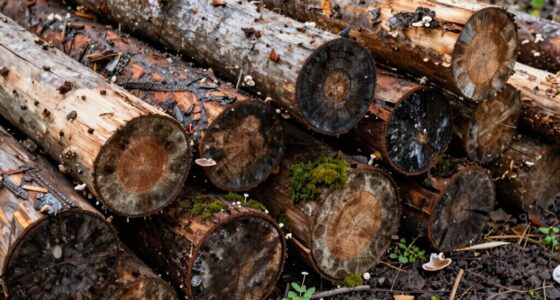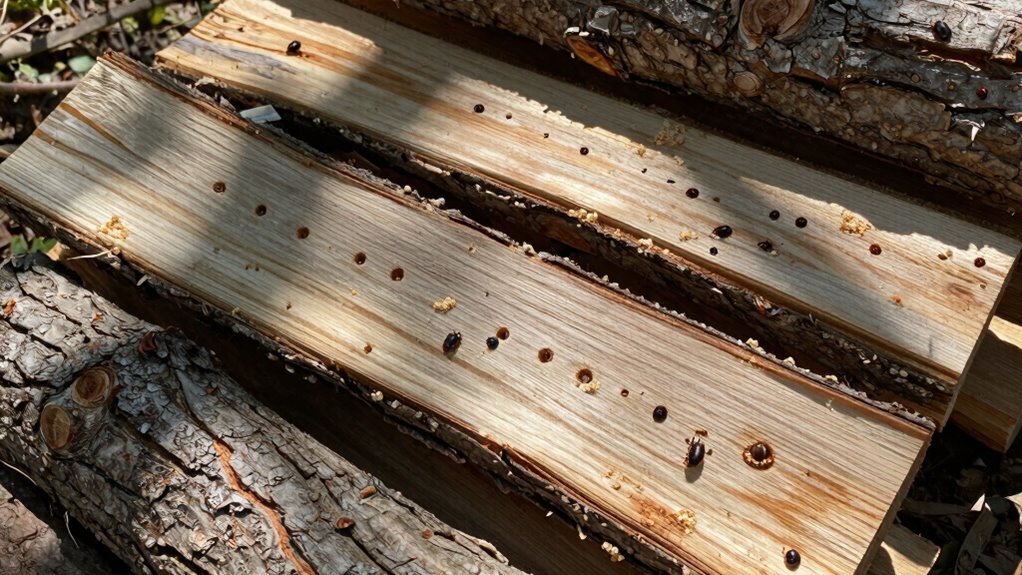

Bugs in firewood are common and usually part of natural decomposition or outdoor storage. Tiny beetles, such as powderpost beetles or wood-boring beetles, may be present without causing damage if kept outside or stored properly. Signs like small holes, powdery dust, or mud tubes can indicate an infestation. Most pests won’t harm your home if you handle firewood correctly. For tips on distinguishing normal from problematic bugs, keep going to learn more.
Key Takeaways
- Tiny bugs and small holes in firewood are common during natural decomposition and usually not problematic.
- Presence of frass, mud tubes, or large holes indicates active infestation that may require attention.
- Most outdoor bugs in firewood won’t damage your home if the wood is stored properly and inspected before bringing inside.
- Proper storage, such as elevating and covering firewood, helps prevent pests from entering your house.
- Freezing or inspecting firewood before indoor use can effectively manage minor bug presence and prevent infestations.
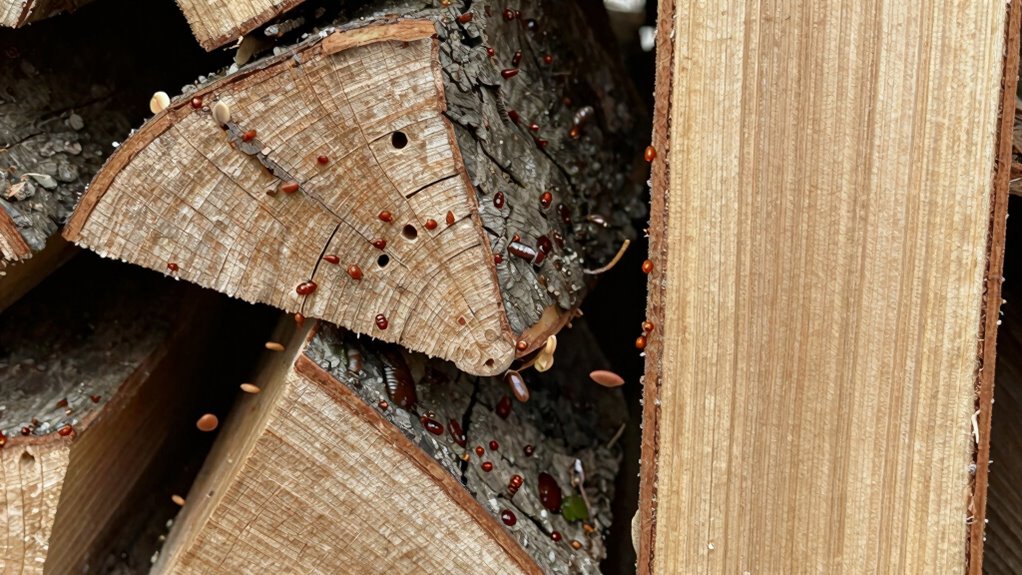
Have you ever brought firewood into your home only to notice tiny bugs scurrying around? It’s a common experience, and it can be unsettling. But not all bugs in firewood are cause for alarm. Some insects are harmless, while others might indicate a problem. The key is understanding insect identification and knowing the right firewood storage tips to prevent unwanted pests from taking hold.
When you see bugs in your firewood, the first step is to identify them. Insect identification involves observing their size, shape, color, and behavior. Common pests like wood-boring beetles, powderpost beetles, or termites have distinct characteristics. For instance, wood-boring beetles are often tiny, shiny, and may leave small holes or fine powdery dust around the infested wood. Powderpost beetles leave behind a powdery residue called frass, and termites tend to create mud tubes along the wood surface. Recognizing these signs helps you determine whether the bugs are just a transient nuisance or a sign of an active infestation.
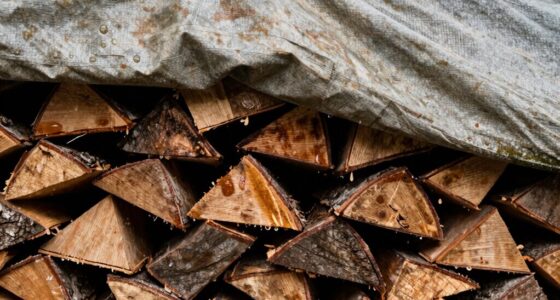
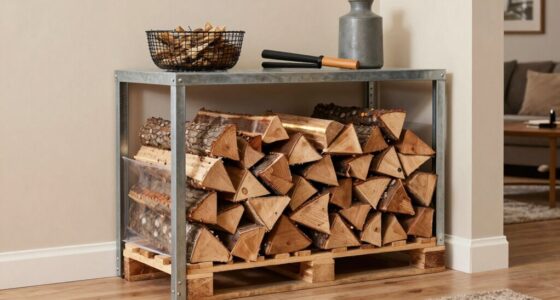
Most bugs in firewood are just part of the natural decomposition process or come from wood that’s been stored outdoors for a while. In many cases, these insects won’t cause damage inside your home if you take proper precautions. That’s where firewood storage tips come into play. To reduce the risk of bringing pests indoors, store firewood away from your house—preferably on a raised platform in a dry, well-ventilated area. Cover the wood with a tarp to keep moisture out, but don’t seal it tightly, as good airflow discourages pest buildup. When you bring firewood inside, try to use it promptly and avoid stacking large quantities indoors for extended periods.
Store firewood on a raised, dry, well-ventilated platform to prevent pests from invading your home.
If you notice bugs after bringing in firewood, don’t panic. Most insects won’t survive long if they’re cut off from their natural environment. You can inspect and shake off the wood before bringing it inside. In some cases, freezing small bundles for a few days can eliminate pests. Regularly checking and rotating your stored firewood helps prevent infestations from developing. Additionally, understanding the role of contrast ratio in the visual quality of home cinema projectors can help you select the right equipment for your entertainment space. If you find signs of a pest problem that seems severe—like widespread holes or wood damage—it might be time to consult a pest control professional.
Frequently Asked Questions
Can Bugs in Firewood Spread to My Home?
Yes, bugs in firewood can spread to your home if you don’t take precautions. Firewood pests like beetles or termites might hitch a ride inside when you bring in firewood. To prevent this, inspect your firewood and do bug identification before bringing it indoors. Properly storing and drying your firewood can also reduce the chances of pests spreading into your home and causing an infestation.
How Do I Prevent Bugs From Infesting My Firewood?
You can prevent bugs from infesting your firewood by treating infestations early and following proper storage tips. It’s like building a fortress around your wood! Keep it dry, elevate it off the ground, and store it in a sealed container or covered area. Regularly inspect for signs of bugs, and if you spot any, treat infestations promptly with safe methods. This keeps pests out and your firewood bug-free!
Are All Bugs in Firewood Harmful?
Not all bugs in firewood are harmful; many are harmless or just part of the natural decomposition process. When you do firewood storage, bug identification helps you determine if pests like beetles or termites are present. Some bugs may pose a risk to your home or health, so if you notice signs of infestation, it’s best to take action. Regular inspection guarantees you catch any problems early.
What Are the Signs of a Severe Firewood Infestation?
You might suspect a severe firewood infestation if you notice an abundance of wood bugs, especially if they’re actively moving or emerging from the wood. Signs of infestation include sawdust-like frass, holes in the logs, and a strong musty odor. Wood bug behavior like swarming or clustering in large groups also indicates a serious problem. If these signs appear, it’s best to treat and store your firewood properly to prevent further issues.
How Long Do Bugs Typically Live in Firewood?
Bugs in firewood typically live for a bug lifespan ranging from a few weeks to several months, depending on the species and conditions. During the firewood lifecycle, you might see them emerge when you bring the wood indoors or start a fire. Most bugs won’t survive long outside their habitat, but understanding their lifecycle helps you determine if an infestation is normal or a problem.
Conclusion
So, next time you spot bugs in your firewood, remember they’re just tiny tenants in your cozy cabin. While a few may be harmless squatters, too many could turn your warmth into a bug invasion. Think of these critters as nature’s little guests—some welcome, others not. Keep an eye out, and with a little care, you’ll keep your firewood stack a friendly, flickering fortress of comfort, not a buzzing battleground.