
You should prioritize cutting dead standing trees if they pose a safety risk during storms or high winds, especially if they’re at risk of toppling. However, if they aren’t dangerous and support local wildlife, it’s often better to leave some intact for ecological benefits. Assess each tree’s stability and ecological role before deciding. If you want to uncover more about balancing safety and conservation, keep exploring these considerations further.

Get business pricing on tools and workshop supplies
- Business-only prices and quantity discounts
- Tax-exempt purchasing
- Multiple users, one account, clear invoices
Key Takeaways
- Prioritize safety by removing dead trees that pose immediate risk of falling or hazard during storms.
- Evaluate the ecological role of dead trees; retain some for wildlife habitat and biodiversity benefits.
- Remove dead trees at risk of disease or pest spread to protect surrounding healthy trees.
- Consider long-term landscape health; allow decay where it benefits soil and ecosystem resilience.
- Balance safety and ecological value by assessing each dead tree individually before removal decisions.
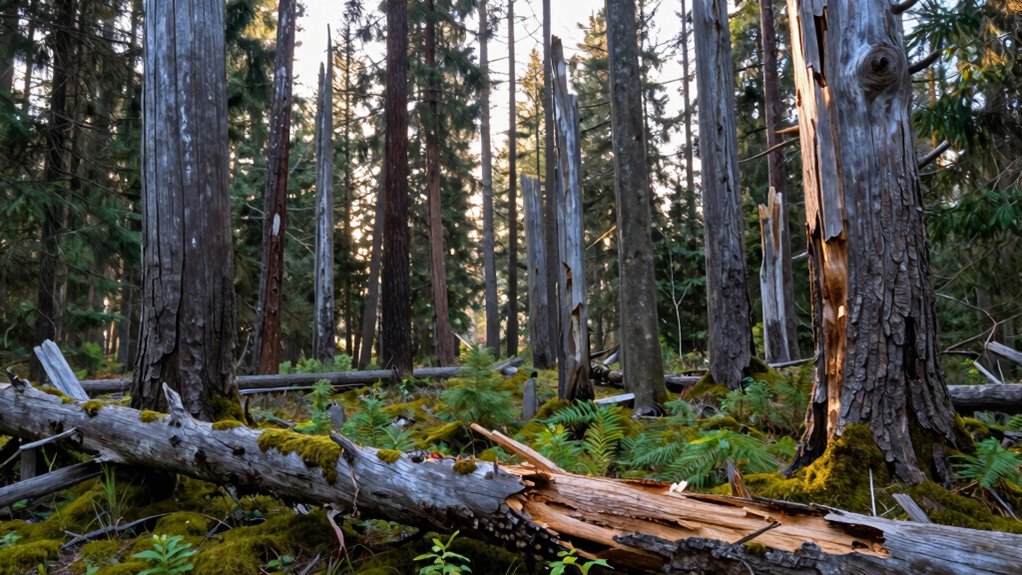
Have you ever wondered whether you should cut dead standing trees first when managing your property? It’s a common question among landowners and property managers. Dead trees, or snags, can be both a hazard and a valuable resource. Deciding whether to remove them right away depends on your priorities, especially if you’re considering wildlife habitat and overall tree health. While removing dead trees can reduce safety risks, it might also eliminate important habitats for birds, insects, and other wildlife. These snags provide nesting sites, perches, and food sources, supporting biodiversity on your land. So, before you grab your chainsaw, think about the role the dead tree plays in the ecosystem around it.
Deciding to remove dead trees depends on safety, wildlife value, and long-term land health considerations.
From a tree health perspective, dead standing trees often indicate underlying issues with nearby or surrounding trees. If a tree has died due to disease, pests, or environmental stress, removing it promptly can prevent the spread of problems to healthy trees. Leaving a dead tree in place might seem like a natural choice, but it could also pose a danger if it’s at risk of falling, especially during storms or high winds. In this case, removing the dead tree first becomes a safety priority. However, if the dead tree is stable and not posing immediate risk, you might choose to leave it temporarily to support local wildlife. It’s a balancing act—prioritizing safety without sacrificing the habitat benefits that dead standing trees provide. Biodiversity enhancement can often be achieved by maintaining some dead trees as part of your landscape management. Understanding ecosystem dynamics can further inform your decisions about whether to keep or remove dead trees. Additionally, considering long-term landscape health**** helps ensure your management practices support ecological stability over time.
Another factor to evaluate is the long-term health of your landscape. Leaving dead trees standing can sometimes promote natural decay processes, enriching the soil and supporting fungi and insects that aid in decomposition. This process can ultimately improve the health of surrounding living trees by recycling nutrients back into the soil. Additionally, understanding the role of dead trees in ecosystem dynamics can help you make more informed management decisions. Recognizing how dead trees contribute to ecosystem resilience can guide your approach to landscape management. This knowledge encourages a balanced approach—preserving ecological functions while addressing safety concerns. Conversely, removing all dead trees without reflecting on their ecological importance can strip your property of essential wildlife habitat, reducing biodiversity and the natural resilience of your landscape. If you decide to keep some dead trees, monitor their stability and remove only those that threaten safety or are likely to fall soon. Properly managing dead trees can also reduce the need for more extensive interventions later, making your landscape more sustainable in the long run.
In the end, whether you cut dead standing trees first depends on a combination of safety concerns, ecological benefits, and long-term landscape health. You don’t have to choose sides without thought. Instead, assess each tree’s condition and role in your property’s ecosystem. Sometimes, leaving a dead tree in place benefits wildlife and the environment. Other times, prompt removal is necessary to protect people and nearby healthy trees. Striking this balance ensures you manage your land responsibly, supporting both safety and ecological integrity.
As an affiliate, we earn on qualifying purchases.
Frequently Asked Questions
How Do I Identify a Truly Dead Tree?
You can identify a truly dead tree by examining its tree health and decay indicators. Look for branches that are brittle or break easily, absence of leaves during the growing season, and signs of decay like fungal growth or holes in the trunk. If the bark is peeling or the wood inside is soft and crumbly, it’s likely dead. These signs help you determine whether the tree needs removal or further inspection.
Are There Legal Restrictions on Removing Dead Trees?
Cutting dead trees isn’t just a simple decision; there are legal restrictions you must follow. You could face hefty fines if you ignore local laws protecting tree preservation and wildlife habitat. Before removing any dead tree, check with your local authorities or conservation organizations. Protecting these trees supports biodiversity, and removal without permission can harm ecosystems. Always guarantee you’re legal and environmentally responsible before taking action.
What Safety Gear Is Recommended for Cutting Dead Trees?
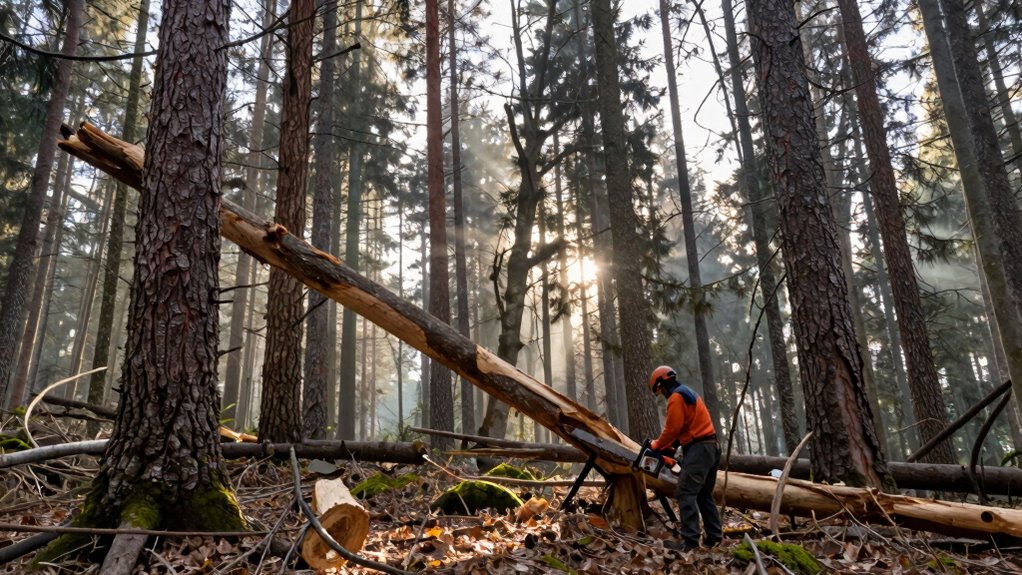
You should wear safety gear like a helmet, eye protection, gloves, and sturdy boots when cutting dead trees. Use proper tree removal equipment such as chainsaws, ropes, and wedges to control the fall. Follow safety precautions—inspect your gear, clear the area of bystanders, and plan the cut carefully. Always prioritize safety to prevent injuries, and consider professional help if you’re unsure about handling the equipment or the tree’s condition.
Can Dead Trees Pose Environmental Risks?
Dead trees can pose environmental risks, even as they provide wildlife habitat. While they support the tree decay process and shelter for birds and insects, they can also become hazards if they fall unexpectedly, damaging ecosystems or property. Their decay releases nutrients into the soil, benefiting plant growth, but if left unchecked, they might harbor pests or diseases that threaten nearby healthy trees. Balancing safety and environmental benefits is key.
How Long Does It Take for a Dead Tree to Decay Naturally?
A dead tree can take anywhere from a few years to several decades to decay naturally, depending on factors like tree health and environmental conditions. The decay process begins as fungi and insects break down the wood, gradually returning nutrients to the soil. You should monitor the decay process, as a compromised tree might pose safety risks. Recognizing signs of advanced decay helps determine when removal is necessary.
Conclusion
So, should you cut dead standing trees first? It really depends on your situation—consider safety, property value, and the potential risks involved. Removing these trees can prevent accidents and protect your surroundings, but timing and proper techniques matter. Are you ready to take action to guarantee safety and preserve your landscape? Remember, addressing dead trees promptly can save you trouble down the line, so don’t wait too long to make that call.
Halloween Picks
halloween
As an affiliate, we earn on qualifying purchases.