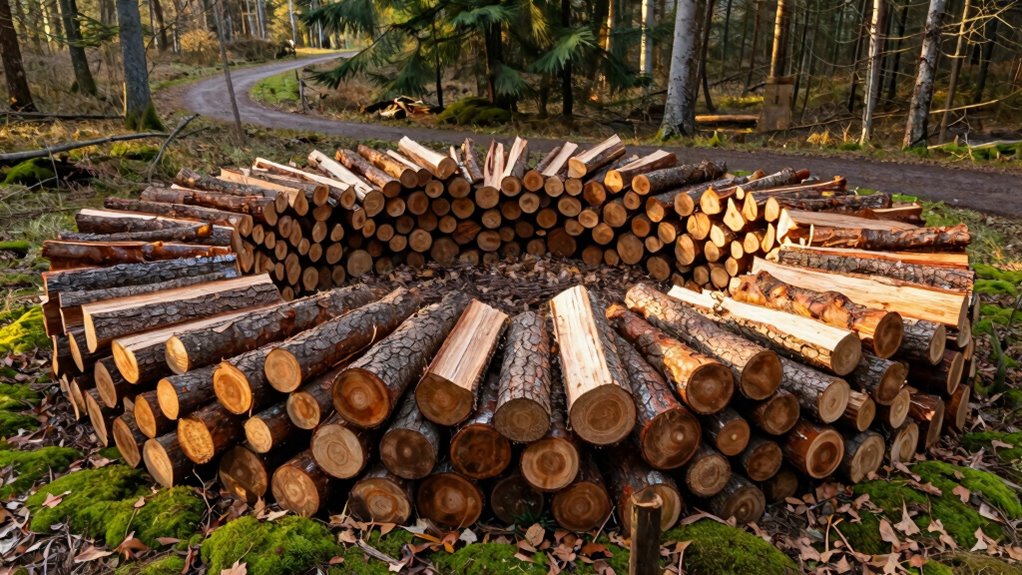

To build a year-round firewood rotation, divide your woodland into manageable zones, harvesting from different sections each season to allow time for proper growth and seasoning. Focus on removing only mature, diseased, or dead trees while avoiding young saplings. Schedule harvesting activities to match natural growth cycles, and regularly assess forest health to make adjustments. By planning carefully, you’ll guarantee a sustainable supply while protecting the forest’s long-term vigor—learn how to refine your system for lasting success.

Get business pricing on tools and workshop supplies
- Business-only prices and quantity discounts
- Tax-exempt purchasing
- Multiple users, one account, clear invoices
Key Takeaways
- Divide your woodland into multiple zones to enable staggered harvesting throughout the year.
- Schedule harvests based on tree maturity, health, and seasonal growth cycles for sustainable yields.
- Prioritize pruning and fast-growing young trees in spring and summer, felling mature or dead trees in winter.
- Allow each zone to rest and regenerate after harvest, ensuring continuous supply and forest health.
- Regularly monitor forest conditions and adapt your rotation plan to environmental changes and growth patterns.
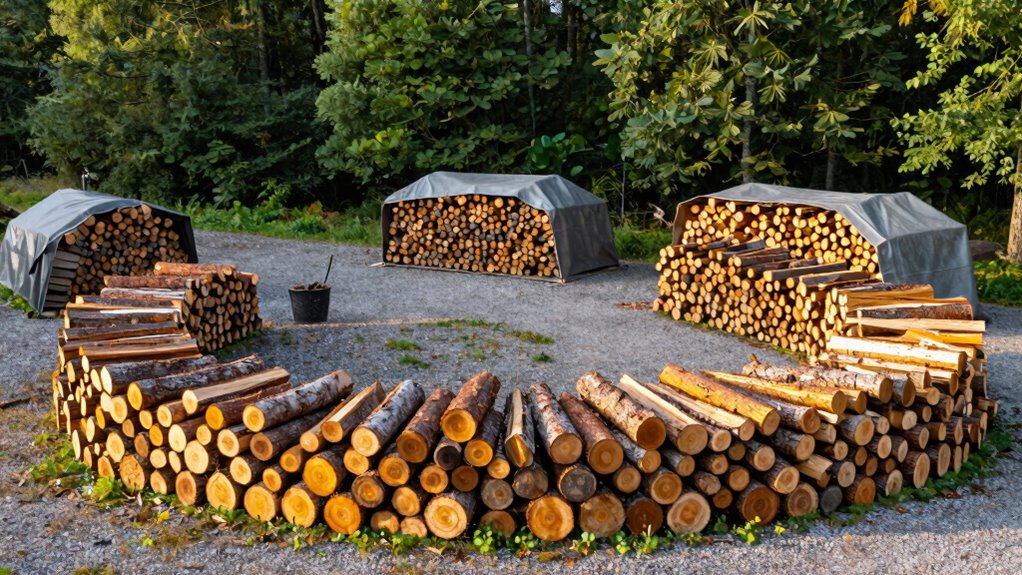
Keeping a steady supply of dry, seasoned firewood year-round requires careful planning and a strategic rotation system. To achieve this, you need to understand how to manage your harvesting process sustainably while aligning your efforts with seasonal changes. Sustainable harvesting ensures you don’t deplete your firewood sources faster than they can regenerate, preserving the health of your woodland for years to come. By planning your cuts carefully and avoiding overharvesting, you maintain a balanced ecosystem while meeting your firewood needs.
Sustainable firewood management balances harvests with forest health for reliable, eco-friendly warmth year-round.
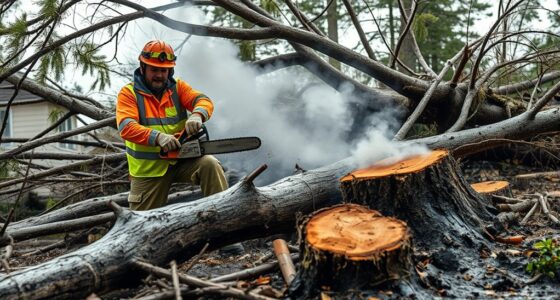
Seasonal planning is your roadmap for effective firewood management. It involves timing your harvesting activities to match the natural growth cycles of your trees. In the colder months, trees are dormant, which makes winter an ideal time to fell mature, standing deadwood or trees that are less likely to be needed for wildlife habitat. During spring and summer, focus on pruning and selectively harvesting young, fast-growing trees that can be replenished quickly. This approach prevents overharvesting and promotes healthy forest growth.
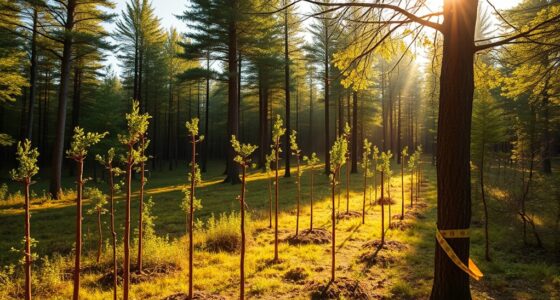
To build a year-round rotation, you should start by dividing your woodland into manageable sections or zones. Each zone will be harvested in a different season, allowing your woodpile to mature and season properly. For example, you might designate one section for winter harvesting, another for summer, and keep some areas untouched for wildlife and forest health. This rotation not only ensures a continuous supply of seasoned firewood but also minimizes environmental impact. As you harvest from each zone, make sure to leave enough mature trees to sustain natural regeneration and to provide habitat for local wildlife. Incorporating woodlot management practices can further enhance your ability to sustain your woodlot over time.
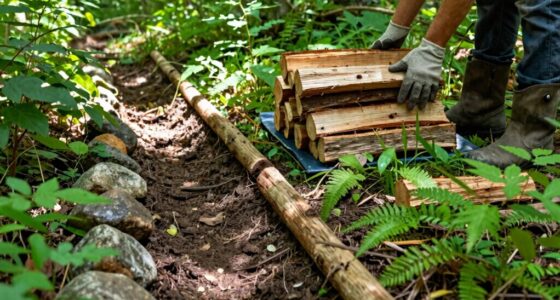
Sustainable harvesting also involves selecting the right trees to cut. Focus on mature, diseased, or dead trees, which are less likely to damage the overall health of your forest. Avoid removing too many young saplings or healthy trees, as they are essential for future growth. When felling trees, take care to minimize soil disturbance and prevent unnecessary damage to surrounding vegetation. Properly buck and split your firewood, then stack it in a dry, well-ventilated location, rotating your stock to guarantee a portion is always seasoning. Additionally, understanding the importance of forest regeneration and its role in maintaining long-term forest health will support your sustainability efforts. Being aware of sustainable harvesting techniques can help ensure your forest remains healthy and productive for generations to come.
Finally, stay flexible with your plan. Seasonal conditions can change, and unexpected weather or growth patterns may require adjustments. Regularly assess the condition of your wood and the health of your forest, adapting your harvesting schedule accordingly. Recognizing the natural cycles of growth and decay can help you make better seasonal adjustments. With thoughtful seasonal planning and responsible practices, you can establish a reliable, eco-friendly firewood rotation that provides warmth without compromising your woodland’s vitality.
firewood splitting and stacking tools
As an affiliate, we earn on qualifying purchases.
As an affiliate, we earn on qualifying purchases.
Frequently Asked Questions
How Do I Determine the Best Trees for Firewood?
You determine the best trees for firewood through careful tree selection, focusing on species that burn efficiently and produce minimal creosote buildup. Look for hardwoods like oak, hickory, and maple, which provide long-lasting, high-energy wood. Prioritize sustainable harvesting by avoiding overharvesting and leaving enough mature trees to maintain the forest’s health. Regularly assess your area to guarantee your firewood collection supports ecological balance and renewal.
What Tools Are Essential for Firewood Harvesting?
Your toolbox should include a sharp, powerful chainsaw for efficient cutting, and don’t forget safety gear—helmet, gloves, and chainsaw safety chaps—to prevent injuries. A splitting maul or axe helps break down logs, while a wedge makes splitting easier. You’ll also need sturdy tarps or firewood storage racks to keep your wood dry and organized. Always prioritize safety to turn your firewood harvest into a manageable, satisfying task, not a disaster.
How Do I Prevent Pests in Stored Firewood?
To prevent pests in stored firewood, use pest-resistant storage containers or elevate your firewood off the ground to reduce pest access. Regularly inspect your wood and remove any infested pieces. Chemical treatments can help, but opt for eco-friendly options and apply them carefully to avoid contamination. Properly drying your firewood before storage also decreases pest attraction, keeping your firewood pile safer and more efficient for winter use.
What’s the Ideal Moisture Content for Seasoned Firewood?
You might think seasoned firewood is ready at any level, but the ideal moisture content is around 20%. Using moisture meters helps you measure this precisely. To attain it, you should use effective drying methods like stacking wood in a dry, ventilated area and splitting logs for faster drying. Proper moisture levels ensure your firewood burns efficiently, produces less smoke, and minimizes pest problems.
How Often Should I Rotate My Firewood Stacks?
You should rotate your firewood stacks every 6 to 12 months to maintain ideal dryness. Use seasonal storage strategies, like stacking techniques that promote airflow, so moisture escapes and the wood stays seasoned. Regularly shifting the stacks prevents rot and pests, ensuring you have dry firewood throughout the year. By adjusting rotation frequency based on weather and storage conditions, you keep your firewood ready whenever you need it.
Conclusion
By planning your firewood rotation carefully, you’ll never run out of cozy warmth, no matter the season. Keep your wood dry, split, and properly aged, rotating your supply like a well-oiled machine. With patience and attention, your firewood stash will be unstoppable—like a wildfire of comfort and readiness. Stick to this system, and you’ll enjoy a consistent, reliable supply that keeps your home warm through every snowstorm and summer chill.
Fall Picks
fall essentials
As an affiliate, we earn on qualifying purchases.