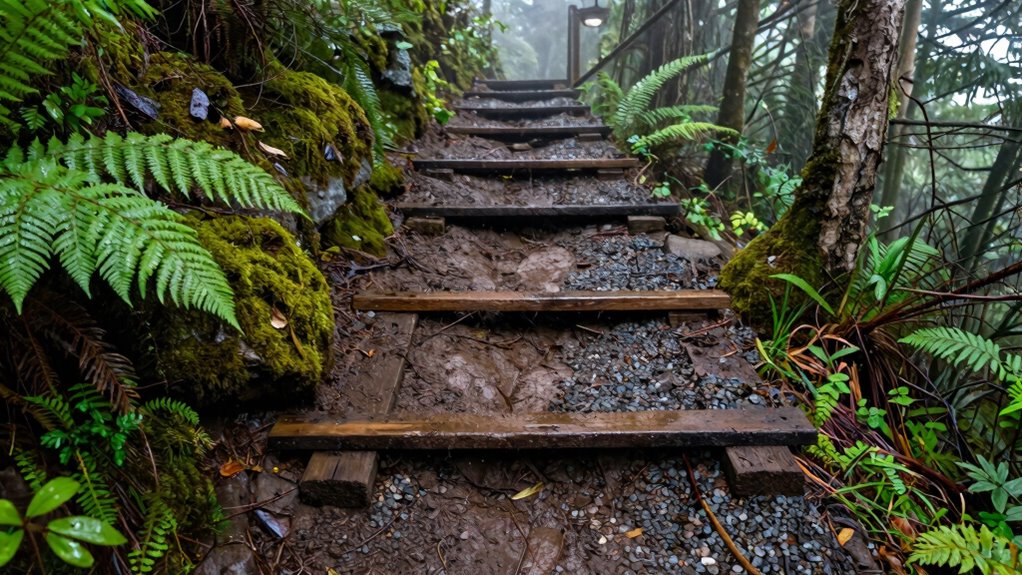

To keep trails usable during wet seasons, focus on effective drainage by installing water bars, culverts, and proper sloping to divert runoff away from the trail surface. Regularly inspect and repair these features to guarantee they operate well. Stabilize soil with vegetation along trail edges and use mulch or ground cover to prevent erosion. Educate users to stay on designated paths and avoid muddy areas. By applying these strategies, you’ll help maintain trail usability through the wettest times—learn more about each step below.
Key Takeaways
- Incorporate proper drainage features like water bars, culverts, and drains to divert water away from the trail surface.
- Regularly inspect and maintain drainage structures to prevent blockages and ensure effective water flow.
- Stabilize soil with native vegetation and ground cover to reduce erosion and enhance trail durability.
- Repair gullies, ruts, and erosion signs promptly to prevent further damage during wet seasons.
- Educate users on staying on designated paths and avoiding muddy areas to minimize trail wear and erosion.

When the rainy season arrives, trails can quickly become muddy and damaged, making them difficult and unsafe to use. You might notice frequent trail erosion, where water washes away soil and creates ruts or gullies that make walking or biking hazardous. To prevent this, you need to understand how to manage water flow effectively through drainage solutions. Proper drainage helps keep the trail surface stable and minimizes erosion, guaranteeing it remains accessible even during heavy rains.
One of the most essential steps is designing your trail with water flow in mind. You should incorporate features like water bars, drains, or culverts that direct runoff away from the trail. Water bars are simple structures built across the trail to divert water off to the sides, preventing it from pooling and washing out the trail surface. Installing culverts—large pipes or channels—under the trail allows water to pass underneath without eroding the trail bed. These solutions are especially critical on slopes or areas prone to heavy runoff, where water velocity can cause significant damage. Additionally, choosing appropriate trail surfaces and materials can further reduce water infiltration and erosion.
Regular maintenance is equally imperative. After heavy rains, inspect the trail for signs of erosion or pooling water. If you see any gullies or ruts forming, take immediate action by filling them with suitable material like compacted gravel or native soil. Reinstall or repair water bars and culverts as needed to guarantee they function properly. Clearing debris from drainage structures prevents blockages that can cause water to back up and erode the trail further. Incorporating erosion control techniques into your maintenance routine can further enhance trail durability during wet periods.
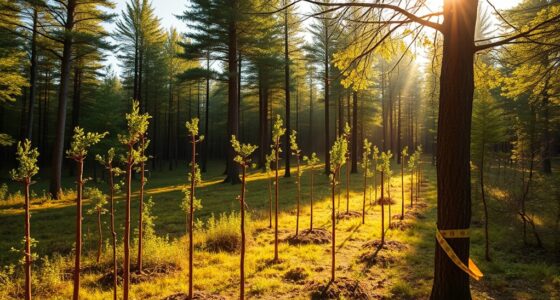
Planting vegetation along the sides of the trail also plays a key role in controlling erosion. Roots stabilize the soil, reducing the likelihood of washouts and helping absorb excess water. Keep trail edges well-vegetated, especially on slopes, to reinforce the soil structure and slow runoff. Mulching or adding native ground cover can further protect vulnerable sections from the erosive forces of rain. Employing vegetation management strategies can significantly improve the trail’s resilience against wet season damage.
Finally, educating trail users about staying on designated paths and avoiding wet or muddy sections helps reduce trail wear. When everyone adheres to proper trail etiquette, it limits compaction and erosion, preserving the trail’s integrity. Combining good design, ongoing maintenance, vegetation management, and user awareness creates a resilient trail system that can withstand the challenges of wet seasons. With these strategies, you’ll keep your trails usable, safe, and enjoyable year-round, even in the face of heavy rains and muddy conditions.

WHITIN Water Shoes for Women Beach Quick Dry Surfing Sneakers Black Gum 7
- Quick-dry waterproof fabric: Flexible and breathable material
- Removable EVA insoles: Non-absorbent and fast-drying
- Easy water activity access: No need to change shoes
As an affiliate, we earn on qualifying purchases.
As an affiliate, we earn on qualifying purchases.
Frequently Asked Questions
What Types of Trail Surfaces Are Best for Wet Conditions?
You should choose trail surfaces made from moisture-resistant materials like crushed gravel, compacted stone, or engineered wood chips, as they offer better trail surface durability in wet conditions. These materials help drain water efficiently, preventing erosion and mud formation. Avoid loose soil or fine sand, which become unstable when wet. Using durable, moisture-resistant surfaces guarantees your trail remains safe and accessible during rainy seasons, reducing maintenance needs and prolonging its usability.
How Often Should I Check Trail Conditions After Heavy Rain?
You should check trail conditions at least daily after heavy rain, especially during wet seasons. Think of it as keeping your finger on the pulse—trail user feedback and weather forecast updates help you spot issues early. Regular inspections allow you to identify erosion, mudslides, or washouts before they worsen. By staying proactive, you’ll keep the trail safe and accessible, preventing small problems from turning into big setbacks.
Are There Specific Tools Recommended for Trail Maintenance in Wet Seasons?
For trail maintenance in wet seasons, you should use tools like shovels, rakes, and drainage tools such as trowels or augers to implement effective drainage techniques. A sturdy pair of gloves and a tamper can help with installing drainage features. Additionally, keep trail signage clear and updated to guide users around vulnerable areas, reducing erosion and trail damage. Regular inspections combined with these tools help you maintain trail usability during wet periods.
How Can I Prevent Erosion on Popular Wet-Season Trails?
Don’t let erosion catch you off guard—think of it as fighting fire with fire through good trail design and erosion control. You can install switchbacks to reduce slope, add drainage features like water bars, and use sustainable materials to stabilize the trail. Regular maintenance is key; by staying proactive, you’ll prevent erosion from turning your popular wet-season trails into a muddy mess, ensuring they stay enjoyable year after year.
What Safety Precautions Should Hikers Take on Wet Trail Surfaces?
When hiking wet trails, you should watch for wildlife encounters and stay aware of your surroundings. Wear sturdy, slip-resistant shoes and take smaller, deliberate steps to maintain balance. Follow trail etiquette by yielding to others and avoiding disturbing wildlife. Keep your dog on a leash if you have one, and steer clear of muddy, unstable areas. Staying vigilant and respectful guarantees your safety and preserves the trail’s natural beauty.
Conclusion
By taking simple steps like installing proper drainage, using durable surfacing, and staying on designated paths, you can keep trails resilient through wet seasons. Think of your efforts as tending a garden—consistent care keeps it thriving, even when storms roll in. With a little attention, your trails will remain a reliable escape, ready to welcome adventurers rain or shine. Keep the path clear and your spirit lively, and the trail will always lead to new adventures.