A tree makes a poor firewood candidate if it has high moisture content, damaged or loose bark, or contains excessive resin or sap, as these issues cause inefficient burning, more smoke, and safety hazards. Decayed or insect-infested wood burns unevenly and releases toxins, while rotting wood produces more creosote buildup. Choosing healthy, properly seasoned wood guarantees a cleaner, safer fire. Keep going to uncover more about selecting the best firewood for your needs.
Key Takeaways
- The tree has high moisture content, making the wood difficult to ignite and inefficient to burn.
- It possesses poor bark quality, such as loose, flaky, or damaged bark that increases smoke and sparks.
- The tree is resinous or contains high sap levels, leading to unpredictable burning and excessive sparks.
- It shows signs of rot, disease, or insect infestation, which degrade combustion and pose safety risks.
- The wood is cracked, split, or decayed, resulting in uneven burns and increased smoke production.
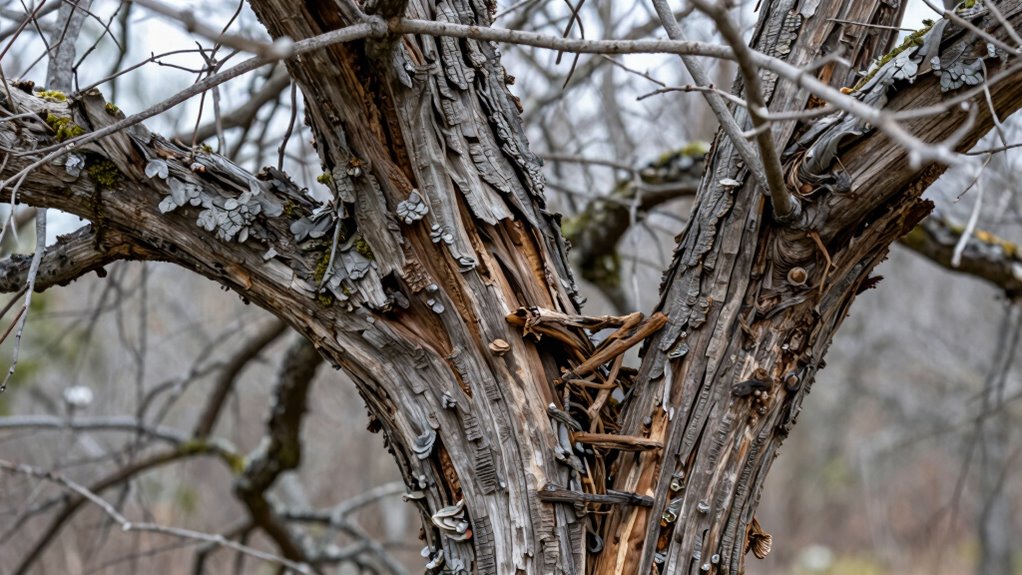
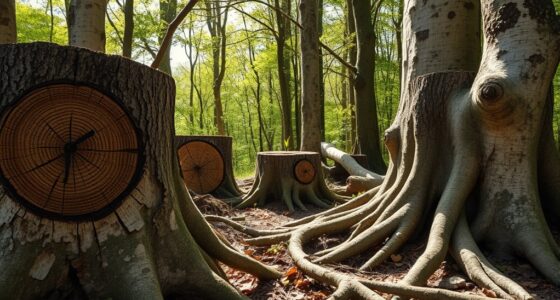
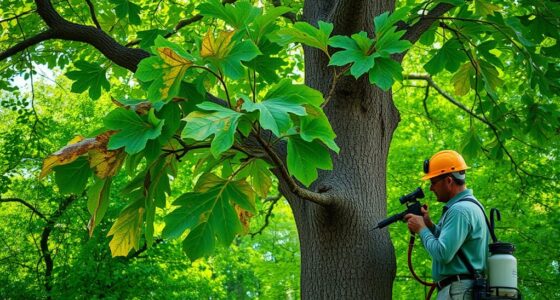
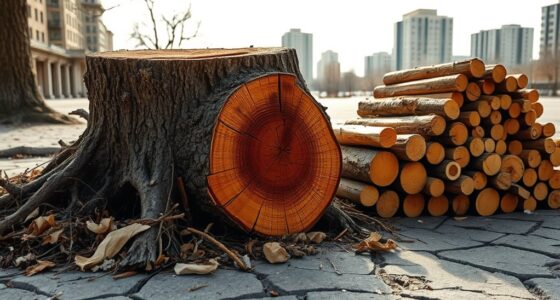
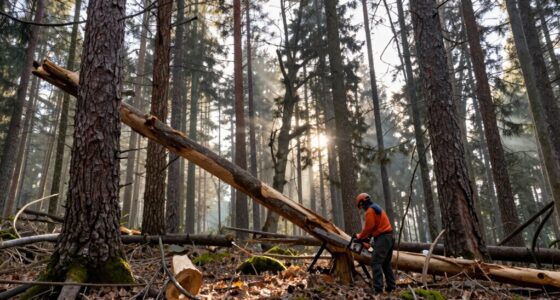
Choosing the right wood for your fire is essential to guarantee efficient burning and minimal smoke, but not all trees make good firewood. One of the main factors that determine a tree’s suitability is its wood moisture content. Freshly cut or green wood contains high moisture levels, which means it burns slowly, produces a lot of smoke, and creates more creosote buildup in your chimney. When wood isn’t properly seasoned—meaning it’s dried for at least six to twelve months—it’ll struggle to ignite and won’t burn as hot or efficiently. Wet wood also leads to excess smoke and soot, which can pose health and safety risks. So, if you’re considering a tree for firewood, you want to choose wood that’s well-seasoned and has a moisture content below 20%. Fir, oak, and hickory are typically good options because they dry well, whereas pine and other softwoods tend to retain moisture longer. Properly seasoned, dry wood allows for cleaner, more efficient fires with less smoke and creosote buildup. Another critical aspect that can make a tree a poor choice for firewood is bark quality. Bark acts as a protective layer for the tree, but not all bark is suitable for burning. Trees with thick, loose, or flaky bark tend to produce more smoke and sparks when burned, which can be dangerous and inefficient. If the bark is of poor quality—perhaps because it’s damaged, rotting, or infested with insects—it can introduce unwanted contaminants into your fire. Additionally, trees with bark that’s prone to cracking or falling off easily may not have the structural integrity needed for good firewood. Good bark quality ensures a cleaner burn, less smoke, and less creosote buildup. It also helps the wood burn more evenly and produces more heat. Trees with poor bark quality may also be more susceptible to pests, further degrading their suitability as firewood. Properly seasoned, dry wood is less prone to cracking and splitting, which contributes to a more consistent burn. In addition, choosing wood with appropriate moisture content is vital for safe and effective burning. Selecting trees with minimal resin or sap is also advisable, as resinous woods tend to burn unpredictably and produce excessive sparks. Ultimately, trees that are too resinous or contain high levels of sap aren’t ideal either, as they tend to burn quickly and produce excessive smoke and sparks. Softwoods like pine, although easy to cut and light up, often fall into this category. Trees with rot, disease, or insect damage should be avoided because they degrade the wood’s combustion properties and can introduce pests or mold into your home. When selecting wood, look for trees with properly seasoned, dry wood and intact, healthy bark. These features indicate good burning quality and help you get the most heat with the least smoke, making your fire both efficient and safe.

15" Oak Firewood Logs, with Fire Starters Set, Kiln-Dried Wood for Fire Pit, Seasoned Logs for Fireplace, Campfire, Firewood Bundle, Pizza Oven, Split Wood for Solo Stove, 1200 cub. in., 15-20lb
Premium Quality Firewood: Our kiln-dried firewood logs are perfect for any use, whether you need oak firewood, birch…
As an affiliate, we earn on qualifying purchases.
As an affiliate, we earn on qualifying purchases.
Frequently Asked Questions
Can Certain Tree Diseases Affect Firewood Quality?
Yes, certain tree diseases can affect firewood quality. Tree disease can weaken the wood, making it less efficient for burning. Additionally, infected trees may lead to firewood contamination, spreading pathogens or pests when burned. This contamination can pose health risks and damage your fireplace or stove. To guarantee safe and effective firewood, avoid using wood from diseased trees and always inspect your firewood for signs of disease before burning.
Does Tree Age Influence Its Suitability for Firewood?
Tree age plays a vital role in firewood quality—older trees often become like seasoned storytellers, packed with dense, slow-burning wood, perfect for heat. Younger trees, however, are like enthusiastic apprentices, with lighter, less dense wood that burns faster and produces less heat. So, when choosing firewood, consider tree age; mature trees tend to offer the best fuel, giving you a steady, warm blaze that lasts.
Are There Legal Restrictions on Burning Specific Tree Types?
Yes, there are legal regulations and tree removal policies that restrict burning certain tree types. You need to check local laws, as some regions ban burning invasive or protected species to prevent environmental harm. Additionally, specific regulations may require permits for removing or burning particular trees. Ignoring these rules can lead to fines or penalties. Always consult your local authorities or forestry departments before burning specific tree types to stay compliant.
How Do Tree Species Impact Smoke Production?
Tree species markedly impact smoke production when burned. Some species, like pine or cedar, release more smoke because they contain higher resin and sap levels, which ignite easily and produce thick, smoky fumes. Conversely, hardwoods like oak or maple produce less smoke due to their dense, less resinous wood. Choosing the right tree species helps you reduce smoke emissions, making your fire safer and more environmentally friendly.
Can Treated or Contaminated Trees Be Safe for Firewood?
Think of treated or contaminated trees as ticking time bombs—they’re unsafe for firewood. Chemical treatments and contamination risks release harmful fumes and toxins when burned, jeopardizing your health and the environment. You might save a few bucks, but the dangers far outweigh the benefits. Always avoid using trees with chemical treatments or signs of contamination, and choose firewood from reputable sources to guarantee safety and cleaner burning.
15" Oak Firewood Logs, with Fire Starters Set, Kiln-Dried Wood for Fire Pit, Seasoned Logs for Fireplace, Campfire, Firewood Bundle, Pizza Oven, Split Wood for Solo Stove, 1200 cub. in., 15-20lb
Premium Quality Firewood: Our kiln-dried firewood logs are perfect for any use, whether you need oak firewood, birch…
As an affiliate, we earn on qualifying purchases.
As an affiliate, we earn on qualifying purchases.
Conclusion
In conclusion, steering clear of soggy, sappy, or sickly trees guarantees safer, smarter firewood choices. Selecting sturdy, seasoned, and suitable specimens keeps your fires fiery but safe, avoiding unnecessary nuisances. Remember, neglecting these nuances might lead to smoky, snuffed-out sessions or even safety scares. So, scrutinize, select, and supply your stove with sensible, sound, and sustainable wood. Smart sourcing sustains your fires and your safety—seriously, it’s simply superior!

Mecurate Digital Pin Type Wood Moisture Meter with 3 Colored Indicators, Moisture Detector 2 Mode 8 Calibration Large Backlit for Wood, Wall, Firewall (Orange)
✅【Accurate & Trusted Measures, Identify Moisture Level】With accurate & trusted performance, Mecurate moisture meter can detect moisture content…
As an affiliate, we earn on qualifying purchases.
As an affiliate, we earn on qualifying purchases.

Gtongoko Fireplace Tools Set 4 Pcs 30 Inch Black Wrought Iron Large Fire Tool Set for Outdoor/Indoor Include Chimney Poker, Antique Shovel, Rustic Brush and Stand Accessories Set
【4 PCS Combination of Fireplace Tools】Complete 4 Pcs set of fireplace accessories including poker, shovel, brush, and stable…
As an affiliate, we earn on qualifying purchases.
As an affiliate, we earn on qualifying purchases.