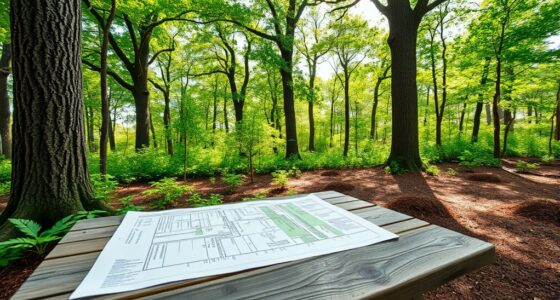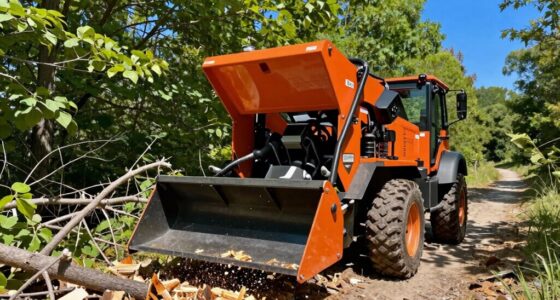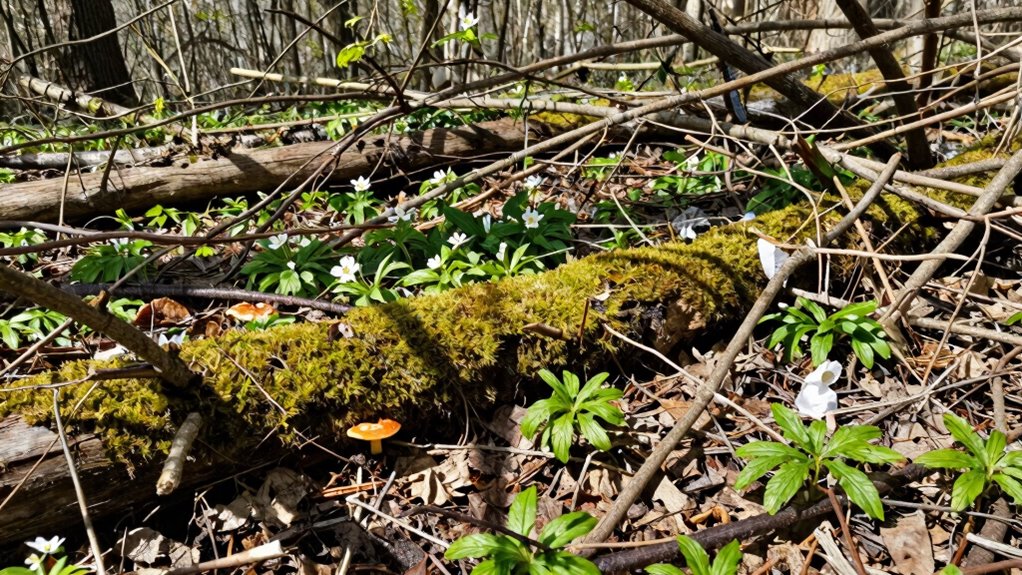

In your spring woodlot cleanup, focus on removing invasive species like certain shrubs, vines, and weeds that threaten native plants. Make sure to remove roots and seeds to prevent regrowth, but leave some fallen branches, dead trees, and woody debris to support wildlife habitats. Thin dense undergrowth to improve airflow and sunlight, while preserving native plants that provide food and shelter. Continuing will help you gain more tips for balancing removal and preservation for a healthy woodland.

Get business pricing on tools and workshop supplies
- Business-only prices and quantity discounts
- Tax-exempt purchasing
- Multiple users, one account, clear invoices
Key Takeaways
- Remove invasive species, including roots and seeds, to prevent spreading and protect native plants.
- Leave fallen branches and deadwood to provide habitat for insects, fungi, and small wildlife.
- Thin dense undergrowth to improve airflow, sunlight, and promote healthy plant growth.
- Preserve native plants that support biodiversity and wildlife shelter.
- Plan ongoing maintenance like mulching and native planting to sustain woodland health.
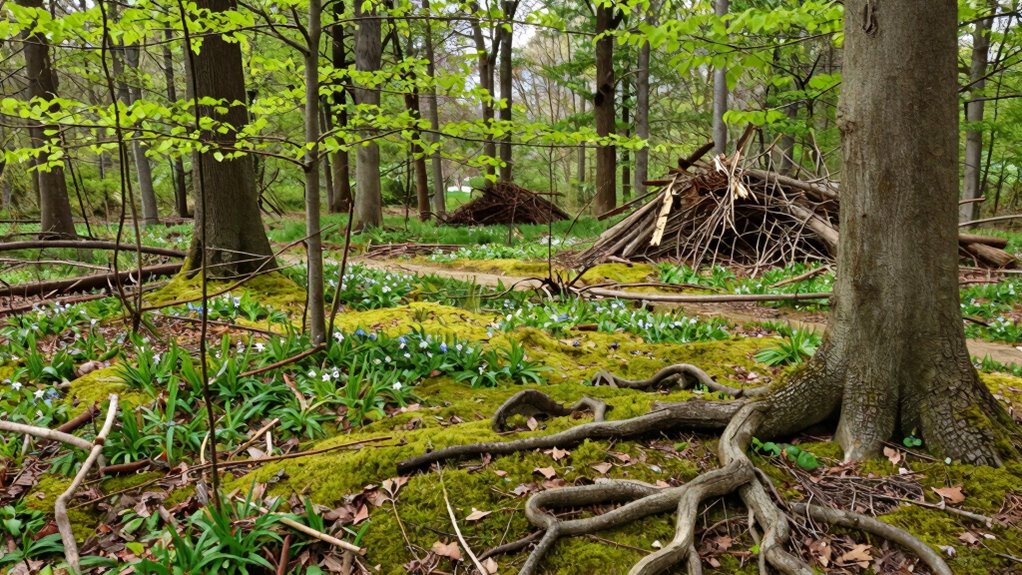
Are you ready to give your woodlot a fresh start this spring? This is the perfect time to assess what needs removal and what should stay. A well-planned cleanup not only enhances the health of your woodland but also supports local wildlife habitat. When you approach this task, keep in mind that some plants and debris are essential for the ecosystem, providing food, shelter, and breeding grounds for birds, insects, and small mammals. Conversely, invasive species can quickly take over, choking out native plants and diminishing biodiversity, so removing these is indispensable for maintaining a healthy, resilient woodlot.
Start by walking through your woodland and identifying any invasive species. These plants often grow aggressively, outcompeting native flora and altering the natural balance. Pull out or treat invasive shrubs, vines, and weeds before they spread further. Be thorough, ensuring you remove roots and seeds to prevent regrowth. While doing this, be cautious not to disturb the native plants that wildlife depends on. Many native species serve as essential food sources and shelter for birds, insects, and mammals, so leave the healthy, established plants untouched. Recognizing the importance of native plants in supporting biodiversity can guide your cleanup decisions, ensuring you preserve the plants that are vital for the ecosystem.
Next, clear out fallen branches, dead trees, and other woody debris. These materials are indispensable for wildlife habitat, offering hiding spots and nesting sites. Leaving some debris on the ground creates a natural environment that supports insects, fungi, and small creatures, which in turn attract larger wildlife. Additionally, understanding the role of deadwood in ecological health can help you make more informed choices to sustain a balanced environment. Incorporating deadwood into your cleanup can enhance habitat complexity and promote ecological health.
Consider thinning dense undergrowth and overgrown areas that hinder airflow and sunlight penetration. Doing so encourages new growth, reduces the risk of pests and diseases, and helps prevent the buildup of combustible material, lowering fire risk. While removing excess vegetation, keep in mind that some underbrush provides essential cover for wildlife during harsh weather. Strike a balance between cleaning up and preserving habitat. Regular maintenance, including mulching around remaining plants, can also help suppress weeds and invasive species, contributing to a healthier woodland.
Finally, take time to plan for ongoing maintenance. Mulching around remaining plants can prevent weeds and invasive species from re-establishing, while planting native species can bolster wildlife habitat. Remember, your goal is to nurture a balanced, healthy woodland that supports native plants and animals. With careful decision-making about what to remove and what to leave, your spring cleanup will set the stage for a thriving, vibrant woodlot for years to come.
As an affiliate, we earn on qualifying purchases.
Frequently Asked Questions
How Often Should I Perform a Woodlot Cleanup Annually?
You should perform a woodlot cleanup at least once or twice a year, ideally in early spring and late fall. Regular cleanups help maintain wildlife habitat and prevent soil erosion by removing debris and excess undergrowth. By doing so, you promote healthy tree growth and protect the soil. Staying consistent guarantees your woodlot remains vibrant, balanced, and resilient throughout the year, supporting local wildlife and preventing long-term environmental issues.
What Tools Are Essential for a Successful Cleanup?
Think of your tools as your trusted team—they need the right gear to perform well. Essential tools include pruning shears, a handsaw, loppers, and a rake. Always prioritize tool safety by wearing gloves and eye protection, and keep your equipment well-maintained for efficiency. Regular equipment maintenance prevents accidents and makes sure your tools work smoothly, making your cleanup safer and more effective.
Can I Compost the Debris Collected During Cleanup?
Yes, you can compost the debris collected during cleanup, but it’s important to compost invasive species separately to prevent spreading. Proper composting allows organic debris to break down naturally, enriching your soil. Be sure to identify invasive species early so you can remove and compost them safely, avoiding contamination of your compost pile. This helps maintain a healthy, balanced ecosystem in your woodlot while effectively managing debris.
How Do I Identify Invasive Species to Remove?
Think of invasive species as unwelcome guests overstaying their welcome. To spot them, look for plants that stand out from your native plants—unusual leaves, aggressive spreading, or different growth habits. Removing invasives helps protect native plants and improves soil health, creating a balanced ecosystem. Regularly monitoring your woodlot guarantees you catch invasives early, keeping your woodland thriving and resilient against unwanted intruders.
When Is the Best Time to Start Spring Cleanup?
You should start your spring cleanup early in the season, ideally as soon as the weather warms and the soil dries enough for working. This timing allows you to prepare for spring planting and supports wildlife habitat by clearing out debris and invasive species. By doing so, you create a healthier environment, encourage native plants to thrive, and provide shelter and food sources for local wildlife.
Conclusion
As you finish your spring cleanup, consider the idea that removing only the dead or diseased wood promotes healthier growth, while leaving some fallen debris provides habitat for beneficial insects. This balance supports a thriving woodlot without overdoing it. Embrace the theory that mindful cleanup boosts forest health, but don’t clear every trace—nature’s resilience often depends on leaving behind some natural debris. Trust in this approach to nurture a vibrant, sustainable woodlot.
Halloween Picks
halloween
As an affiliate, we earn on qualifying purchases.